The most effective teaching of music is when it is ongoing and not erratic. My commitment to my students is a long-standing one. Fees are broken down into monthly payments, adding up the number of scheduled private and group lessons and recitals students receive in a 12 month period. Regardless of the number of lessons you receive in a month, the fee remains the same. Your fee is a monthly retainer.
Many teachers do not offer make-ups; I only allow (2) two per Fall, Spring or Summer term. After all, one is not reimbursed for a missed day at school. With a fully booked schedule, there are no hours left for make-ups. It is critical that teacher be informed well in advance when any student expects to miss for any reason so that make-ups can be scheduled. If students plan to be absent for any length of time, please inform teacher well in advance so that other students will not be turned away or inconvenienced.
These courtesies will be required of your students when they enter university, and it should be no less observed, now, with their private teacher. Parents should (and generally do) model these behaviors. Courtesy is so important, and a sign of high levels of personal integrity. Therefore:
Always call teacher well in advance of any missed lessons. Calling at the lesson time, or a hour before, may sometimes be unavoidable, but think ahead to your scheduled time, as much as possible. Note that three no shows/no calls will likely result in student being asked to find another teacher.
One thing I stress in lessons, especially to older students and those interested in a professional career, is that it is imperative to develop good work habits. Specifically, don't be late and do pay your fees on time. In professional situations if a musician is chronically late or otherwise unreliable, the contractors will simply cross their name off the list (no matter how well they play), and hire someone else. Please be reliable and courteous; the benefits are enormous.
Be very specific regarding holidays, vacations, etc. I am very easy to get along with as long as I am clearly informed by parents/students regarding what their schedules are.
Students do much better when parents take a clear interest in the lessons, take notes, follow the child’s progress, and carefully supervise the home practice. I realize that many of my parents have tight schedules, but when in the studio, please observe carefully, ask questions, and have a clear idea of what the child is expected to work on during the week.
Remain calm but firm; don't nag, threaten, get angry, or give up. Brushing teeth is not optional, and neither is practicing. 10 minutes a day is fine at the beginning.
Create a musical environment: this will include listening to the Suzuki CD's, other CD's of classical music or other musics, going to concerts, and listening to NPR (National Public Radio) programs with classical music. Have music on all the time, or at least during meals and before bedtime.
Make it fun and enjoyable. Let the child be happy and loved at all times. Never make being loved contingent on whether they practice, or whether they do well.
Use lots of praise, even for the smallest thing, and even if it sounds awful. There is always something positive to say: "You really worked hard" "That sounded pretty good" "That was much better than last time." No negative or derogatory remarks!!
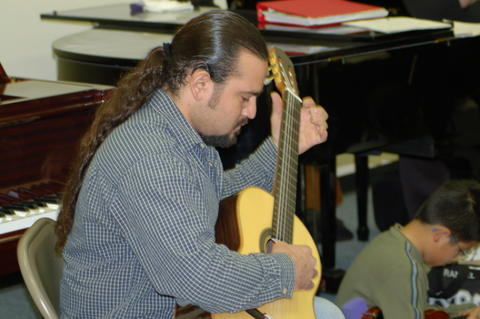 Lessons in classical guitar in West Texas.