 |
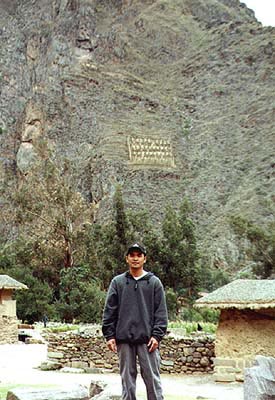
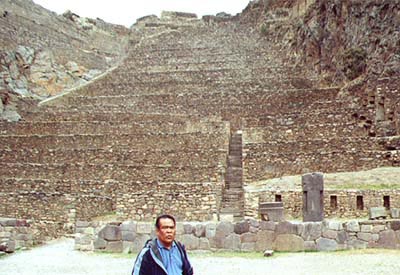
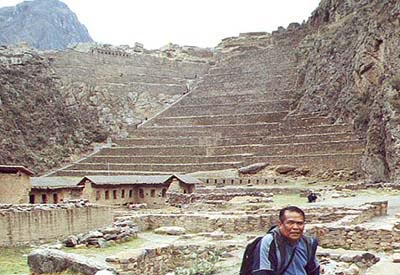
Pictures wherein were taken in Ollantaytambo area.
Ollantaybambo, a massive fortress, is one of the site where the Spanish conquistadores lost a major battle.
After his defeat at Saqsaywaman in 1536 (see Out Visit to Cusco), Manco Inca retreated here and was followed by Hernando Pizarro, half brother of Francisco Pizarro, and a force of 70 calvarymen. Supported by a large number of natives and Spanish foot soldiers they attacked the fortress in an attempt to take the Inca.
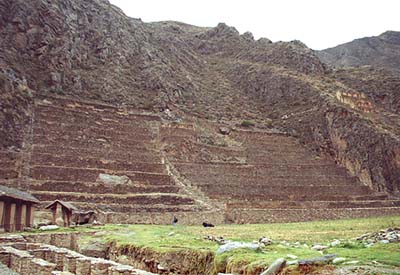
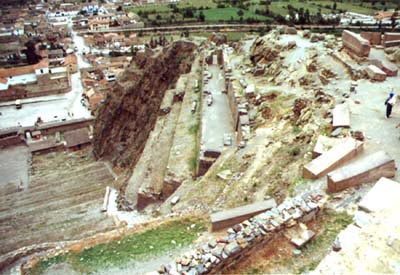
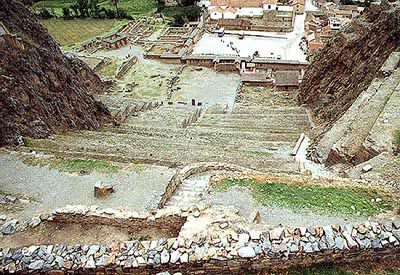
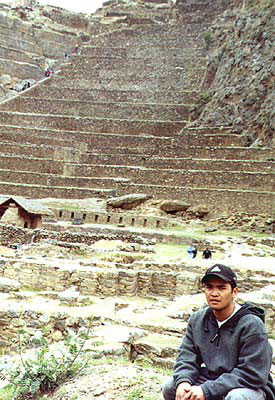
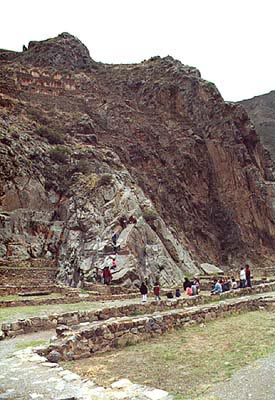
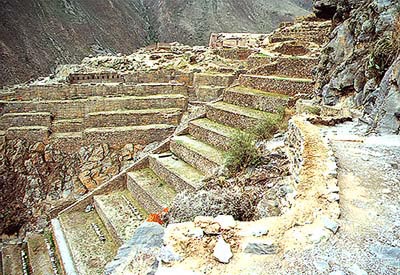
The steep terracing, (see pictures below) appeared to be highly defensible. The Spaniards found themselves been showered by boulders, stones, spears and arrow from above and were unable to climb the terraces. The Spaniards problem was further worsened when the Inca, through a will plan channeling, flooded the plain below creating difficulties in maneuvering the horses forcing Pizarro to order a hasty retreat which almost turned to rout when they were followed down the valley by thousands of victorious Inca soldiers.
The Inca�s victory didn�t last long because soon after, the defeated force was relieved by the returning larger Chilean expedition force, and Ollantaytambo was again attacked, with a cavalry force of about 4 times the size of the previous one. Manco Inca was forced to retreat and headed to his jungle and last stronghold, Vilcabamba, and Ollantaytambo was left become part of the Spanish Empire.
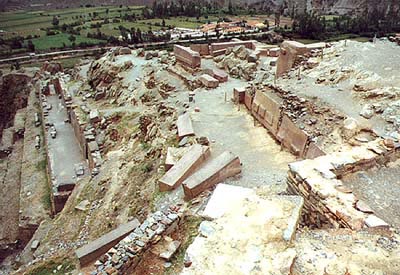
Perhaps the Incas themselves considered Ollantaytambo as their temple and the Spanish dubbed it as fortress and has been called as such ever since. Above the terracing is the temple area, where extremely well-built walls left unfinished. It were never been completed when the Incas retreated.
Stone used for building were quarried about 6 km, from the mountainside at other side of the Urubamba River.
Transporting these large blocks of stone is a monumental task that involved thousands of native workers. To move these tons of blocks, the Incas used their ingenuity, an uncanny technique and that is � instead of hauling the blocks across the river, they left the block by the side of the river and diverted the river around the blocks!
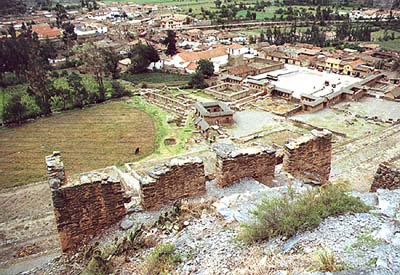
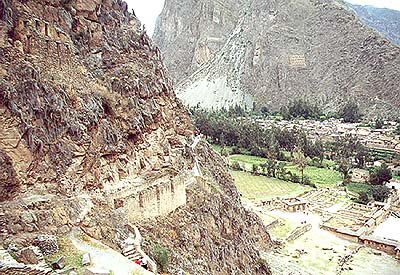
Below the ruins, is where the village of Ollantaytambo now � built on traditional Inca foundation � exhibiting a typical Inca city planning. The place was divided into blocks. Each block has one entrance that led to the courtyard. Houses in the block are entered from the courtyard and not from the streets.
The water channeling system still works today. Part of it passes through the courtyard and down to the Urubamba River.
|
 |
 |  |
<4>
 |  |
<5>
 |  |
<6>
 |  |
 |  |
<8>
 |  |