 |
|
|
|
|
|
|
|
|
|
|
|
|
|
|
|
|
|
|
|
|
|
|
|
|
|
|
|
|
|
|
|
|
|
|
|
|
|
|
|
|
|
|
|
|
|
|
|
|
|
|
|
|
|
|
|
|
|
|
|
|
|
|
|
|
|
|
|
|
|
|
|
|
|
|
|
|
|
|
|
|
|
|
|
|
|
|
|
|
|
|
|
|
|
|
|
|
|
|
|
|
|
|
|
|
|
|
|
|
|
|
|
|
|
|
|
|
|
|
|
|
 |
|
|
|
The 5 Senses |
|
|
|
First Grade |
|
|
|
Tara Virga, Janis Stravino, Melanie Meyer |
|
|
|
Edu. 5503 |
|
|
|
Mrs. Guleksen |
|
|
The 5 Senses 1st Grade
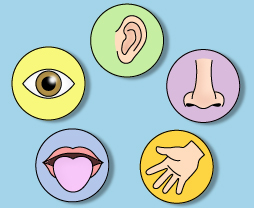
Rationale: The first grade students are beginning a unit on the 5 senses, which is part of the first grade curriculum. The major purpose of the unit is to teach students how they can use their 5 senses to observe and investigate the world around them. Students will engage in hands-on activities and interactive, cooperative groups as they develop a greater awareness of their bodies and their 5 senses.
|
|
|
|
Objectives: Students Will...
a) Name the 5 Senses.
b) Identify how each sense is used.
c) Identify what part of the body provides each sense.
d) Experiments to develop their understanding of how their 5 senses work.
e) Identify how the senses can or cannot work together.
f) Work with the 5 senses in all curriculum areas. |
|
|
|
New YorkState Learning Standards: |
|
|
|
a) According to NYS ELA standard #1, Students will listen, speak, read, and write for information and understanding. |
|
|
|
b) According to NYS ELA standard #3, Students will listen, speak, read, and write for critical analysis and evaluation. |
|
|
|
c) According to NYS MST standard #1, Students will use mathematical analysis, scientific inquity, and engineering design, as appropriate, to pose questions, seek answers, and develop solutions. |
|
|
|
d) According to NYS MST #4, Students will understand and apply scientific concepts, principles, and theories pertaining to the physical setting and living environment |
|
|
|
Sensory Lane Learning Center |
|
|
|
The teacher will take advantage of the students natural curiosity and set up a five senses center before beginning a unit on it. The center will display books, posters and items that encourage students to discover their own senses of touch, sight, taste, smell and sound. The students will discover the importance of using their senses in learning. The center will be put out while the students are at lunch. The teacher will create a visually tempting display and encourage students to browse the items. There is a new center in the room. You may go over and read, explore and view the items. The center will stimulate their five senses and curiosity. |
|
|
|
Materials in the Center: |
|
|
|
Books |
|
|
|
Senses by Anna Sandeman |
|
|
| My Five Senses by Aliki |
|
|
| Your Five Senses by Melvin and Gilda Berger |
|
|
| You Touch With Your Fingers by Melvin and Gilda Berger |
|
|
|
You Hear With Your Ears by Melvin and Gilda Berger |
|
|
| You Taste With Your Tongue by Melvin and Gilda Berger |
|
|
| You Smell With Your Nose by Melvin and Gilda Berger |
|
|
| You See With Your Eyes by Melvin and Gilda Berger |
|
|
| Seeing by Kathie Billingslea |
|
|
| Hearing by Kathie Billingslea |
|
|
| Smelling by Kathie Billingslea |
|
|
| Tasting by Kathie Billingslea |
|
|
| Touching by Kathie Billingslea |
|
|
| The Ear Book by Al Perkins |
|
|
| Click, Clack, Moo Cows That Type by Doreen Cronin |
|
|
| Do Your Ears Hang Low by Caroline Jayne Church |
|
|
| Shaggy Dog and the Terrible Itch by David Bedford and Gwyneth Williamson |
|
|
| Too Much Noise by Ann McGovern |
|
|
| Polar Bear, Polar Bear What Do You Hear? By Bill Martin Jr. |
|
|
| Brown Bear, Brown Bear What Do You See? By Bill Martin Jr. |
|
|
|
Poems |
|
|
|
My Five Senses ? unknown |
|
|
| Something Cooking by Gerri Brioso and Richard Freitas |
|
|
| Singing The Senses by Penni Flood |
|
|
| We Love Popcorn by Dawn Spurck |
|
|
|
Station 1: Hearing |
|
|
|
Books on tapes
Tape recorder with headphones
Radio
Books on tape
|
|
|
|
Station 2: Smell |
|
|
Perfumes
Spices
Body Sprays
Flowers
Peanut Butter
Lemons |
|
|
|
Station 3: Taste |
|
|
|
Cookies
Crackers
Apples
Raisins
Lemons |
|
|
|
Station 4: Touch |
|
|
|
Texture boards
Braille Writing
Clay molds of eyes, ears, nose, mouth, hands
Touch and Feel Boxes |
|
|
|
Station 5: Sight |
|
|
|
Eye Chart
Magnify glasses
Glasses
Pictures
Computer set to www.lichildrensmuseum.com
Mirror
|
|
|
|
Introductory Activity: Lets Go Down Sensory Lane Learning Center |
|
|
|
Pre-Reading Strategies |
|
|
|
The teacher will activate curiosity by introducing the center. The teacher will walk over to the learning center and pick up one of the books and read it to the class. The teacher will pick up the book Senses by Anna Sandeman. The book will introduce the students to their five senses.
The teacher will reread the book and stop after each sense to connect the book with the items on the table. As a specific sense is featured, the students will identify the corresponding body parts. |
|
|
|
During Reading Strategies |
|
|
|
The students will be broken up in five groups. The class will count off. The students with number 1 will begin at station 1; the students with number 2 will begin at station 2 and so on.
Each group will have 5 to 6 minutes at each station to explore the items. The students will work with their group to discover what sense they are using the most at each station. The class will rotate clockwise until each group has reached each station. |
|
|
|
Culminating Strategies |
|
|
|
The teacher will review the group?s answers. The teacher will then take the class on a walk outside. The teacher will ask them to use their senses to see, hear, smell and touch the sounds and scents of the outdoors.
The students will record with words or pictures things they observed and label their picture with an eye, ear, nose or hand to show which sense they used.
The teacher will display the class pictures in the learning center. |
|
|
| Introductory Activity: Build-A-Body |
|
|
| The primary purposes of this lesson are to develop an understanding of the 5 senses and to brainstorm objects in their everyday life in which they use their 5 senses to investigate. |
|
|
| 1. The children will put together "5 Senses Sammy." |
|
|
|
2. The children will sing "Oh Five Senses?" |
|
|
| 3. The children will make predictions about the story ?My Five Senses? |
|
|
| 4. The children will tell some things they use their senses to experience. |
|
|
| 5. The children will work in cooperative groups to draw things they experience using their five senses. |
|
|
| 6. The children will fill in the blank pages of their own Five Sense book. |
|
|
| At the conclusion of this lesson, students will be able to name the 5 senses and explain what part of their body provides each sense. They will be able to identify how each of the senses is used and draw objects they experience by using their senses. |
|
|
| Developmental Activity: Using Our sense of Hearing |
|
|
|
Pre-Reading Strategies |
|
|
|
To review the five senses previously discussed the students will name the five senses and match pictures to the sense being used.
The teacher will introduce hearing as the sense they will further explore. All the students will close their eyes and identify objects they hear. |
|
|
|
During Reading Strategies |
|
|
To gain a better understanding of their hearing, the students will listen to the teacher read Too Much Noise. The students will be assigned parts to act out as the story is being read.
When the story is finished the students will identify different sounds they heard.Students will also be able to identify other sounds they hear everyday. |
|
|
|
Culminating Strategies |
|
|
|
The Sound Match Game: Six containers will be set up with different objects inside. The students will not be able to see the objects. The teacher and or student will shake the container and match the sound with the object that they think is inside. The teacher and students will fill in the chart to see if their answers were correct.
Students will make their own noisemaker. |
|
|
| Developmental Activity: Using and identifying our sense of Sight |
|
|
|
Pre-Reading Strategies |
|
|
|
What can the class observe in the poem? The teacher will read and sing the poem Something Cooking while the students listen. The teacher will hang up the poem on chart paper. The class will read and sing the poem together. The students will name the five senses and give an example of how or when each sense is being used in the poem. The teacher will write their responses on the board. The teacher will introduce sight as the sense they will explore further. |
|
|
| During Reading Strategies |
|
|
|
To gain a better understanding of their sense of sight the students will perform an experiment. The teacher will read You See With Your Eyes. The teacher will hand out worksheet 1 to the students.The students will fill in the first question.The students have to give their hypothesis on what they think they can do better: Catch the ball with two eyes open or one?The students will fill in column 1 on the worksheet.
Perform Experiment: 2 Eyes - The teacher will toss the ball 10 times to one student at a time. The class will count the number of times they caught the ball and record their results on their worksheets. The students will put on the safety goggles and try to catch the ball. The students will count and record their results.
When the class has finished the experiment, they will compare their results and hypothesizes. Can you see better with two eyes or one? The students should conclude that by using both eyes it helps them see better. |
|
|
| Culminating Strategies |
|
|
|
The teacher will show the students an eye chart and have the students read the chart. (If possible have the school nurse come to the class and talk.)
Picture Match Game: The teacher will hold up a picture for a few minutes.The students will get time to scan the picture and identify things they see. The teacher will put that picture down and hold up a similar picture.The students will tell what is different from each picture. This step will be repeated a few times using different sets of pictures.
Worksheet 2: The students will match the pictures that look the same.
The students will draw a picture of what they see in the class to make a class book. |
|
|
| Developmental Activity: Using and Identifying our Sense of Touch: |
|
|
| Pre-Reading Strategy |
|
|
|
To review and/or learn words that describe how something feels (texture words), students will independently and as a whole class match texture words to an example of something that has that texture. (Ex: hard - rock). |
|
|
| During Reading Strategy |
|
|
|
The last page of the book encourages students to challenge a friend to guess a secret object based on its texture. The teacher performs this activity with the students using a number of "feely bags" with hidden objects inside of them. As small teams of students feel inside the bag, they write down one texture word that might describe that object. Then the students guess and reveal the hidden object. |
|
|
| Culminating Strategy |
|
|
|
After guessing the hidden objects, students are given a piece of construction paper. They trace their hand and outline it in black marker. Next, they glue a variety of different objects onto the hand from the teacher's selection. Once they've created a collage of a variety of textures, they label the textures with different texture words. |
|
|
| Using and Identifying our Sense of Taste: |
|
|
| Pre-Reading Strategy |
|
|
|
The teacher will read The Very Hungry Caterpillar by Eric Carle aloud to students. Before reading, she will give each student a paper cut out of each food that the caterpillar eats (plums, strawberries, lollipop, etc). Then the students will discuss the foods, and the teacher will identify and describe any foods that the students are unfamiliar with. The teacher will show a diagram of the tongue and where taste buds are located. The teacher will also draw the students' attention to taste buds for salty, sweet, sour, and spicy foods. |
|
|
|
During Reading Strategy |
|
|
|
While reading the story, students will sort the foods according to how they taste: sweet, salty, sour, or spicy. Each time a new food is read, students will classify that food on a large chart according to how it tastes. |
|
|
| Culminating Strategy |
|
|
|
To demonstrate for students how we can use our sense of taste to describe a food, students will identify foods based on how they taste. After reading the story, students will eat several foods to further describe foods according to their taste. Students will move in small groups to a number of centers where they will sample the following foods: sour patch kids candies, pretzel sticks, M & M's,, and red hots candies. At each station, students will briefly taste the food and write down how it tastes. |
|
|
|
Developmental Activity : How our sense of smell works with our other senses. |
|
|
|
Pre-Reading Strategy |
|
|
| The primary purpose of this lesson is for students to develop an understanding of how the five senses interact with each another. The children will make predictions about the story based on the title and cover of the book. The children will take a picture walk throughout the story Mr. Putter & Tabby Catch the Cold by Cynthia Rylant. |
|
|
| During Reading Strategy |
|
|
| The children will share their personal experiences about having a cold. |
|
|
| � The children will look at a chart that shows the nose and mouth connection. |
|
|
| The children will work with a partner taking turns holding their noses and having their partner place a Life Saver into his/ her mouth.; The children will continue to hold their nose until they can determine the flavor of the Life Saver. Their partner will tell them if they are correct. |
|
|
| Culminating Strategy |
|
|
| Individually, the children will color in the passageway that connects the nose and mouth. |
|
|
| The students will be able to name two senses that work together.They will also be able to explain how the sense of smell helps or prevents the sense of taste and identify the connection between the nose and mouth. |
|
|
| Developmental Activity: Use of manipulatives for addition and subtraction: |
|
|
| Pre-Reading Strategy |
|
|
|
To help students make appropriate predictions, the students will examine and discuss the cover of the book Candy Counting as a class. Then each student will individually select (using a teacher-made worksheet) predictions that relate to the cover of the story. Students will also discard predictions that do not relate to the cover and create one prediction on their own. |
|
|
|
During Reading Strategy |
|
|
|
Students will listen to teacher's think-aloud modeling to review how she uses manipulatives to help figure out tricky word problems. During the think-aloud, the teacher uses actual manipulatives as demonstrated in the story Candy Counting to demonstrate this strategy. Students will answer questions relating to the teacher's think aloud before attempting the problems in small groups. These small groups solve similar problems using candy manipulatives and report their findings to the class. |
|
|
|
Culminating Strategy |
|
|
|
Each student receives a face cut out of construction paper and a supply of senses manipulatives (eyes, ears, noses, mouths, hands see attached). The teacher reads aloud simple addition and subtraction problems (for example: put 5 things that see on your face [answer is eyes] and 4 things that smell [answer is noses], how many things all together)? As the problems are read, students use the manipulatives to individually create a silly face. Then they write the problem on a teacher-made worksheet. After several teacher-prepared problems, students independently create their own silly face by combining any number of senses manipulatives they choose. When they have created a silly face they mount it on construction paper with a written description of the problem. These silly faces can be displayed in the hallway. |
|
|
|
Concluding Activity: A Celebration of Senses |
|
|
|
Pre-Reading Strategies |
|
|
|
The students will be broken up in two teams and play Name That Sense. The teacher has prepared questions and put them in a bag. One person from each team will come up and pull a question from the bag. If the student answers the question correctly, their team will receive a point. If the student doesn't answer the question they can forfeit the point and ask another student for help. All the questions will be pulled from previous lessons on the five senses.
The winning students will get to choose a student from the other team to bring to the class day celebration of senses. Everyone is invited! |
|
|
|
During Reading Strategies |
|
|
|
The teacher will hang up and read the poem We Love Popcorn. As the teacher is reading the students will point to the appropriate body part that is being used. The teacher will then take out the popcorn machine, kernels and bowls. The teacher will make popcorn while the class is reading and discovering that each sense is being used at the same time. The students will be able to see the popcorn popping, hear the popcorn popping and smell the popcorn cooking. The students will be able to touch and taste the popcorn. |
|
|
|
Culminating Strategy |
|
|
|
The students will enjoy their popcorn while playing games and activities from the SensoryCenter.The students will be celebrating the use of their five senses. |
|
|
|
Concluding Activity |
|
|
|
As a concluding activity, the first graders will take a field trip to the Long Island Children's Museum in Garden City. The children will experience exciting, hands-on, interactive exploration. The children will engage in many fun, learning-through-discovery experiences. |
|
|
| 7. Evaluation Activity |
|
|
| The students will be divided into two teams.They will use a floor size Tic-Tac-Toe board to gain spaces to connect three in a row to score points for their team. To take over a space on the board, one member of each team will be asked a question whichever team's player gives the correct answer first gets to choose a space on the game board. The X team stands on the square and the O team sits on the square. Three in a row wins a point for their team. |
|