
Temel donanım bilgileri
© Copyright Brian Brown, 1992-2001. All rights reserved.


 Printers
There are two main classifications of printers.
The two main types of impact printers are Dot-Matrix and Daisy-Wheel.
The three main types of non-impact printers are laserjet, ink-jet and thermal.
Dot-Matrix Printers
Dot matrix printers are suitable for draft copies and home use,
where quality of the finished type is not critical. Dot matrix
printers have tended to become cheap, but now are being quickly
overtaken by cheap laserjet and inkjet printers, which offer
higher printing speeds and superior quality, as well as good
color.


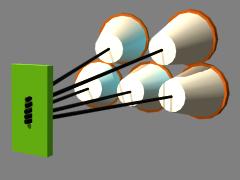
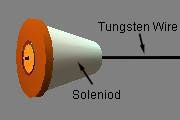
High speeds cause smudging of the characters, as the print head must stop, fire the pins, wait for the pins to retract, then move the print head to the next colum before firing again. The less time there is involved between firing the pins means it reaches a stage where the pins have not fully retracted from the previous firing, which causes smudging as the print head is moved to the next column position. The character printing speed restriction is thus based on the physical mechanism being used to print the characters.
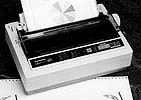
Fig 6.48: Panasonic KXP-1150 Dot Matrix Printer © Panasonic
Daisy-Wheel Printers
Daisy wheel printers use a spoked wheel with characters placed at
the end of each spoke. A print hammer is used to strike the
desired character onto the ink ribbon and then the paper.
The spoked wheel of characters is rotated around until the desired character is under the print hammer, then the print hammer is fired which strikes the character, pushing it against the ink ribbon, and onto the paper, creating the character.
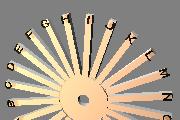
Fig 6.49: Daisy Wheel Print Head
Different fonts are available by changing the print wheels. Daisy wheel printers were commonly found in typewriters. Below is an image of the Brother electronic typewriter which uses a Dasiy Wheel print mechanism.
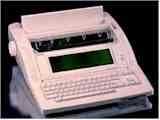
Fig 6.50: Brother WP-1700MDS Daisy Wheel printer © Brother
Laser-Jet Printers
Laserjet printers are very common today. Most laserjet printers
have been based on the Canon Print Engine, which
originally ran at 4ppm (pages per minute), with a resolution of
300dpi (dots per inch).
Refinements to the print engine has increased the speed of printing and resolution of the print quality.
How the LaserJet works
The diagram below shows a simplified canon laser print engine.
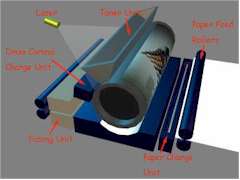
Fig 6.51: Canon Laserjet Print Engine
The diagram below shows a laser scanner assembly from a canon based engine.
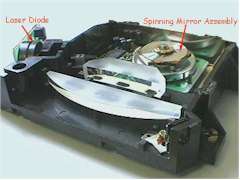
Fig 6.52: LaserJet scanner assembly
The following diagram below shows a Hewlett Packard Series 5 Laserjet printer.
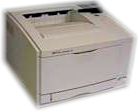
Fig 6.53: HP LaserJet 5 Printer
Ink-Jet Printers
Ink-Jet printers have become the defacto standard for home
computers and low cost printing. They offer good quality at an
affordable price.
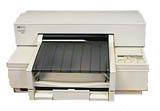
Fig 6.54: HP DeskJet 680c Printer
Thermal Printers
Thermal printers are generally used in low cost printers and fax
machines.
Some types use a silvery grey paper, which is an aluminium surface coating. When the print head burns away this layer, it exposes a dyed layer underneath.
One application for thermal printers is the production of bar codes. The diagram below illustrates a bar code thermal printer.
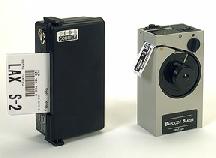
Fig 6.55: Cognitive Solutions PD1520 Thermal Printer © Cognitive
Solutions
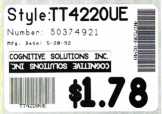
Fig 6.56: Cognitive Solutions Thermal Printer Label © Cognitive
Solutions
Summary
The two main classifications of printers are impact and
non-impact. In impact printers, the print head makes physical
contact, using force to create the characters.
Examples of impact printers are dot-matrix and daisy wheel printers. As new technology is developed, these mechanical type printers are becoming increasingly outdated.
Examples of non-impact printers are laserjet and inkjet. These printers offer superior quality and greater options (in terms of the number of fonts and quality of graphic pictures).
Home | Other Courses | Notes
| Tests | Videos
© Copyright Brian Brown, 1992-2001. All rights reserved.