Intrauterine Growth Restriction* Section of Neonatology, Neonatal Clinical Research Center, and the Division of Perinatal Medicine, Department of Pediatrics, University of Colorado School of Medicine, Denver, CO.
Intrauterine growth restriction (IUGR) is defined as a rate of fetal growth that is less than normal for the growth potential of a specific infant. An enormous number and variety of established and possible causes have been identified. Potentially, any aberration of biological activity in the fetus can lead to growth failure. For example, deficiency or insufficient action of any one of the factors that influence fetal growth (see "Factors Influencing Fetal Growth" in this issue), alone or in combination, could lead to IUGR. The most common identifiable cause is fetal undernutrition due to placental insufficiency. Although most placentas that have insufficient function probably have specific deficits in nutrient transport capacity (eg, decreased placental vasculature with resulting decreased uterine and/or umbilical blood flow, decreased number or function of specific nutrient transporters), a smaller-than-normal placenta alone is sufficient to limit fetal nutrient supply. Small placental size can be natural, pathologic, or simply relative. For example, a small mother generally cannot produce a large placenta because her uterus is small. Similarly, even a normal-size mother can have a relatively small uterus, and, therefore, produce a small placenta if she carries more than one fetus. Experiments of artificially decreased placental growth have shown that any such restriction leads to fetal growth delay, confirming the direct relationship between placental and fetal size and the primary causal role of the placenta in determining fetal growth. However, there is no obvious or known cause of placental growth failure in most cases of IUGR; the majority are idiopathic. The diagnosis, pathophysiologic etiologies and aberrations, maternal management, and fetal therapy of IUGR are significant issues that are far from being resolved. Recent evidence that growth failure during fetal life may result in lifelong health disorders has added a new urgency to understanding this complex disorder.
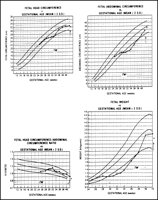
Traditionally, normal fetal growth rate was determined by comparing single anthropometric measurements of an infant shortly after birth with population-based growth curves constructed from single measurement data at birth in a large number of infants at different gestational ages. More recently, fetal growth curves have been developed from in utero serial ultrasonographic measurements of fetuses who subsequently were born at term in healthy condition and "normal" term baby anthropometric measurements according to both local and broadly based populations of newborns. Ultrasonograpically derived in utero growth curves have the advantage of being based on continuous rather than cross-sectional indices of fetal growth. Serial measurements of fetal growth can more accurately determine the effects of external influences on fetal growth, such as severe maternal illness and undernutrition. Figure 1  shows ultrasonographically derived fetal growth curves
with superimposed in utero growth data for a fetus whose
growth rate initially was limited by poor maternal health but
then was increased by improved maternal nutrition. Fetal
ultrasonographically derived growth curves also demonstrate
less of the mid-gestational exponential increase in fetal
growth rate that is typical of cross-sectional growth curves
derived from neonatal measurements at different gestational
ages. This observation supports the view that preterm birth
is not a normal outcome; the intrauterine growth of preterm infants
probably was affected adversely by the same pathologic factors that
led to the preterm birth (see following section). Thus, inaccurate
growth curves probably would be derived from cross-sectional anthropometric
measurements of preterm infants assessed at birth.
shows ultrasonographically derived fetal growth curves
with superimposed in utero growth data for a fetus whose
growth rate initially was limited by poor maternal health but
then was increased by improved maternal nutrition. Fetal
ultrasonographically derived growth curves also demonstrate
less of the mid-gestational exponential increase in fetal
growth rate that is typical of cross-sectional growth curves
derived from neonatal measurements at different gestational
ages. This observation supports the view that preterm birth
is not a normal outcome; the intrauterine growth of preterm infants
probably was affected adversely by the same pathologic factors that
led to the preterm birth (see following section). Thus, inaccurate
growth curves probably would be derived from cross-sectional anthropometric
measurements of preterm infants assessed at birth.
Most cases of fetal growth restriction represent only minimal growth delay. They are relatively natural, reproductively successful (though not perfect) adaptations to a modest reduction in nutrient supply to the fetus. Accordingly, IUGR generally is not a major cause of preterm delivery, and fetal growth rate and length of gestation are not related. However, the pathophysiologic processes causing severe IUGR can lead to preterm labor and preterm delivery. Thus, IUGR frequently occurs with a variety of maternal conditions that are associated with preterm delivery (Table
). It is not surprising, therefore, and important to note,
that the frequency of IUGR is inversely proportional to gestational
age. Recent reports suggest that in many neonatal intensive
care units, more than 50% of infants born at fewer than 26
weeks’ gestation demonstrate significant fetal growth restriction.
Established maternal conditions that cause both IUGR and preterm delivery include direct effects of very low maternal prepregnancy weight, prior preterm delivery, and cigarette smoking and indirect effects of very young or advanced maternal age and lower maternal socioeconomic status. IUGR related to maternal smoking and substance abuse may be due to reduced placental blood flow, inhibition of uteroplacental vascular development, or direct fetal toxicity. Nutritional, uterine, and vascular mechanisms may be common factors in very young and very old women who produce IUGR infants who often are also born preterm. Young, still-growing adolescent women appear less capable of mobilizing fat reserves in late pregnancy, apparently reserving them for their own continued development. Failure to mobilize such reserves can limit nutrient supply to the fetus and the rate of fetal growth. Racial differences in rates of growth restriction and preterm delivery have been well established. African-American women who were born in the United States have a two-fold greater incidence of both preterm birth and IUGR than do Caucasian United States women or African-American women who emigrated from Africa. Reasons for this are multifactorial and include nearly all of the generally associated risks and causes of IUGR and preterm delivery. In cases of multiple gestation, uterine and placental space-occupying anomalies (eg, fibroids), and polyhydramnios, stretch-activated mechanisms of uterine contractions probably induce preterm labor, leading to preterm delivery. These conditions also are associated with insufficient endometrial surface area for placental invasion and growth plus abnormal placental perfusion, which combine to restrict nutrient delivery to the fetus, thereby producing IUGR. In addition, poor placental growth and function limit placental supply of growth-promoting hormones to the fetus (eg, placental lactogen, steroid hormones, insulin-like growth factor [IGF]-I) and, because of abnormal rates and patterns of blood flow, limit effective maternal-fetal nutrient exchange. In cases of polyhydramnios, IUGR often is related to a primary fetal pathologic process such as fetal infection, anemia, cardiac failure, or neuromuscular disorder. Intrauterine fetal infections can limit fetal growth by directly damaging the fetal brain and neuroendocrine axis that support fetal growth via IGFs and insulin and by damaging the fetal heart, leading to diminished cardiac output, poor placental perfusion, and inadequate nutrient substrate uptake. Fetal infections and ascending infections of the membranes from the vagina also are associated with preterm delivery, most likely related to enhanced fetal supply of prostaglandins, which causes fetal and uterine production of various cytokines that are associated with or cause the onset of labor. Chronic placental and fetal infections also limit placental perfusion, in some cases by inhibiting nitric oxide production, which leads to uteroplacental vasoconstriction, placental insufficiency, and IUGR. Preeclampsia limits endometrial vascular support for growth of the placenta, leading to placental growth failure, fetal nutrient insufficiency, and IUGR. Fetal hypoglycemia, hypoxemia, and acidosis are usually present in such cases of poor placental development and perfusion. These factors lead to increased production of prostaglandins and the activation of labor-promoting cytokines, leading to preterm delivery. Many affected fetuses are delivered preterm to protect the mother from eclampsia or the fetus from hypoxic-ischemic injury.
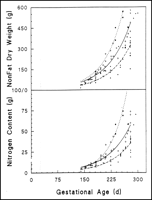
Fetal growth restriction can occur during any or all periods of gestation. During the embryonic period, growth occurs primarily by increased cell number (hyperplasia); in the middle of gestation, cell size also increases (hypertrophy) and the rate of cell division stabilizes. In later gestation, the rate of cell division declines, but cell size continues to increase. Thus, insults that limit fetal growth in early gestation result in global reduction in fetal growth. Insults in later gestation usually limit growth of specific tissues, such as adipose tissue and skeletal muscle, that primarily develop during this period and spare other organs and tissues, such as the brain and heart, whose growth rate already has slowed. Water Minerals Nitrogen and Protein
Glycogen
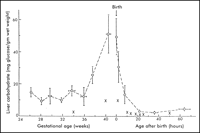
Glycogen content is markedly reduced in IUGR infants, both in the
liver and in the skeletal muscles (Fig. 3 Adipose Tissue
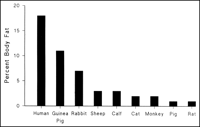
In human IUGR fetuses at term, fat content may be less than 10% of body weight. Causes include decreased fatty acid, triglyceride, and glucose supplies from the smaller placenta as well as a simultaneous insulin deficiency that limits fat synthesis because of decreased stimulation of fatty acid synthase in adipocytes. Because fat has a high energy content of 9.5 kcal/g and a very high carbon content of approximately 78%, decreased fat content in IUGR fetuses leads to large decreases in energy and carbon accretion rates. Total Energy Balance and Tissue Mass
Diagnosis It is difficult to diagnose IUGR antenatally. Serial maternal physical examinations are the most common clinical means of assessing fetal growth, but this is very insensitive. Despite recent significant advances, serial fetal ultrasonography is not universally available, and the accuracy of size assessment can vary highly, depending on available equipment and operator experience. Additionally, prenatal gestational dating by maternal history may not be accurate. Not surprisingly, therefore, more than 50% of infants who have IUGR are not identified before birth. Once a decrease in fetal growth rate is suspected, the current diagnostic approach to determining the severity of IUGR includes serial ultrasonographic evaluation of fetal growth rate and body proportions combined with Doppler velocimetry of the uterine, placental, and fetal circulations. Doppler velocimetry measurements particularly have provided increasingly accurate prognostic evidence of deteriorating fetal condition and impending death. Chronic fetal distress resulting from placental insufficiency, hypoxia, and ischemia (with or without acidosis) is associated with increased systolic-to-diastolic arterial flow velocity (amplitude) waveforms, indicating vascular resistance and reduced systemic flow in the fetal descending aorta and umbilical artery. Various ratios of systolic-to-diastolic flow velocity waveforms have been used, including the systolic-to-diastolic ratio, the systolic-diastolic/systolic ratio (resistance index), and the systolic-diastolic/mean ratio (pulsatility index). Ratios or indices greater than two standard deviations from the mean are associated with IUGR; reversed or absent diastolic waveforms represent severe fetal hypoxia and increased risk of fetal death. The most severely affected IUGR fetuses that have the greatest risk of death demonstrate absent or reversed diastolic flow in systemic fetal arteries plus increased umbilical venous pulsation and reversed flow in the abdominal vena cava. Interestingly, these same fetuses often have decreased cerebral (internal carotid artery) flow velocities, indicating increased cerebral blood flow. This flow pattern has been interpreted as one way in which brain growth is spared as body growth rate slows following placental ischemia and/or placental growth failure. Doppler waveform abnormalities usually precede less specific signs of fetal distress, such as abnormal changes in fetal heart rate that are spontaneous or in response to oxytocin challenge. The fetus also should be examined ultrasonographically for anatomic abnormalities that indicate congenital malformations, genetic syndromes, and deformations. The amniotic fluid index is useful for identifying oligohydramnios (a risk factor for congenital anomalies), severe IUGR with reduced urine production, pulmonary hypoplasia, variable decelerations from cord compression, and intrauterine fetal death in as many as 5% to 10% of affected pregnancies. Future Diagnostic Modalities New diagnostic techniques to assess the severity and timing of fetal pathophysiologic changes in severe IUGR hold great promise. Current examples include magnetic resonance imaging, Doppler measurements of blood flow to specific organs, cordocentesis, and neurologic and neuromuscular response to vibroacoustic stimulation. A goal of such potential studies should be to assess whether the earliest detected changes in fetal growth rate and pathophysiology associated with IUGR are, in fact, as serious and indicative of future handicap as careful postnatal follow-up studies have indicated. Such findings might encourage more aggressive diagnosis and early treatment studies to prevent the more severe forms of IUGR. Antenatal Management for Prevention Antenatal Management for Amelioration of Existing IUGR Monitoring the Pregnancy With Suspected or Confirmed IUGR Most obstetricians avoid labor when combined fetal surveillance techniques show severe IUGR and evidence of severe chronic distress. Such signs include absent or reversed diastolic flow in the fetal aorta, increased pulsations and/or reversed flow in the umbilical veins, and a low biophysical profile score. These conditions usually are associated with nonreactive NST results and a flat baseline fetal heart rate variability pattern. Such fetuses often deteriorate rapidly during labor and quickly show signs of acute distress, with worsening fetal bradycardia patterns, loss of beat-to-beat variability, and decreased movement. Prior to emergency delivery, the mother usually is given oxygen to breathe. More recently, saline amnioinfusion has been used, particularly in the presence of oligohydramnios. Amnioinfusion may decrease the incidences of meconium-stained fluid, variable fetal heart rate decelerations, end-stage bradycardia, and acute fetal acidosis. Generally, the mild-to-moderately affected IUGR fetus should be left in utero unless repeated evaluations show progressively worsening IUGR and signs of fetal distress. Decisions to deliver these fetuses to prevent fetal death should be tempered by the difficulties of accurately diagnosing the worsening of fetal condition and successfully managing all potential neonatal problems of a preterm infant. Frequent consultations between maternal-fetal medicine specialists and neonatologists should be standard, adding thought and data from repeated evaluations to appropriate caution regarding a decision for early delivery. This is especially true for the earliest (<30 weeks’ gestation) and smallest (<1,000 g) of these fetuses.
Recent epidemiologic evidence indicates that obesity, insulin resistance, diabetes, and cardiovascular disease are more common among adults who were smaller-than-normal at birth because of IUGR, particularly those who had a high placental-to-fetal weight ratio. A variety of animal studies support this concept, including the greater incidence of obesity, glucose intolerance, plasma lipid abnormalities, and hypertension in offspring whose mothers were fed a low-protein diet during pregnancy. These examples indicate that certain adult pathologies may be unavoidable consequences of environmentally imposed conditions, such as severe and prolonged fetal undernutrition, that lead to fetal growth restriction to ensure fetal survival. These conditions may represent examples of what Lucas refers to as metabolic "programming," in which an insult applied at a critical or sensitive stage in development may result in a lasting effect on the structure or function of the organism. IUGR, therefore, is increasingly viewed as an adaptive physiologic process, even though it can produce adverse fetal, neonatal, and adult consequences. Mechanisms responsible for these later life morbidities in adults whose growth was restricted in utero are not yet clearly established. There is some evidence of diminished pancreatic growth and development, which might present in later life as pancreatic insufficiency when the adult starts eating a diet rich in simple carbohydrates and lipids. Peripheral insulin resistance may develop in the same way, and hypertension in adulthood may be the result of altered adrenal development in response to IUGR. If these epidemiologic and supportive animal data hold true, there is even more reason to focus attention on early fetal growth failure.
Supported in part by NIH Grant MO1 RR00069, HD20761, and DK52138.
|

 ····);
average-for-gestational age infants (• —);
small-for-gestational age infants (
····);
average-for-gestational age infants (• —);
small-for-gestational age infants ( ----). From Sparks JW, Cetin I. Intrauterine growth and
nutrition. In: Polin RA, Fox WW, eds. Fetal and
Neonatal Physiology. 2nd ed. Philadelphia, Pa: WB
Saunders; 1998:272.
----). From Sparks JW, Cetin I. Intrauterine growth and
nutrition. In: Polin RA, Fox WW, eds. Fetal and
Neonatal Physiology. 2nd ed. Philadelphia, Pa: WB
Saunders; 1998:272.