 |
|
|
|
|
|
|
|
|
|
|
|
|
|
|
|
|
|
|
|
|
|
|
|
|
|
|
|
|
|
|
|
|
|
|
|
|
|
|
|
|
|
|
|
|
|
David Mazer |
|
|
|
Motivations and Career Aspirations |
|
|
|
 |
|
|
|
I was born with racecars in my blood.� While 6 months pregnant with me, my mother was still roaring around racetracks all along the Eastern US with my father and the Porsche Club of America.� Friends joked that I would pop out with a helmet and gloves on.� As there tends to always be a bit of truth in humor, they were not far off.� |
|
|
|
|
|
My younger years were spent going to different racetracks and seeing many Porsche racecars in all their forms.� I was exposed to an environment that few others could boast at such an early age. By the time I was five, I could identify every model of Porsche, new or old that I encountered and was able to distinguish between a turbo and a "regular" Porsche.� Understanding the distinction between a turbo-charged and a naturally aspirated engine was just the beginning of my fascination with vehicle performance technology.� Even today, this unique and unusual focus continues to drive my pursuit of a career in motorsport engineering. |
|
|
|
|
|
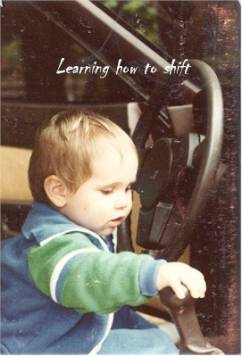
Less than one year old, and already fascinated by the mechanics of automobiles |
|
|
|
 |
|
|
|
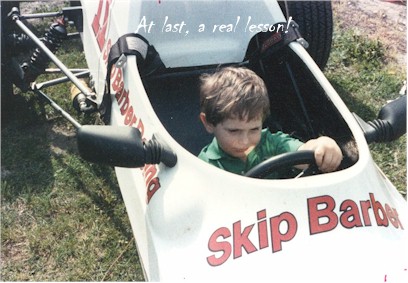
Five years old, and checking out a Skip Barber open-wheeled racecar at Lime Rock Park, Connecticut, USA |
|
|
|
During my early teenage years, my father decided to start racing in the Sports Car Club of America (SCCA) racing series on a national level.� Of course, such an undertaking required a dedicated and motivated pit crew.� This turned out to be an opportunity for me to take the skills I had already learned from being at the track with my father for so many years and utilize them in a competitive setting.� My duties ranged from taking lap times, to taking tire temperatures, to checking wheel torques, to general car maintenance and preparation.� This experience gave me a chance to work with others in a high-energy environment towards achieving the same goal, to win with a better prepared car and driver! |
|
|
|
 |
|
|
|
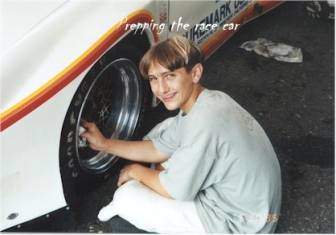
����������������������������������� ��������� Here I am working on my Father?s SCCA 914 racecar at age 14 |
|
|
|
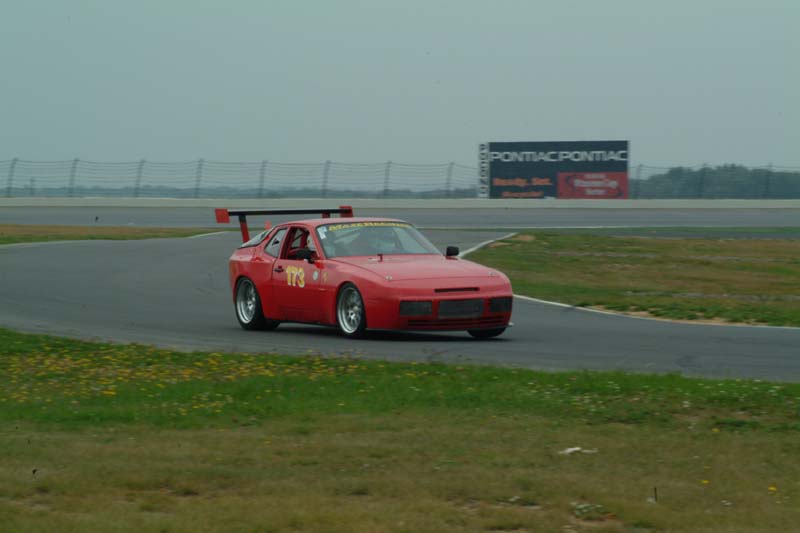
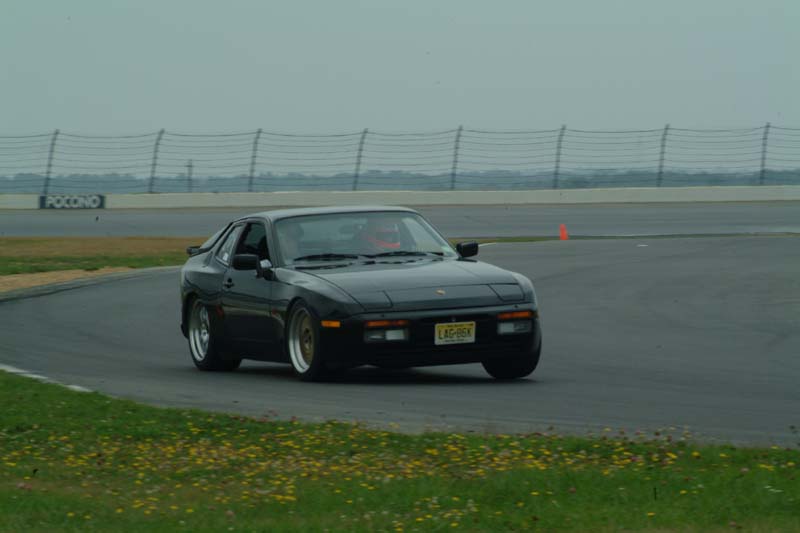
Ever since my first experience on the racetrack, my passion for driving has only further fueled my interest to learn and understand the technology of racing.� Presently, my father and I are both active members of the PCA, attending driver's education events and occasionally an autocross event.� We both pilot Porsche 944 Turbos, but his is a little faster than mine, for now.� |
|
|
|
 |
|
|
 |
|
|
|
|
My 1986 944 Turbo at Pocono Raceway |
|
My Father's 944 Turbo Racecar, which I drive as well |
|
|
|
|
|
Track driving has given me a much greater respect for these machines.� It introduces a whole new dimension to racecar design, when you have to approach it from the driver's seat. |
|
|
|
 |
|
|
|
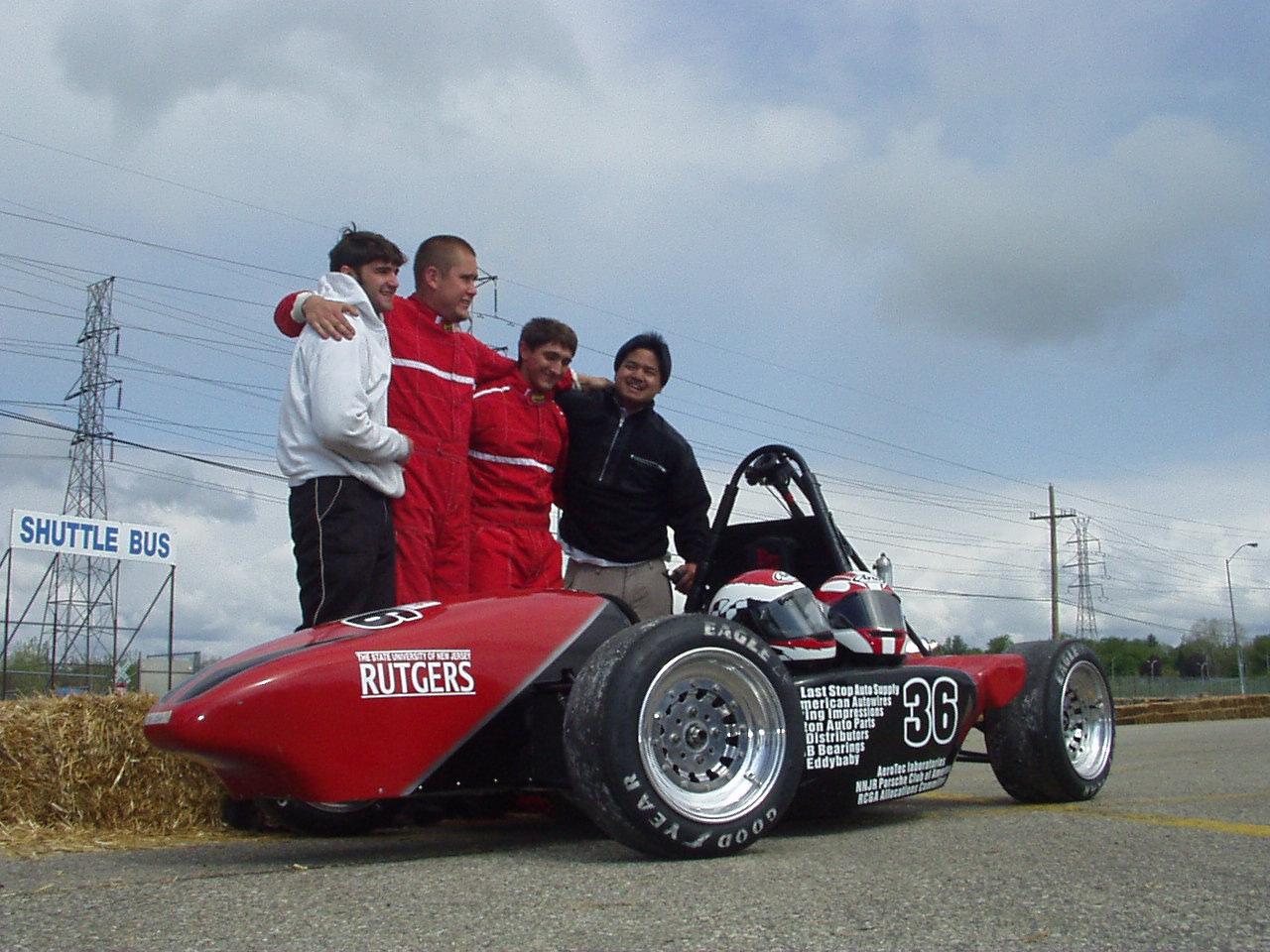
At the end of this year, I will have helped Rutgers Formula SAE design and build four very competitive racecars from scratch for the International Formula SAE Competition. That's me, 2nd from the right. |
|
|
|
When it was time to go to university it seemed appropriate to study Mechanical Engineering to further my understanding of racecar component design and its effect on performance.� When I learned that I could design and build racecars with the Formula SAE program at Rutgers University, I knew that this was where I needed to be.� |
|
|
|
Holding various positions of involvement within the FSAE organization such as Project Manager, Chief Design Engineer, Engine Team Leader, Vice President, Primary Competition Driver/Test Pilot, and Team Welder have all exposed me to many valuable aspects of motorsport engineering.� |
|
|
|
 |
|
|
|
From design, to fabrication, to testing, to management, I have contributed to the evolution of a racing program from many positions that most professionals don't have the opportunity to experience.� This has helped to broaden my perspectives on racecar design and team interaction. In addition to leadership skills, I received a broad range of positive experiences that have fueled my growth and desire to find my crucial niche in the motorsports industry.� |
|
|
|
|
|
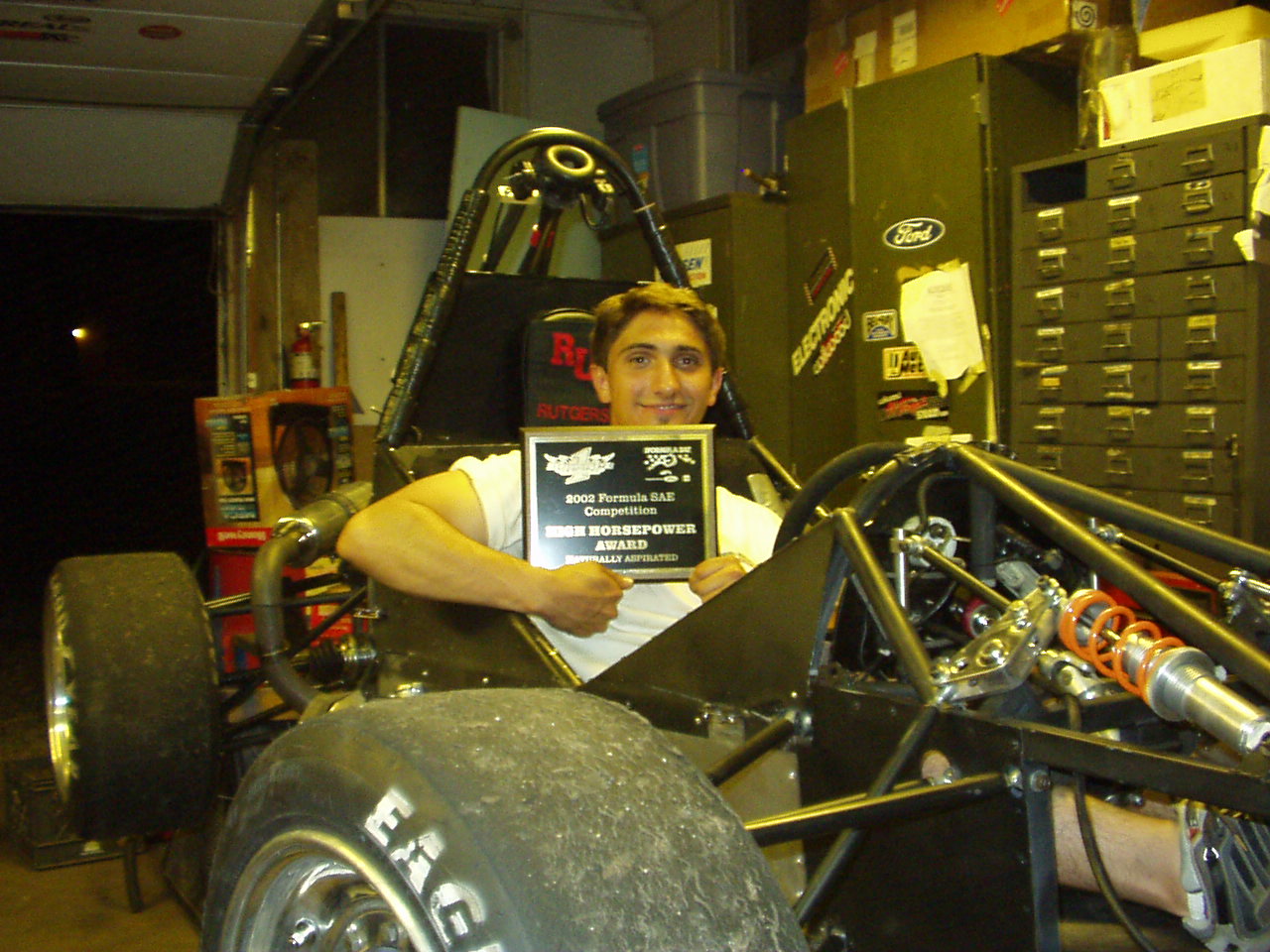
My engine design won the 2002 Dynojet "Highest Naturally-Aspirated Horsepower" Award from among the 130+ teams that showed up to compete in Pontiac, MI. |
|
|
|
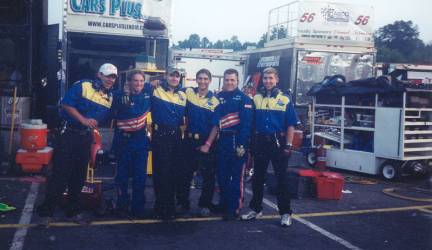
My ambition to become more involved in motorsport engineering has motivated me to research possible career paths in this industry.� Spending my summers in the heart of stock car country has given me another taste of what engineering in the racing industry is all about.� Two summers ago, I enrolled myself in a crew school where I learned stock car fabrication, preparation, and engine and chassis tuning, as well as crew duties, including "over-the-wall" responsibilities.� All of these skills were put to the test at three different Hooters Cup races at which a group comprising myself and five others performed all the required crew duties.� |
|
|
|
 |
|
|
|
Here I am with the rest of the crew at a Hooter's Cup Race in Hickory, North Carolina. That's me 3rd from the right. (Summer 2001) |
|
|
|
|
|
Last summer (2002) was spent working with Tex and Mike Powell of Tex Racing Enterprises in NC; a company that supplies transmissions and differentials, among other racing commodities, primarily to stock cars and Trans-Am series racers.� Working with the Powells, I got a real taste of what the racing supply market is like as well as the tasks required of an engineer in this environment.� Working on projects such as bellhousing deflection testing, pinion-bearing deflection testing, brake bed-in dynamometer design, rendering transmission components in CAD, and component development for their new transmission prototype have all exposed me to some of the engineering responsibilities in a racing supply market. |
|
|
|
Thriving on the challenges of innovation, I strive to one day become the technical director of motorsports for a company on the leading edge of research and development of new technologies in this field.� In pursuit of my goals, I plan to spending time working with both factory supported and independent race teams in order to gain additional practical engineering experience. |
|
|
|
As I keep searching for what it means to be an engineer in the racing industry, my enthusiasm to become more involved in this field continues to grow.� I have a love for working with other passionate and motivated people in a competitive and challenging environment.� I enjoy the management, research, design, and testing aspects of engineering, and I don't mind getting my hands dirty in the pursuit of knowledge.� These characteristics, as well as my passion for motorsport, continue to drive me to pursue advanced study of engineering within this field. |
|