
Taraxacum officinale
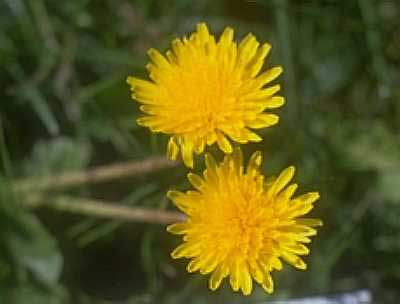
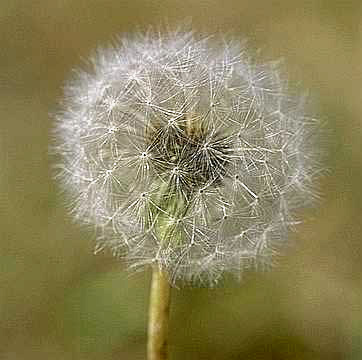
Sometimes called: lion's-tooth, cankerwort, Irish daisy, monk's-head,
priest's-crown, puffball, blowball, milk-gowan,
witch-gowan or yellow-gowan
Origin: non-native
What is it? A common flower of lawns and dry fields
Flower: looks like 1 large yellow flower (1-2" in diameter), but is actually a
composite of many tiny flowers clustered together (a characteristic of the
sunflower family)
Height: 2-18"
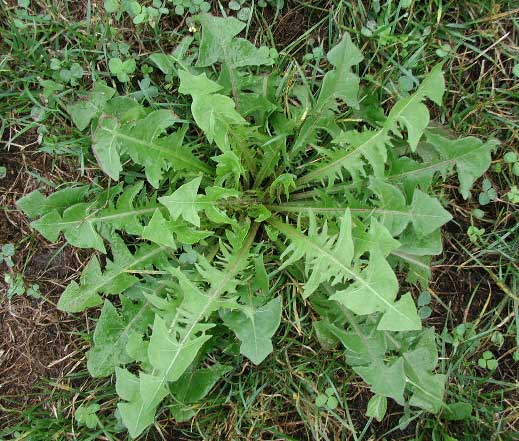
Leaf: a rosette of simple basal leaves with deep lobes and sharp teeth
Bloom time: spring-autumn (but heaviest in spring)
cycle: cool-weather perennial
Set aside your preconceived ideas. The dandelion is actually a pretty cool flower. I might even go so far as to call it my favorite flower!
The dandelion is responsible for much water contamination, as people treat lawns with
chemicals in generally unsuccessful attempts to eradicate it. But when one considers its flower as a flower and not simply as a weed, some people actually consider it to be beautiful. The flowers close at night (just before twilight and reopen each morning at dawn.
With only a long single taproot for roots, the leaves of this ingenious plant help it outcompete the plants around it by funneling water down the leaves directly onto the root at the center. Thus the dandelion can survive extremely arid conditions by maximizing water intake.
From ancient times to the present, common dandelion has been considered one of the most delectable of garden vegetables. People have carried the seeds from place to place for cultivation since before written history. According to legend, Theseus ate a dandelion salad after killing the
Minotaur. Romans ate the plant as did the Gauls and Celts when the Romans invaded the North. The Anglo-Saxon tribes of Britain and the Normans of France continued to use the plant as food and as medicine to control scurvy and as a diuretic; it was planted in the medicinal gardens of
monasteries.
The dandelion was introduced to the U.S. by early settlers from Europe because of its value as a tonic. Long winters without fresh vegetables often resulted in malnutrition, but the vitamins derived from consuming Dandelions were a life saver. The root could be found even in winter and the juice extracted and given as a tonic. As the scientific name Taraxacum officinale implies, this plant was considered an "official" remedy. It was, and is, an effective treatment for vitamin A and C deficiency. It is also a diuretic and mild laxative. Its use was so prevalent in Puritan times that dandelion seed, along with seed of other essential plants, was carried to the Colonies as part of every goodwife's garden supply. More than most "weeds," therefore, dandelion has been spread by deliberate cultivation as a food.
Modern uses:
Dandelion is a rarity in that humans can eat all parts. The young leaves picked before the flower forms make a healthful and delicious green or can be boiled like spinach. The roots are peeled and sliced for salads or can be roasted or fried. The yellow blossoms can be eaten outright (although they are slightly bitter and momentarily turn your saliva a startling yellow). The
blossoms can be deep-fried, mixed into pancakes, or made into wine. One can even feast on the ripe seeds, minus the plumes. Dandelion leaves can be made into a healthful tea, and the roots can be dried and ground, like chicory, for a coffee-like drink; dandelion is indeed type of chicory (Cichorium) within the sunflower family (Asteraceae).
Dandelion is an exceptional source of iron, copper, potassium, and other minerals. It contains 0.5% phosphorus - half again as much as spinach, and twice as much as cabbage. It is comparable to spinach and cabbage in calcium content (1.6%) and magnesium (0.5%). It is also a good source of Vitamins A and C. Improved large-leaved dandelion varieties are available
specifically for cultivation as an annual fall and spring vegetable. Imagine your neighbors' delight when you plant a plot of this herb in your vegetable garden!
backyard wildflower page
main nature page