
Rudbeckia hirta
|
|
|
|
|
|
|
|
|
|
|
|
|
|
|
|
|
|
| Black-eyed Susan Rudbeckia hirta |
|||||||||||||||||
|
|||||||||||||||||
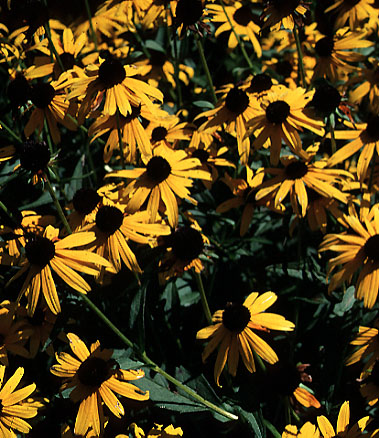
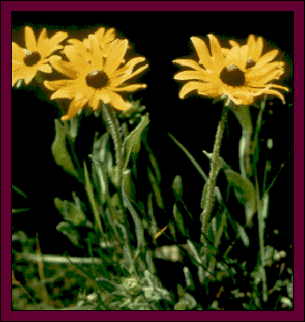
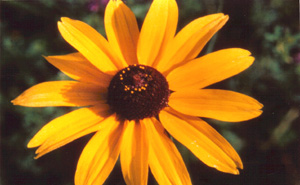
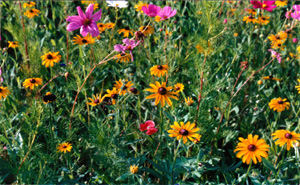
| Also known as Brown-eyed Susan, this wildflower has three prominent veins on each leaf and a characteristic winged leafstalk clasping each erect, straight stem. This native biennial forms a rosette of leaves and the first year, and its unmistakeable flowers the second. The most widely-recognized member of this North American genus (Rudbeckia), it is a member of the Sunflower/Daisy family (Asteraceae). Originally a native prairie plant, it is now found in just about any habitat, including roadsides and disturbed fields. Its seeds make an abundant food source for goldfinches and House finches. The species name hirta, Latin for "hairy" or "rough," refers to the plant's hairy nature (no one knows who "Susan" was). Black-eyed Susan is also a host plant for the black-with-orange striped, Silvery Checkerspot caterpillars. The caterpillars camouflage themsleves with bits of the flower secured by silk while feeding on the brown centers of the Black-eyed Susan. | |||||||||||||||||
|
|||||||||||||||||
|
|||||||||||||||||
|
|||||||||||||||||
| Click your back button to return to a specific page, or ... | |||||||||||||||||
| < Back to the main nature page | |||||||||||||||||
| Home | |||||||||||||||||