Broadcasting and Cable
February 24, 2003
How Networks Can (and Do) Stifle Producers
[Counterpoint]
By Stephen J. Cannell
Editor's Note: On Jan. 20, in his bimonthly column, Broadcasting & Cable Editor in
Chief Harry Jessell argued that, despite consolidation of ownership and other rule
changes, there's no evidence that Big Media has affected the diversity of what television
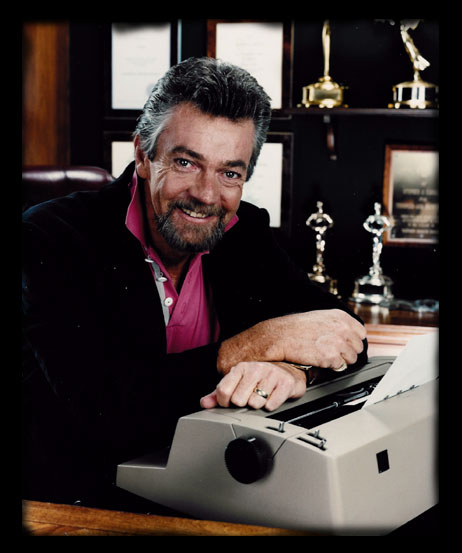
offers viewers. In the following, noted television producer Stephen J. Cannell, who
produced such hits as The Rockford Files, The A-Team and Baretta among many others,
disagrees, forcibly, and says fin-syn rule changes that allow the networks (rather than
outside studios) to own all the programming they air inevitably leads to blandness.
It is obvious from reading the column by Harry Jessell ("Voices and Choices,"
Jan. 20, 2003) that he has never had the experience of trying to guide a new television
program over the deadly shoals and sharp rocks of network development. He sees the
upcoming hearings to review the remaining station-ownership rules as a matter for the
Justice Department, not the FCC, stating that he will need to see some "concrete
evidence that the extraordinary amount of media consolidation over the years has
significantly diminished the good old marketplace of ideas."
I will try to enlighten him.
To begin with, I created or co-created over 40 prime time network shows from 1973 to 1999.
In 1981, I formed the Cannell Studios, a solely owned, stand-alone company with no studio
or financial partnerships.
The Cannell Studios became the third-largest supplier of television programming in
Hollywood, until I was forced to sell because of the FCC's repeal of the Financial
Interest and Syndication rules.
I am not here to quibble over the loss of my life's dream. The FCC commissioners told me
that I had nothing to fear from the repeal of these rules. But it soon became clear that
it was impossible to sell programs to my competitors.
Mr. Jessell sees no evidence of blandness of content caused by consolidation. I beg to
differ.
 In 1976, while under contract to Universal Studios, I wrote a pilot for ABC called The
Rockford Files. The script was about a detective who was the ultimate pragmatist. When
threatened by heavies, he would simply quit. He also insisted on being paid, often arguing
about his fee with prospective clients. I thought all of this made the character very
fresh and funny. ABC, on the other hand, hated the script, refusing to let us photograph
it with these elements in place. Since Universal, not ABC, owned the screenplay, we held
our ground and walked away. We eventually added Jim Garner and set it up at NBC, where it
went on to become a huge, creative and Nielsen hit, named the best detective show in
television history by TV Guide in 2001. In 1976, while under contract to Universal Studios, I wrote a pilot for ABC called The
Rockford Files. The script was about a detective who was the ultimate pragmatist. When
threatened by heavies, he would simply quit. He also insisted on being paid, often arguing
about his fee with prospective clients. I thought all of this made the character very
fresh and funny. ABC, on the other hand, hated the script, refusing to let us photograph
it with these elements in place. Since Universal, not ABC, owned the screenplay, we held
our ground and walked away. We eventually added Jim Garner and set it up at NBC, where it
went on to become a huge, creative and Nielsen hit, named the best detective show in
television history by TV Guide in 2001.
If this had happened today, I would have most likely been working for ABC or a Disney
production arm. Once the disagreement over content occurred, I would have been replaced,
and another writer working under network supervision would have turned my screenplay into
dust.
Another example: In 1990, Steve Kronish and I created a pilot idea, using as the template
a personal friend of ours who was the commissioner of police in Rye, N.Y. Our friend was a
short, round, Italian bundle of energy with a pixie smile and a totally unique way of
doing police work. We sold the idea to CBS and wrote a screenplay called The Commish. CBS
loved the script and ordered the pilot, "subject to casting." It soon became
clear that they did not want a short, round, middle-age character actor in the title role.
They wanted a handsome Italian, several times mentioning Jack Scalia (a fine actor but, in
our opinion, all wrong for the part).
I brought a succession of character actors in to read for CBS. The list ranged from
Academy Award winner Ned Beatty to a brilliant newcomer named Michael Chiklis. We missed
the pilot season and were still arguing well into the following year. Steve and I were
determined to preserve our vision. Finally, I suggested to CBS that we not do the project.
They agreed.
The Cannell Studios, not CBS Productions, owned the script. One year later, Steve Kronish
and I were able to set up The Commish at ABC with Michael Chiklis attached to star. The
series was programmed and became the time-period winner, surviving on ABC for five
seasons. Had the current rules been in effect, I would have been working for CBS from the
start. They would have cast whomever they wanted, and Steve's and my content vision would
have been ignored.
If all this reads like ancient history, let's fast-forward. My final example is not a show
from the Cannell Studios, but The Sopranos, created by David Chase. This project was
originally written for Fox. When they "didn't get it," it was unsuccessfully
shopped at all the other networks.
In view of my previous stories, you can imagine why that show never found its way onto the
air. The reasons all of the networks gave not to do it are all too familiar to those of us
who create content for network television. "Does Tony Soprano really have to be a
middle-age, overweight, Italian on Prozac? Can't he be younger and better-looking? Has
anybody got Jack Scalia's phone number?" Since Brillstein-Grey owned David Chase's
script, it was able to move The Sopranos to HBO, where it went on to redefine the face of
television.
The aforementioned shows all managed to survive network meddling and demands because the
underlying rights were owned by other entities. How many fresh, innovative ideas have been
destroyed by these now unregulated, vertically integrated monoliths? My guess is plenty.
But take heart, America. We can at least sit back and enjoy all this new, low-cost,
network-spawned reality television.
Not a content issue? Get serious, Mr. Jessell. |

