 |
| Info On Lanzarote, The Island |
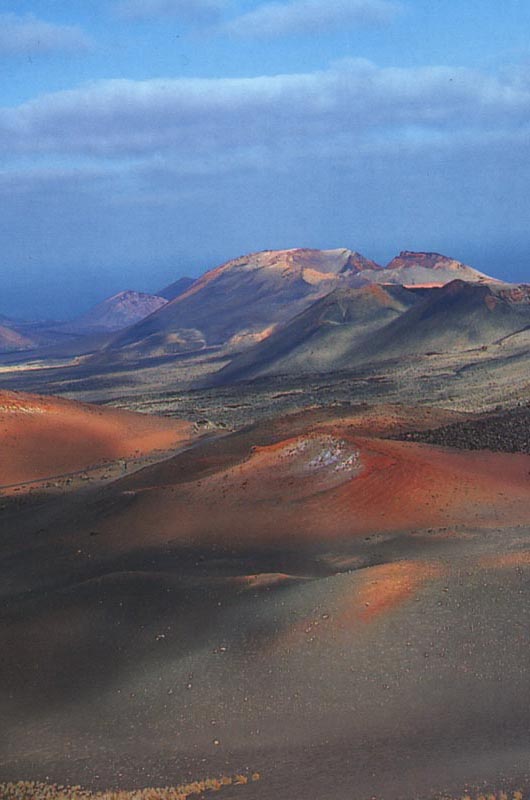
| Lanzarote is the most easterly of the seven major Canary Islands and lies in the Atlantic Ocean only some 100 km (60 miles) from the coast of Africa and 1.000 km from the Iberian Peninsula. Lanzarote, including the small islands of La Graciosa, Alegranza, Monta�a Clara, Roque del Este y del Oeste, covers 900 km� running 60 km north to south and only 20 km at its widest point. Lanzarote harbours seven municipalities: Arrecife (the capital), Teguise, Har�a, San Bartolom�, T�as, Tinajo and Yaiza with an official population of nearly 100.000 inhabitants, mostly residing in the south-central part of the island. Lanzarote is named after a Genoese navigator called Lancelotto Malocello who arrived on the island during the second half of the XIV century opening the way to successive expeditions of French, British and Spanish sailors and merchants. Previously the isles were known as the Fortunate Islands Fishing and agriculture once formed the basis of the island�s economy but have since been overtaken by the excellent quality of its tourism industry. Amongst the most outstanding attractions are the Art, Culture and Tourist Centres run under the auspices of the insular Council. The world famous artist C�sar Manrique's sensitive response to Lanzarote�s unique geography and people was instrumental in creating a pervasive artistic identity throughout the island. Great care has been taken in preserving its historical and artistic heritage, its monuments and characteristic houses, its local festivals and popular customs... in short, all the expression of its culture and folklore. Places Of Interest The National Park of Timanfaya is a volcanic field where visitors can appreciate a great variety of geologic phenomena as well as a large biological mix of some 180 different plant species. The C�sar Manrique Foundation is the island�s cultural centre par excellence that has won international recognition , not only because it houses some of the work of the world famous artist himself. The Museum of Contemporary Art is located in Arrecife, in the San Jose�s Castle, a fortress built between 1776 and 1779 by King Carlos III. Jameos del Agua, one of the most interesting galleries of connecting caves and underground grottoes in the world lies to the north of Lanzarote, at the foot of the volcano Monte de la Corona which erupted around 3.000 years ago. El Golfo -the Gulf- is the name of the crater ( today reduced to half of its original size) with a green lagoon, colouring caused by the algae that inhabit its waters. Mirador del R�o. This unique lookout point is located in the northern part of the island, on top of a cliff, 479 meters above sea level. The Cactus Garden is one of C�sar Manrique's last works. The artist turned an old quarry into an impressive cactus plantation. Teguise, the capital of Lanzarote up to 1852, has become one of the most important cultural and tourist centers of the island. Santa B�rbara Castle, now the Museum of Emigration, sits on the Guanapay mountain, to the east of Teguise. It was built in the 16th century as a watchtower for the coast. |
|
 |