 |
|
|
|
|
|
|
|
|
|
|
|
|
|
|
|
|
|
|
|
|
|
|
|
|
|
|
|
|
|
|
|
|
|
|
|
|
|
|
|
|
|
|
|
|
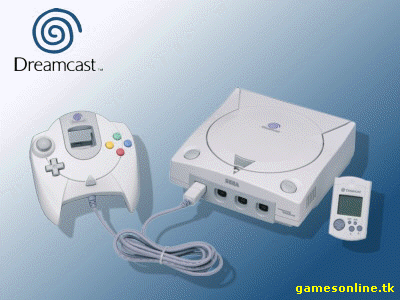
Sega Dreamcast |
|
|
|
 |
|
|
 |
|
|
|
|
|
|
|
 |
|
|
|
Alot of people don't give much notice to Sega these days. But with good reason. All those people that supported the Genesis back during the 16-bit era were greatly disappointed by a number of decisions that Sega made. |
|
|
|
|
|
1989 Any hardcore gamer can admit that Sega got off to a reletively great start. The Sega Master System managed to hold its own against Nintendo's mighty Nintendo Entertainment System and the Sega Genesis was a very formidable contender against Nintendo's Super NES. However, all was not well with Sega. |
|
|
 |
|
|
|
|
|
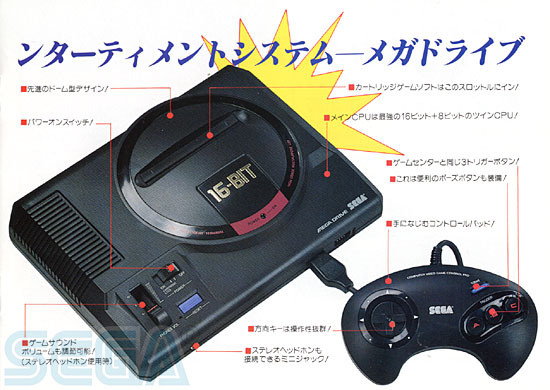
This is the original Sega Genesis. First ever 16-bit console also. (Did you know that Sega's name is NOT Japanese? Its actually two english words combined: SErvice GAmes....get it?) |
|
|
|
|
|
|
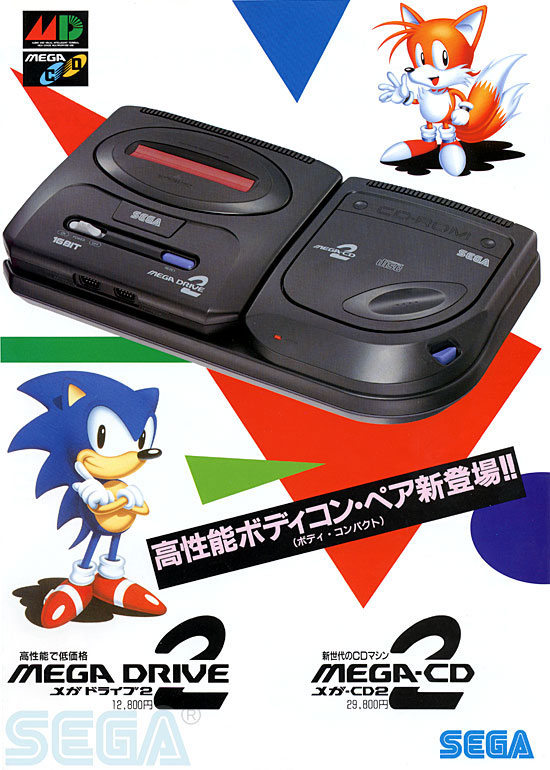
This is the 2nd Generation Sega CD attached to the Genesis 2 unit. Also the first big failure Sega had. |
|
|
|
|
|
1992 Sega's success with the Genesis went to there head and thats where things changed for the worse. This is about the time that the Sega CD was born. Sega's intentions with this piece of hardware were noble. The massive storage space of the CD-ROM and the much improved picture & sound were things that they needed to win the war with Nintendo. Sadly the third-party developers used the storage space for FMV (Full Motion Video) games that basically sucked, thus bringing failure to Sega's doorstep. |
|
|
|
 |
|
|
|
|
|
 |
|
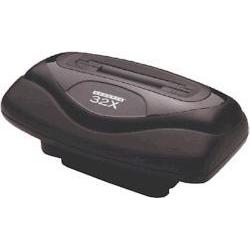
1994 Next came the 32X. This was designed to turn the Genesis, with or without the Sega CD attatchment, into a full fledged 32-bit machine. Again, its a great idea in theory but doomed by third party support. This launch was better done by Sega however due to some great games that took advantage of the hardware (for example: Virtua Fighter fully 3D). But durning this time period, Nintendo was launching its own mega-success Donkey Kong Country therefore overshadowing the 32X drastically. |
|
|
|
|
Sega 32X 32-Bit enhancement for Genesis |
|
|
|
|
|
|
 |
|
|
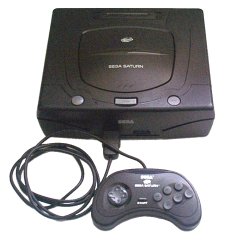
1995 Then came a new beginning for Sega. The Saturn. This system may have been yet another failure but this is where the "new" Sega started showing itself. It had innovative games and tremendous power (eight 32-bit CPUs vs. the PS1's one 32-bit CPU). There was even an pre-launch rumor stating the the cart slot on the rear of the system would play Genesis & 32X games while the CD-ROM would except Saturn & Sega CD games. Sadly all of these were cut for cost reasons which was a good idea since the system first hit retail for $499! This is the first console to truly introduce online play also. |
|
|
|
|
|
|
 |
|
|
|
New President. New Console. New Sega. The Sega Dreamcast was to be Sega's saving grace and with good reason. It was powerful, affordable, and innovative as hell. Check out the specs under the pic. I actually included a comparison to the Playstation 2 specs. This system took the best idea's from previous generations (such as four controller ports, and two memory card slots) and coupled it with custom technology. They didn't stop there though. They also addressed previous issues such as the difficult development of the Saturn by integrating Microsoft Windows CE into the system. Sega's last stand was also full of amazing games that were not only innovative and gorgeous but fun as well. |
|
|
|
|
Released 9/9/99 |
|
|
|
|
|
|
 |
|
|
|
 |
|
|
Sega Dreamcast - 1999 |
|
|
Sony Playstation 2 - 2000 |
|
|
|
|
CPU: 128-bit Hitachi SH-4
200MHz
Graphics: NEC Power VR DC
3 Million polygons per sec.
Sound: 45MHz Yamaha 32-bit
(more powerful than the entire PS1)
Memory:
16MB main RAM
8MB video RAM
2MB sound RAM
Storage: GD-ROM (1.0GB or 1024MB)
Release Date: 9/9/99
Launch Price: $199 |
|
|
CPU: 128-bit Sony Emotion Engine
300MHz
Graphics: Emotion Engine
6 Million polygons per sec.
Sound: 48KHz 32-bit
Memory:
32MB Rambus RAM
4MB video RAM (same as N64)
No sound RAM
Storage: DVD-ROM (about 4GBs)
Release Date: 10/26/00
Launch Price: $299 |
|
|
|