Welcome
Patriots
To my
Remembrance Day Page
Have You
Hugged a Veteran Today?
The Gift of
Remembrance
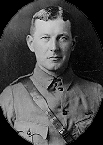
John McCrae was born in Guelph, Ontario
on November 30, 1872. As a youngster, John took
a keen interest in the military. At 14, he joined the
Hatfield Cadet Corps.
John began writing poetry while attending
Guelph Collegiate Institute. He graduated at age
16 and was the first Guelph student to win a
scholarship to the University of Toronto.
In 1894, John graduated with a Bachelor of
Arts degreen. He immediately enrolled at the
University of Toronto Medical School.
While attending university, John had sixteen
poems and short stories published in various
magazines, including Saturday Night.
Throughout this time, he continued to pursue a
career in the military.
On August 14, 1914, Canada declared war on
Germany. John rushed to join up. Being a
doctor, he was appointed brigade-surgeon to the
First Brigade of Canadian Forces with the rank of
Major.
In 1915, John was in the trenches of Ypres.
Some of the heaviest fighting of the war took place
there during the Second Battle of Ypres. On
April 22, the Germans used deadly chlorine gas in
a desperate attempt to overtake the Allies. Despite
the debilitating effects of the gas, Canadian
soldiers fought relentlessly to hold the lines. In the
trenches, John tended hundreds of soldiers.
He was surrounded by the dead and dying.
On May 3, 1915, John watched horrific
scenes of battle unfold. A wagon, a horse or a
stray man would reach the road just in time to be
shelled.
The Second Battle of Ypres took place in a
place called Flanders. Hundreds of crosses stood,
like sentinels, in the same field. John was
devastated. Even his superior skills as a surgeon
were of no use to him. Men were dying as he
stood by, helplessly.
As dawn crept over the eastern sky, John
could hear the larks singing between the volley of
gunfire. He looked out over the field where the
crude crosses stood. The field was thick with
scarlet poppies blowing gently in the breeze, their
seeds germinated when the ground was uprooted
by the guns. Beauty in the midst of carnage.
John recognized that the images before him
could become part of the collective images of war.
He grabbed his dispatch book, tore out a page and
scribbled what would become the best-known
poem of the First World War.
IN FLANDERS FIELDS
In Flanders fields the poppies blow
Between the crosses, row on row
That mark our place; and in the sky
The larks, still bravely singing fly
Scarce heard amid the guns below.
We are the Dead. Short days ago
We lived, felt dawn, saw sunset glow,
Loved and were loved, and now we lie,
In Flanders Fields.
Take up our quarrel with the foe:
To you from failing hands we throw
The torch; be yours to hold it high.
If ye break faith in us who die
We shall not sleep, though poppies grow
In Flanders Fields.
copyright © John McCrae
John sent the poem to the Spectator, a British
weekly magazine, which rejected it. Dissatisfied
with it, John tossed it away, but a fellow officer
retrieved it and sent it to newspapers in England.
It was published anonymously in Punch on
December 8, 1915.
Within a short time, this poem came to
symbolize the sacrifice of all who fought during
the First World War.
John McCrae died at 1:30 am on January 28,
1916, of pneumonia and meningitus. He was
buried in Wimereux Cemetery, north of
Boulogne, with full military honors.
Before he died, John had the satisfaction of
knowing his poem had been a success. It was the
voice of every man who died during the First
World War. It was translated into many
languages and placed on billboards advertising
the sale of Victory Bonds in Canada in 1917.
Designed to raise $150,000,000, the campaign
raised $400,000,000.
Because of the poem's popularity, the poppy
was adopted as the Flower of Remembrance for
the war dead in Britain, France, the United
States, Canada and other Commonwealth
countries.
Today, the poem continues to be part of the Remembrance
Day ceremonies in Canada, the Annual Festival of
Remembrance in the United States as well as ceremonies in
other countries.
People still pay tribute to John McCrae by visiting
McCrae house, the limestone cottage in Guelph, Ontario
where he was born. The house has been preserved as a
museum and a memorial cenotaph and a garden of
remembrance pay homage to this great Canadian poet.
Thank you, John McCrae. You have left us a legacy - the
gift of remembrance.
WHY WEAR A POPPY?
"Please wear a poppy," the lady said
And held one forth, but I shook my head.
Then I stopped to watch to see how she would fare -
Her face was old and lined with care,
But beneath the scars that the years had made
There remained a smile that refused to fade.
A boy came whistling down the street,
Bouncing along on carefree feet.
His smile was full of joy and fun,
"Lady," he said, "may I have one"
As she pinned it on, I heard him say,
"Why do we wear a poppy today?"
The lady smiled in her wistful way
And answered, "This is Remembrance Day.
The Poppy there, is a symbol for
The gallant men who died in war,
And because they did, you and I are free,
That's why we wear a Poppy, you see!"
"I had a boy about your size,
With golden hair and big blue eyes.
He loved to play and jump and shout -
Free as a bird he would race about.
As years went on he learned and grew
And became a man as you will too."
"He was fine and strong with a boyish smile,
But he seemed with us just a little while.
When war broke out, he went away -
I still remember his face that day,
When he smiled at me and said, "Goodbye -
I'll be back soon, so please don't cry."
"But the war went on and he had to stay -
All I could do was wait and pray.
His letters told of the awful fight -
I can still see it in my dreams at night.
With tanks and guns and cruel barbed wire,
And mines and bullets, the bombs and fire."
"Until at last the war was won,
And that's why we wear a poppy, son."
The small boy turned as if to go
Then said, "Thanks lady, I'm glad I know.
That sure did sound like an awful fight,
But your son - did he come home all right?"
A tear rolled down each faded cheek -
She shook her head but didn't speak.
I slunk away - head bowed in shame
And if you were me, you'd have done the same.
For our thanks in giving is oft delayed,
Though our freedom was bought and thousands paid.
And so you see - when a poppy is worn,
Let us reflect on the burden borne
By those who gave their very all
When asked to answer their country's call.
That we at home in peace may live -
Then wear a Poppy - remember - and give!
Author
Unknown
If you know the author of this poem, please
notify me, so proper credit can be given.
Please, wear a poppy on November 11.
Give generously for those who
sacrificed all, that we might live in
a free country where liberty, justice
and freedom is a right, not a privledge.
Please
visit my tribute page for Veterans.
WHAT IS A
VETERAN
Background
copyright © 2000
by Mary M. Alward
All Rights Reserved.
This
background is very special to me. It is my first
and made from a photo of Oriental Poppies that grew
in my garden this year. Please, if you would like to
use it, e-mail me and ask permission.
Music Playing: At The
Cross Hymn # 163
(public domain) provided by
Digital
Hymnal
Heartfelt thanks to VETERAN
AFFAIRS CANADA
for the use of the photo of John McCrae

|


