The Life and Works
Of Sylvia Plath
Biography
�
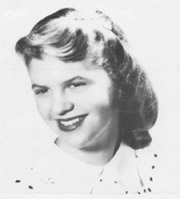
Sylvia Plath was born in Boston Massachusetts
on October 27, 1932 to Otto Plath, a young man of German descent, and Aurelia
Schoeber, a young woman of Austrian ancestry.
�
In
September 1950, Sylvia Plath began
studying at Smith College in Massachusetts.
�
At the end of Plath�s third year at Smith
College she was named to be the guest managing editor of the magazine Mademoiselle.
and she was given a month of �working vacation� in New York City.
�
After returning from New York City in August
of 1953 Sylvia suffered from a nervous breakdown and attempted suicide. She was hospitalized and given shock
treatments and psychotherapy.
�
After making it through her first semester of
senior year without any problems she submitted her English honors thesis. titled �The Magic Mirror: A Study of the
Double in Two of Dostoevsky�s Novels� in January 1955. In June she graduated from Smith College
with the title of summa cum laude.
�
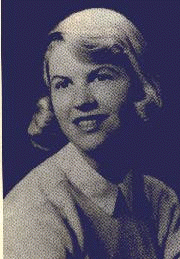
It was at Cambridge in the winter of 1956 that
Sylvia met Ted Hughes, a young British poet whom she would soon wed.
�
Hughes and Plath were married on June 16, 1956
in London.
�
In 1957 she submitted her manuscript of poetry
entitled, �Two Lovers and a Beachcomber� for the English tripos and M.A. degree
at Newnham College.
�
In the early months of 1960 Plath found out
that her book of poems titled �The Colossus� was going to be published by
William Heinemann.
�
After finding out about her book publishing
she found out she was pregnant and gave birth to a daughter, Frieda, on April
1, 1960.
�
In early February 1961 Plath was pregnant
again, but she miscarried this child and then underwent an appendectomy surgery
later in the month. In the same year as
her miscarriage Plath was given a grant to enable her to work solely on her
novel. The Bell Jar.
�
On January 17, 1962 she gave birth to another
child. This time it was a boy that was
named Nicolas.
�
In July of the same year Plath learned that Ted
Hughes had been having an extramarital affair with Assia Gutman.
�
Attempting to rebuild their marriage the young
couple journeyed to Ireland together in September and almost immediately Hughes
returned alone to London and began living with his mistress.
� That
winter she moved into a small London flat with her two children and tried to
recreate the family that they once had.
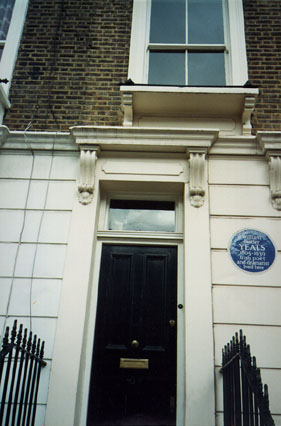
The
winter of 1962 was rough in London and proved to one of the worst ever
recorded. The children became ill
because of the intolerable living conditions in the small flat and Plath began
suffering from extreme depression. On
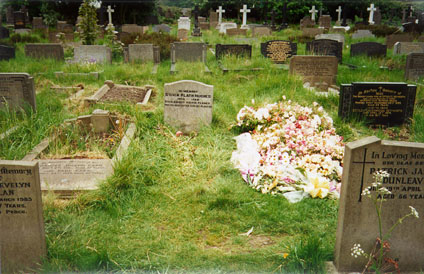
February 11, 1963 Plath committed suicide in the kitchen of her London flat.
The Poem "Daddy"
You do not do, you do not do
Any more, black shoe
In which I have lived like a foot
For thirty years, poor and white,
Barely daring to breathe or Achoo.
Daddy, I have had to kill you,
You died before I had time �
Marble-heavy, a bag full of God,
Ghastly statue with one grey toe
Big as a Frisco seal
And a head in the freakish Atlantic
Where it pours bean green over blue
In the waters off beautiful Nauset.
I used to pray to recover you.
Ach, du
In the German tongue, in the Polish
town
Scraped flat by the roller
Of wars, wars, wars.
But the name of the town is common.
My Polack friend
Says there are a dozen or two.
So I never could tell where you
Put your foot, your root,
I never could talk to you.
The tongue stuck in my jaw.
It stuck in a barb wire snare.
Ich, ich, ich, ich,
I could hardly speak.
I thought every German was you.
And the language obscene
An engine, an engine
Chuffing me off like a Jew.
A Jew to Dachau, Auschwitz, Belsen.
I began to talk like a Jew.
I think I may well be a Jew.
The snows of the Tyrol, the clear beer of
Vienna
Are not very pure or true.
With my gypsy ancestress and my weird
luck
And my Taroc pack and my Taroc pack
I may
be a bit of a Jew.
I have always been scared of you,
With your Luftwaffe, your gobbledygook.
And your neat mustache
And your Aryan eye, bright blue. Panzer-man, panzer-man, O You �
Not God but a swastika
So black no sky could squeak through.
Every woman adores a Fascist,
The boot in the face, the brute
Brute heart of a brute like you.
You stand at the blackboard, daddy,
In the picture I have of you,
A cleft in your chin instead of your foot
But no less a devil for that, no not
Any less the black man who
Bit my pretty red heart in two.
I was ten when they buried you.
At twenty I tried to die
And get back, back to you.
I thought even the bones would do.
But they pulled me out of the sack,
And they stuck me together with glue.
And then I knew what to do.
I made a model of you,
A man in black with a Meinkampf look
And a love of the rack and the screw.
And I said I do, I do.
So daddy, I�m finally through.
The black telephone�s off at the root,
The voices just can�t worm through.
If I�ve killed one man, I�ve killed two �
The vampire who said he was you
And drank my blood for a year,
Seven years, if you want to know.
Daddy, you can lie back now.
There�s a stake in your fat black heart
And the villagers never liked you.
They are dancing and stamping on you.
They always knew it was you.
Daddy, daddy, you bastard, I�m through.
-Sylvia Plath (The
Riverside Anthology)
-Sylvia Plath (The
Riverside Anthology)
Analysis of �Daddy�
In the poem �Daddy� Sylvia Plath takes
on the idea that she is the Eastern European Jew being persecuted during World War
II by a Nazi, who is personified to be her father. When writing �I thought every German was you. And the language obscene/ An engine, an
engine chuffing me off like a Jew. A
Jew to Dachau, Auschwitz, Belson.� Plath is showing her own emotions of being
thought of as the Jew while her father (the German) ordered her around and sent
her on her way to these terrible places.
Plath also uses color imagery to show her meaning in this poem. The reference to the color black when
describing various objects such as a shoe and the telephone and her reference
to her father as �A man in black with a Meinkampf look� shows Plath�s need to
show the contrast between the Nazi and herself. . This poem shows Plath�s
vision of herself as a product of a male society, molded by males to suit their
particular needs. In the poem she is
also attempting to find her own identity by destroying her �creators�, in this
case her father. The last two stanzas
of the poem �Daddy� allow Plath to be victorious over her �creator� by Plath�s
words of �Daddy, you can lie back now.
There�s a stack in your fat black heart�� This poem allows Plath to show the complexity and the depth of
her own parent-child relationship and
allows the reader to place their own relationship within the poem. The reader can go through the steps of
imagery by making their own father first a shoe, a nazi, a teacher, and finally
a vampire. When analyzing �Daddy� the
vampire metaphor shows that the poem can also be interpreted to attack the
speaker�s husband on a symbolic level and her father on the literal level. �Daddy� can portray Hughes as a monster and
Otto Plath as a vampire and can show that Plath was attempting to overcome her feelings for her estranged husband while
she was also dealing with issues of abandonment over her father�s death from
when she was a mere eight years old.
The Poem �Lady Lazarus�
I have done it again.
One year in every ten
I manage it -----------
A sort of walking miracle, my skin
Bright as a Nazi lampshade,
My right foot
A paperweight,
My face a featureless, fine
Jew linen.
Peel off the napkin
O my enemy.
Do I terrify? --------
The nose, the eye pit, the full set of
teeth?
The sour breath
Will vanish in a day.
Soon, soon the flesh
The grave cat ate will be
At home on me
And I a smiling woman.
I am only thirty.
And like the cat I have nine times to die.
This is Number Three.
What a trash
To annihilate each decade.
What a million filaments.
The peanut-crunching crowd
Shoved in to see
Them unwrap me hand and foot ----
The big strip tease.
Gentlemen, ladies
These are my hands
My knees
I may be skin and bone,
Nevertheless, I am the same, identical
woman.
The first time it happened I was tem.
It was an accident.
The second time I meant
To last it out and not come back at all.
I rocked shut
As a seashell.
They had to call and call
And pick the worms off me like sticky
pearls.
Dying
Is an art, like everything else.
I do it exceptionally well.
I do it so it feels like hell.
I do it so it feels real.
I guess you could say I�ve a call.
It�s easy enough to do it in a cell.
It�s easy enough to do it and stay put.
It�s the theatrical
Gentlemen, ladies
These are my hands
My knees
I may be skin and bone,
Nevertheless, I am the same, identical
woman.
The first time it happened I was tem.
It was an accident.
The second time I meant
To last it out and not come back at all.
I rocked shut
As a seashell.
They had to call and call
And pick the worms off me like sticky
pearls.
Dying
Is an art, like everything else.
I do it exceptionally well.
I do it so it feels like hell.
I do it so it feels real.
I guess you could say I�ve a call.
It�s easy enough to do it in a cell.
It�s easy enough to do it and stay put.
It�s the theatrical
Comeback in broad day
To the same place, the same face, the same
brute
Amused shout:
�A miracle!�
That knocks me out.
There is a charge
For the eyeing of my scars, there is a
charge
For the hearing of my heart ------------
It really goes.
And there is a charge, a very large charge
For a word or touch
Or a bit of blood
Or a piece of my hair or my clothes
So, so, Doktor.
So, Herr Enemy.
I am your opus,
I am your valuable,
The pure gold baby
That melts to a shriek.
I turn and burn.
Do not think I underestimate your great
concern.
Ash, ash ---------
You poke and stir,
Flesh, bone, there is nothing there
--------
A cake of soap,
A wedding ring,
A gold filling.
Herr God, Herr Lucifer
Beware
Beware.
Out of the ash
I rise with my red hair
And I eat men like air.
-Sylvia
Plath (The Riverside Anthology)
Analysis of �Lady
Lazarus�
�Lady
Lazarus� reveals Plath�s awareness of the lingering ties and stands as an
encapsulation of her whole life�s quest for identity from passivity, to passive
resistance, to active resistance, and finally to the violently imagined
destruction of those people who first gave and then shattered her life:
men. �Lady Lazarus� is a poem where the
speaker is developed as a character of true religious prosecution. Plath�s use of extended metaphors and
allusions help to develop the imagery of her terrifyingly gruesome attempts at
suicide. Plath attempts to describe her
suicides as a form of entertainment such as �peanut-crunching crowd� and her
living is simply described as �the big strip tease� which can be a form of
entertainment for others and not for Plath herself. �In the New Testament of
the Bible, Lazarus is a man who rises from the dead at the command of Jesus
Christ (John 11:38).� The title �Lady
Lazarus, where the Lady most likely refers to Plath herself, is a true example
of confessional poetry. In Lines 65-79
Plath uses metaphor and allusion to compare the doctors who helped revive her
after her attempted suicide to Nazis giving her life which, according to the
poem the speaker �Plath� felt to be more horrible than killing her. The speaker also uses apostrophe to address
the doctors in her past: �So, so Herr Doktor, So, Herr Enemy.� These so called �doktors� are being pictured
as evil Nazis that must be reckoned with.
To help so the stupidity of the �doktors� Plath uses assonance such as
�charge, large charge� to mock the �doktors� that are attempting to save her
life. The speaker in the poem also
continues to identify herself as a Nazi�s victim. She uses allusions to Nazi death camps as her own way to develop
this idea:
Ash, ash, ----
You poke and stire.
Flesh, bone, there is
nothing there.
A cake of soap,
A wedding ring,
A gold filling.
In
this section of the poem the speaker is referring to the Nazi death camps to
describe her own attempts at suicide.
�Ash, ash� can be used to reflect on the ovens that the Germans placed
the Jews in to burn the remains of their dead bodies. �Wedding rings� can be used by saying that these were items that
were taken from the Jews right before they lost their lives.
The �Lazarus� motif also exists in
the poem. The first metaphor referring
to this is found in the poem�s title.
Lazarus� resurrection by Christ is mentioned throughout the poem. The �napkin� can be conferred to be the
linen wrappings of Lazarus, and the �grave cave� can be the tomb in which he
was buried after his death. Sylvia
Plath is the �Lady Lazarus.�
In �Lady Lazarus� the use of poetic
devices such as allusion, metaphor, apostrophe, extended metaphor, and irony
are used to help develop the speaker�s feelings of confusion, paranoia, and her
own contempt for herself.
Conclusion
Sylvia Plath�s own life deeply affected
her poetry. Poems such as �Daddy� and
�Lady Lazarus� show her own contempt for men liker her father and her husband
and her contempt for herself. Her
experiences in life such as her father�s unusual death and her husbands
adultery have caused her to be confused and to doubt herself which has been
reflected in her poetry.

Works Cited
Austin, David Craig. Scribners � Sylvia Plath 1932-1963.
Modern American Women
Writers,
1991. P.411-424
Cady, Ben. An Interpretation of Sylvia Plath�s �Lady Lazarus� Online.
October 1999.
Available: May 21, 2001 http://www.cityhonors.buffalo.k12.ny.us/city/rsrcs/eng/placady1.html.
Cam, Heather; Dejong, Mary G.; Ramazani,
Jahan; & Srivastava, K.G. . Sylvia The
Vampire Slayer. Online.
1992. Available: June 7, 2000. http://members.aol.com/raisans/plath.htm
Encyclopedia Brittanica. �Sylvia Plath: Personal Influences on Sylvia
Plath�s Writing�
Online. Available: May 21, 2001 http://acler.cwrl.utexas.edu/slatin/sexton/plath.html
Frank N. Magill, et al. Critical Survey of Poetry 1847-2300 MacL
� Qua. Englewood
Cliffs,
New Jersey, Salem Press, 1982.
Other Great Sylvia Plath Links
http://www.geocities.com/Paris/Caf�/3986/pagetwo.html (This is a great site for Pictures of Plath
and her childhood home)
http://www.poets.org/Lit/poet/splath.htm (Great site for general knowledge about
Plath)
http://www.gurlpages.com/music/ariel_doll/velvet.html
(This page is great it has other poems besides the ones that you can find on
this page)
-Carrie
Throckmorton