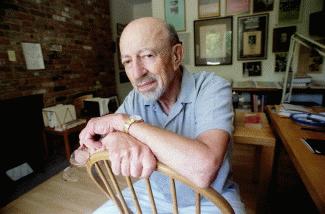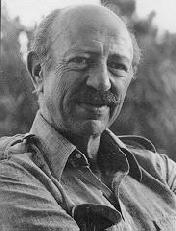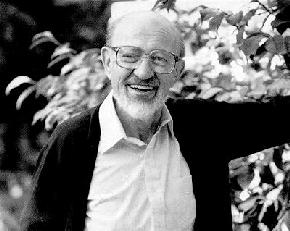
HOWARD FAST
To Nazim Hikmet
The way your own walls could not contain your words,
so did they find us, my brother,
nor could our walls exclude them.
And there came to me that day in prison,
speaking in the prison whisper you know so well,
that gentle writer, Albert Maltz-
Like you, his crime was words that sang of life,
of peace and hope and the things men cherish-
and told me you were free.
Free, he said, Nazim Hikmet's free,
and walks in freedom on his own good native ground,
and sings loud and proud, for all men to hear.
How can I tell you, friend, comrade, brother too,
whom I have never seen but know so well,
and hold so high, in such precious esteem-
how can I tell you what this meant?
For in that moment we were free.
For in that moment my heart sang a song to equal yours,
and I knew you as well as ever I knew a man,
knew you and all your kind, our kind,
such a brotherhood that surmounts nations,
and they think to quiet us,
to make us silent behind walls.
A small blow once we struck in your behalf,
yet I tell you that you freed us,
two writers of a land five thousand miles from yours,
like yours a land where evil men do evil things,
like yours a land where freedom bows her head in shame,
but will awaken yet.
When you went free we understood
the small moment of our own walls,
erected by clowns and smirking killers,
a small moment in the march of man toward light and glory-
yet do I have to tell you,
when surely you heard the song our hearts made!
Masses & Mainstream - October 1950
October Revolution
THE little spark,
touched by what suffering and what splendid endeavor,
when I was only three, and lay in my mother's arms!
Sleep gently, my child, oh, gently,
the wild winds blow-sleep, and in your sleep
will be a sound of men singing of tomorrow,
where the red banners unfurl to the morning breeze.And now my own children sleep.
Sleep, my children, sleep well,
no care, and not for you
shall there be the jail, the knouted whip, diverse terror;
for it is October, my children,
and far away men build in freedom-Ah, what shall I tell a Korean mother
who holds a broken child in her arms?
Ah, what shall I tell a Grecian maiden
whose lover has gone to return no more?
And my own children-
what shall I tell them when I go away?If I go away, I will come again,
for this is the time of dawning, of dawning.
Your beautiful world will be like a garden,
and pure will you grow in it,
and proud will you stand in it,
and when you reach out, you will touch my dreams.This is October, when the workers arose,
and the red banners unfurled in the cleansing wind,
and the sound of their singing was heard all over the world.
Masses & Mainstream - November 1950
A SONG OF PEACE
I closed my eyes in darkness
and opened them in light,
and over the world,
like a flag unfurled,
was a sweet sound and a holy sight.
A dove spread wings of magic;
its shadow was golden and broad,
and the people of earth,
in a passion of birth,
had shattered an ancient sword.
Oh, why is my country hated
and made such a thing of scorn,
this fruitful place
with its varied race,
this land where I was born?
And why is my country darkened,
when the rest of the world is light,
and cloaked in fear
of things once dear,
and weak in its frightful might?
And why are the people silent,
and where is the ancient song
that mankind found
was freedom's sound,
to shatter injustice and wrong?
We'll not have our country hated!
Our country is strong and grand.
Oh, be not dismayed
by those who betrayed
the heritage of our land.
If a song can be made so simple,
if a word can become a creed,
then the sound of peace
will gently increase,
like the harvest from the seed.
Ask not why the land is silent;
let the people measure their toil,
and the human race
will share its grace
with the lonely folk of our soil.
Its grace is new and holy,
and peace is the dream of the world,
and the people of earth
in a passion of birth
will see their banner unfurled.
The banner is pure and sacred,
enough of the swine who destroy!
Enough of the night,
the world is bright-
and the future is filled with-joy.
Our cup is running over
with the graft and the lies and the hate,
and the renegade
is too well paid
with our broken dreams and our children's fate.
We'll open our eyes in the darkness,
and boldly look to the light,
and call to our side
with earnest pride
our people who dwell in the night.
And they'll see the dove so holy,
so pure and wide of wing,
wide as the earth
in its passion of birth-
with a joyful song to sing.
And the lilt will be made so simple,
and the word will become a creed,
and the song of peace
will gently increase,
like the harvest from the seed.
Korean Lullaby - 1951
|
by Maxine Gomberg |
| Masses & Mainstream cover - January 1954 |
| Daily Worker - June 1950 |
| AP
photo - Aug. 1997
by Maxine Gomberg - 1977 |
Howard Fast, the son of a factory worker, was born in New York City in 1914. He dropped out of high school and published his first novel before he was a twenty. Fast held strong left-wing views and a large number of his novels dealt with political themes. This included a series of three books on the American Revolutionary War period: Conceived in Liberty (1939), The Unvanquished (1942), and Citizen Tom Paine (1943).
In 1943 Fast joined the American Communist Party and his Marxist views were reflected in the novels that he wrote during this period. This included Freedom Road (1944), a novel of the Reconstruction era; The American (1946), a fictionalized biography of the radical Illinois governor, John Peter Altgeld, and Spartacus (1951), an account of the 71 B.C. slave revolt.
In 1950 Fast was ordered to appear before the House of Un-American Activities Committee. Fast refused to name fellow members of American Communist Party, claiming that the 5th Amendment of the United States Constitution gave him the right to do this. The HUAC and the courts during appeals disagreed and he was sentenced to three months in prison.
Fast was blacklisted but after forming his own publishing company, the Blue Heron Press, he continued write and publish books that reflected his left-wing views. This included Spartacus (1951), an account of the 71 B.C. slave revolt, Silas Timberman (1954), a novel about a victim of McCarthyism and The Story of Lola Gregg (1956), describing the FBI pursuit and capture of a communist trade unionist. In 1956 Fast broke with the Communist Party. The following year he published The Naked God: The Writer and the Communist Party (1957).
The Hollywood Blacklist was ended in 1960 when Dalton Trumbo wrote the screenplay for Fast's novel, Spartacus. Fast himself moved to Hollywood where he wrote several screenplays. However, he continued to write political novels and had considerable commercial success with The Immigrants (1977), Second Generation (1978), The Establishment (1979), The Outsider (1984) and the Immigrant's Daughter (1985). His autobiography, Being Red, was published in 1990.