| ZOLTAN KODALY (1882 - 1967) |
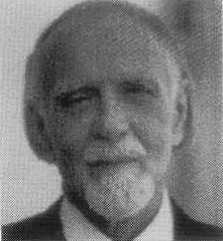 |
| Kodaly was born at Kecskemet in Hungary on 16 December 1882. Brought up in the country, he knew folk music from childhood and also learnt to play the piano and string instruments, and to compose, all with little tuition. He was a chorister in his youth at Nagyszombat (now Trnava), Czechoslovakia, where he wrote his first compositions. In 1902 he went to Budapest to study with Koessler at the Academy of Music, and in 1905 he began his collaboration with Bartok, collecting and transcribing folksongs during the year before his graduation from Budapest University with a thesis (1906) on the structure of Hungarian folk song. After studying for a short time in Paris with the composer-organist Charles Widor, he became teacher of theory and composition at the Budapest Academy of Music (1907-41). He and Bartok worked side by side as composers, and Kodaly's visit in 1907 to Paris, bringing back Debussy's music, was important to them both: their first quartets were played in companion concerts in 1910, marking the emergence of 20th-century Hungarian music. Kodaly preferred to accept rather than analyse folk material in his music, and his style is much less contrapuntal. Romantic in flavour, smoother harmonically and less percussive than Bartok, his individual style was derived from Hungarian folk music, contemporary French music, and the religious music of the Italian Renaissance. His major works, notably the comic opera Hary Janos, the Psalmus hungaricus, the 'Peacock' Variations for orchestra and the Dances ofMarosszek and Galanta draw on Magyar folk music (unlike Bartok, he confined himself to Hungarian material). His collecting activity also stimulated his work on musical education, convincing him of the value of choral singing as a way to musical literacy. He taught at the Budapest Academy from 1907, and after World War II his ideas became the basis of state policy, backed in part by his own large output of choral music, much of it for children. He died in Budapest on the 6th March 1967. |