
|
|
|

Introduction
This is a brief history about Atari Computers in order of timeline. We will have a look at some of their better developments and where they started to go wrong. Atari is the one Computer Company that influenced my childhood and started my interest in PC�s and Computer gaming.
Atari takes its name form a term from the Japanese game called go, whose
meaning is equivalent to "check" in chess.)
In 1972 Nolan Bushnell, Ted Dabney and Larry Bryan decided they would try to invent and market a video game machine. So they each put in $100 to start the project. But soon after they started Larry Bryan decided not to carry on and pulled out of the project. They then went and set up office at 2962 Scott Boulevard, Santa Clara, California and with the help of Al Alcorn (Atari�s first employ), they invented the game machine Pong for less than $1000. The first Pong coin-op was play tested in a bar. When Bushnell came to remove the machine. The coin box was overflowing with coins.
Pong became very successful, Approximately 9,000 units were made. But unfortunately for Atari they were too slow in trade marketing the game and Many variations of the game appeared. After dropping out of college in Oregon, Steve Jobs becomes an Atari employee and starts sneaking his friend Steve Wozniak in to the factory after hours to play arcade marathons. Steve Jobs is asked by Bushnell to create the game breakout. But it is Steve Wozniak that completes the machine.
Later Steve Wozniak uses his version of the basic language to manipulate his computer version of Breakout and is amazed how powerful software is in creating games.
In 1973 Atari got sued by a company called Magnavox on copyright grounds and lost. Atari was made to pay royalties to Magnavox in order to ship game Pong.
Ted Dabney panics about competition and also leaves Atari in the same year.
Bushnell forms Kee Games in order to provide competition for Atari game software.
Atari makes $3.2 million in earnings for the year and employs 80 people.
1974 sow Al Alcorn create and Atari released home console version of the Pong arcade machine for the home market. Atari begins creating video games in rapid succession and the game Spacewar was added to their arcade collection.
Kee Games, releases Tank, invented by Steve Bristow. It becomes a major success, and Atari merges with Kee Games to release Tank under the Atari label.
Joe Keenan President of Kee games is made President of Atari.
In 1976 Atari began to develop a prototype console that accepted cartridges called Stella.
Nolan Bushnell then sells Atari inc. to Warner Communications for $28 Million in order to get more capital for the new project.
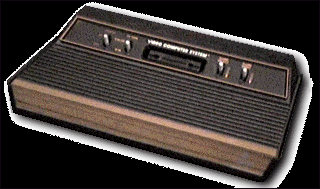
In 1977 after a 100 million-dollar investment by Warner Communications the Stella project was completed and released. The new machine called VCS. VCS stood for Video Computer System and it was very successful, it was Atari�s first games cartridge system. It retailed $200 each. The Stella project was headed up by Jay Miner how later went on to create the Amiga.
By 1979 there were 12 new cartridges released for the VCS.
A Japanese company called Taito had launched a game entitled Space Invaders and Atari quickly bought the rights. Space Invaders became so popular that people were buying the machine just to play it.
In 1978 Atari releases Football for the arcades, which is the first commercial game to use a track-ball controller.
Bushnell and Warner disagree over the direction to take Atari. As a result of disagreements Atari's only remaining founder, Nolan Bushnell leaves the Company he started. He was asked to sign an agreement not to get involved with video games for 10 years so he went and started a company called Chuck E Cheese pizzas. Many changes take place as a result of Bushnell leaving and many employees became unhappy with changes to their working environment and also quit.
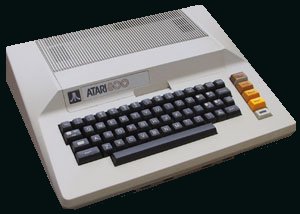
In 1979 Atari entered the personal computer market. Atari produced two very good computers the 400 and 800, which were both 8-bit systems. Through the use of its custom communication bus called SIO (Serial I/O) a large number of peripherals could be connected to them. SIO was very similar to USB (Universal Serial Bus) in fact Joe Decuir the creator of the SIO was also a member of the Microsoft development team that helped design USB.
The biggest problem for Atari was that there was so much competition in the personal computer market. Companies like Apple and Commodore dominated the market. Funnily enough Apple now a big competitor was founded by ex Atari employees Steve Jobs and Steve Wozniak. They had even offered their computer they made out of Atari components to Atari, but Atari turned them down because of a lack in capital.
It was Nolan Bushnell himself who introduced two men to their first investors.
In 1980, Atari setup its own research center, directed by Alan Kay, which among other things undertook a great amount of research in to the development of virtual realty systems. Unfortunately the project was dumped after Atari recorded a loss of $536 million dollars 1983.
Between 1980 and 1982 Atari programmers produced some well known games such as Asteroids, Battle Zone, Missile Command, and Pac-Man
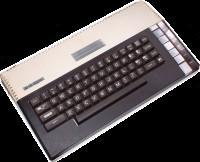
In 1982 the Atari VCS was renamed to Atari 2600 after the release of the Atari 5200. Atari released the Atari 800xl it had a 5.25" floppy Disk Drive and cartridge slot on the top for cartridge games. Atari had about 10,000 employees.
In 1983 Atari announced plans to add a keyboard/computer attachment to the Atari 2600, along with peripherals and software, but never released.
Atari introduces the 1200XL, 600XL, 1450XL, and the 1450XLD, which had a 300 bps modem. Atari also had several new computers in the prototype phase including one of these was called the 1600XL, which would be a dual processor system and IBM compatibility. But never made it past prototypes as Atari was sold in 1984. Atari cancels production of the Atari 1200XL, due to compatibility and other problems.
In 1984 Atari�s Consumer Electronics Division and its Home Computer Division were sold to Jack Tramiel, (former owner of Commodore) of Tramiel Technologies Limited and the company was renamed Atari Corporation and the XL line Of computers was cancelled.
In 1985 a new line of computers were introduced to replace the XL line called the Atari 65XE and 130XE computers. Atari also introduced the Atari ST line of computers. These came with 512K of memory and use a 3.5" floppy disk drives unlike their previous computers that used 5.25" drives.
At the Summer Consumer Electronics show 1985 Atari hooked up a working prototype of a CD-ROM to an Atari 520ST it was the first time people had seen a CD-ROM and the Atari exhibit stole the show.
In 1987 Atari introduced the Atari PC-1 an IBM compatible computer system which had built in disk drive, serial port, parallel port, it used an IBM style keyboard and a mouse.
Atari also introduced a laptop called 386sx and a palmtop computer the size of a VHS videotape.
In1989 Atari launched the Lynx games machine the world's first color handheld video gaming system. The Lynx could display16 different colors on screen out of a possible 4096 and could Multiple players.
In 1992there were only about 450 employees left at Atari.
In 1996, Atari Corporation entered into a merger agreement with JT Storage, Inc (JTS)
In 1998 JTS sells all Atari Corporation assets to Hasbro for $5 million cash. Atari becomes a part of Hasbro's games division
In 1999 Hasbro publicly makes the Jaguar an open system platform allowing software developers to freely create their own games for the systems without a license or fear of violating patents. Hasbro uses the Atari label for their home video game a subdivision of Hasbro Interactive.
Hasbro (Atari) planing to update versions of classic Atari titles like Pong, Missile Command, Star Raiders, and other games for the Sony PlayStation and Nintendo 64 consoles.
Also since they changed their name to Atari there has been rumors that Hasbro will be developing a new video-game-console under the Atari brand in the uncertain future.
In conclusion
Nolan Bushnell the founder of Atari in 1972 after selling 150,000 home versions of pong by 1975 he sold Atari to Warner Communications for $28 million dollars in 1976. He then left in 1978 to create Chuck E. Cheese pizza parlors. Atari went on under new ownership to create some good products, but after some bad management decisions and a few not so good products. Atari got split up and most of it was sold to Tramiel Technologies Limited in 1984. Atari then got pulled apart, but still managed to produce some good products. For example: the Atari 130xe, which I myself had for many years.
After about 1987- 1989 everything turned to custard and the rest is a sad end to a great company. But wait Atari could be back.
Some Famous Employees of Atari Inc.
Nolan Bushnell � Founder of Atari and later Chuck E. Cheese pizza parlors
Al Alcorn � First Atari employee and creator of Home Pong
Steve Jobs � Founder of Apple Computers
Steve Wozniak - cofounder of Apple Computers
Jay Miner - Founder of Amiga Computers.
Jack Tramiel � former owner of Commodore.
Joe Decuir - creator of the SIO and co-creator of USB
Resources |
|
| (2002) Atari Historical Society, Received 18th august 2003 from: | http://www.atarimuseum.com/mainmenu/mainmenu.html |
| (n.d) Atari Explorer Received 18th august 2003 from: | http://www.atari-explorer.com/history.html |
| M. Crawley (1999) Movieprop. Com�s Atari Video Game Pages, Received 17th august 2003 from: | http://www.movieprop.com/videogames/atari/ |
| Designboom (2002), from �pong� to �pac-man� Received 21st august 2003 from: | http://www.designboom.com/eng/education/pong.html |
| T. Smolar, (n.d.) Atari History & Timeline Received 21st august 2003 from: | http://www.xs4all.nl/~rimmer/atari/files/atari_history.txt |
| M. Lundstrom (07/22/94) Jay Glenn Miner Received 21st august 2003 from: | http://www.heartbone.com/comphist/JayMiner.html |
| M. l.Clayton (n.d.) Atari Histroy Received 21st august 2003 from: | http://www.heartbone.com/comphist/Atari.htm |
| (2000) Atari Rise and fall of a legend Received 21st august 2003 from: | http://mitglied.lycos.de/deomaki/ |