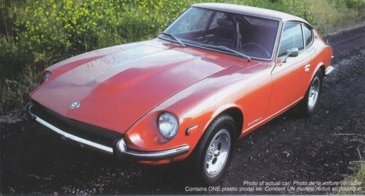
The Datsun 240Z was in many ways a milestone for the young Japanese auto industry in the 1960s as it was one of the first cars designed specifically for the American market. Up to that point, Datsun, Toyota, and to a lesser extent Honda were exporting small, fuel-efficient 4 cylinder cars to export markets including the U.S. They were known for their tight engineering and solid reliability. They were also known for one other common trait--they were boring. Compared to tire-melting horsepower American auto makers were dispensing, the Japanese makes did not have the "pizzazz" of the domestic makes.
Datsun knew that in order to make an impression on the American driving public, they needed a vehicle that along with the qualities that the imports were known for would be quick, handle well, and most importantly, look sharp. Datsun had hired as a consultant a German-born gentleman named Albrecht Goertz. While certainly not known by name to Americans, he was one of the contributors of such ground-breaking designs as the Studebaker Starliner of the 50s, the BMW 507 sports car, and the Porsche 911.
With Goertz's ideas as a nucleus, Datsun stylists came up with a winner. The 240Z, first introduced in 1969 as a '70 model, boasted sharply-edged American influenced lines. Two cylinders were added to Datsun's existing and proven 1600cc four cylinder engine, creating a straight six of just under 2400cc developing 150 horsepower. Large in physical size, the big six required a long hood be incorporated in the body design, perfect for the long-hood, short-deck sporty cars Americans were buying in large numbers. Along with all-independent suspension, quick-ratio rack & pinion steering and front disc brakes, the two seater 240Z more than held its own in the American marketplace.