
The construction
The chapel of grace stands on the exact same spot as the road shrine built by Hendrik Busman in 1642. Busman's building was very simple. It was only two meters high, one meter wide and about 50 centimetres deep. Under a sloping roof, in a small cavity, the miraculous image was housed. Many of such road shrines can still be seen in the German Rhineland today.
During the first decade after 1642, the number of pilgrimages to the road shrine grew steadily by the year. The shrine became even more popular when the Church acknowledged eight miracle healings wrought by Our Lady of Kevelaer. In 1651 the leader of the shrine decided to have a larger chapel built around the original road shrine. The design was based on that of the church of Scherpenheuvel/Montaigu, the famous Belgian shrine of the Virgin Mary. The chapel was completed in 1654.
Exterior
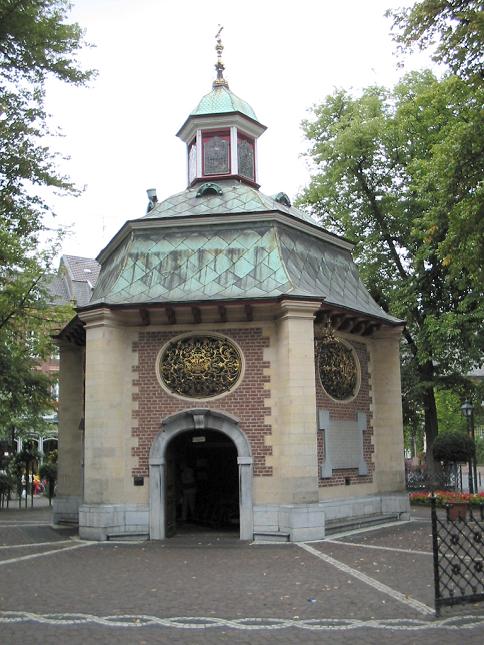
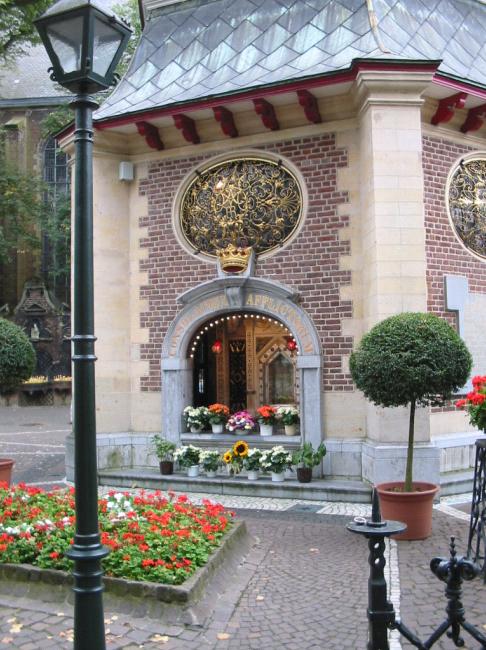
The six-angular chapel is built around a central point. Three arched doors (on the south, south-west and south-east side) give access to the building. In the upper part of each wall there is an oval window, a typically baroque feature. The decorative bars of forged iron were added in the late 19th century. The characteristic green-copper dome consists of two parts that bend in opposite directions. The dome is topped by a transparent lantern. Each corner of the dome is carried by a large buttress.
Inside the chapel of grace, the original road shrine from 1642 stands approximately one meter from the northern wall. In this wall an arched opening was made, through which the shrine with the miraculous image can be seen from the outside. Thus the chapel of grace, like its predecessor, is a road chapel. Old paintings and engravings show that Kevelaer's miraculous image is traditionally venerated from the public road. Above the opening, under a golden crown, the title of Our Lady of Kevelaer is written: Consolatrix Afflictorum, or "Consoler of the Afflicted".
In 1892, two tables were placed on the remaining outside walls of the chapel. The table on the north-west wall commemorates the events of 1642, the shrine's year of origin. The text on the north-east wall is taken from the coronation decree of Saint Peter's basilica in Rome. Next to this table hangs a small bell.
Interior
The first altar that was built in the chapel's main space, against the back of the original road shrine, dated from 1663. The main altar piece was a painting from Rubens' workshop, showing Joseph, Mary and Jesus on their pilgrimage to Jerusalem.
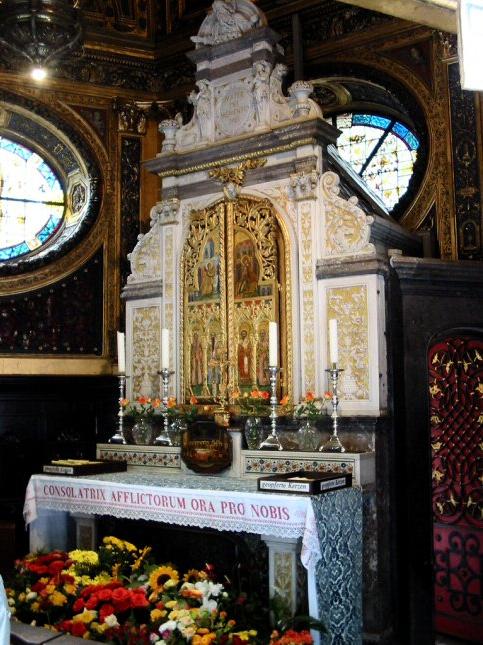
In 1874 a second door was made next to the shrine housing the miraculous image. This door enabled pilgrims to walk past the shrine in one direction, which created more order in the chapel's small space. The altar from 1663 was too large to be placed between the two doors. It was replaced by a marble altar in neo-baroque style. The painting of the Holy Family was replaced by an image of the Immaculate Conception. In former days ignorant pilgrims would sometimes mistaken this picture for the miraculous image.
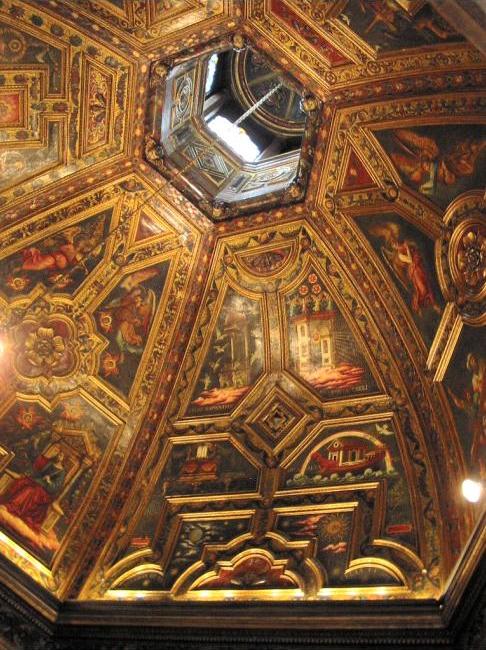
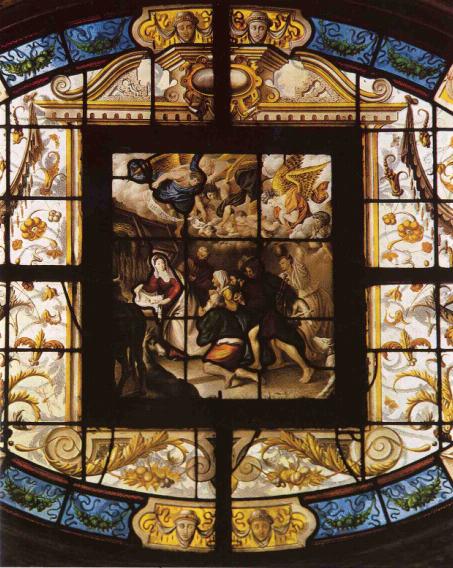
In the late 19th century the chapel's interior underwent a great renovation. First of all the vault was renewed. Friederich Stummel from Munster designed the neo-renaissance paintwork. Depicted are scenes from the Virgin's life and Marian allegories from the Litany of Loreto. The walls of the chapel were decorated with a gold-coloured panelling of fruit garlands and other decorative motives. The oval windows of the chapel were decorated with stained glass. In addition to the paintwork Stummel also designed a mosaic floor for the chapel. The floor's central image is a fountain from which deer and birds are drinking, a symbol of Mary as "fons aquarum viventium" (spring of living water, Ecclesiastes 4:15).
One of the most recent additions to the chapel's interior is the so-called peace lamp hanging to the left of the altar. The lamp symbolizes the European reconciliation after the Second World War. It was lit in the French shrine Lourdes in 1949. It was then brought to Kevelaer via the Bavarian shrine Altoetting.
The most recent change to the chapel's interior dates from 1980, when the altar painting of the Immaculate Conception was covered with a double door in Byzantine style. This 18th-century work of art depicts the Annunciation. Below the scene with Mary and Gabriel stand four important saints of the Eastern Church: James the Great, Basil the Great, John Chrysostomos and Gregory Theologos.
Votive offerings
Silent testimonies are the many votive offerings that can be seen in the chapel of grace. In the course of the centuries these have been offered to Our Lady of Kevelaer as tokens of answered prayers. In barred cases on the walls hang silver hearts, limbs and child figures. In its shrine the miraculous image is surrounded by precious jewels of gold and silver, precious stones, pearls and diamantes. The many ex-voto's stress the importance of Kevelaer as a place of pilgrimage. For more than 350 years people have come from near and far to the chapel of grace to pay their tribute to the Mother of Jesus.
BACK