FOOD
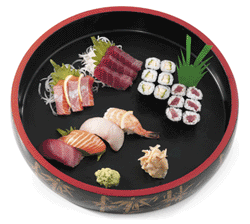
Sushi is the
most famous Japanese dish
outside of Japan, and one of the
most popular dishes among the Japanese themselves who usually enjoy
sushi on special occasions.
Ramen
is a noodle dish that was originally imported to
Japan from China. Over the last few decades, however, ramen has become
a typical Japanese dish and gained great popularity inside and outside
of Japan. Ramen noodles are about as thin as spaghetti and are served
in a soup with various toppings.
Rice is
Japan's most important crop, and has been cultivated by
the Japanese for over 2000 years.Wasabi
is Japanese horseradish. It is most famous in form of a green paste
used as condiment for sashimi (raw seafood) and sushi. However, wasabi
is also used for many other Japanese dishes.
MONUMENTS
The most important monuments in Japan are in Tokio, the capital city:
- The Rainbow Bridge, a
suspension bridge. Its total length is 918m and the distance
between the two main towers is 570m. The bridge has 2 stages: the upper
stage is used for an express way while the lower one is for an ordinary
road and sidewalks as well as an unmanned seaside express train, called
Yurikamome (sea gull).
- The Tokio Tower, the
world's
tallest self supporting steel tower. In the postwar boom
of the 1950s,
Japan was looking for a monument to symbolize its ascendancy as a
global economic powerhouse - it was also looking to build a television
and radio relay tower. Looking to the occident for inspiration, the
Tokyo Government decided to erect its own Eiffel Tower. Constructed by
Takenaka Corporation, Japan' oldest architecture, engineering and
construction firm, and completed in 1958.
Click here to see the Rainbow bridge and the Tokio Tower.
- Himeji Castle, also called
Shirasagijo (White Heron Castle) due to its white outer walls, is the
best preserved castle in all of Japan. It serves as a classic example
of Japanese castle architecture, having been designated a national
treasure in 1931. Incorporating both strategic design as well as a very
conscious awareness of space, it functions as a military command, a
center for political life, and as a monument to the glories of an
earlier age.
- Tokio Olimpic Stadium was
built as a stadium of Tokio Olimpic Games in 1964.
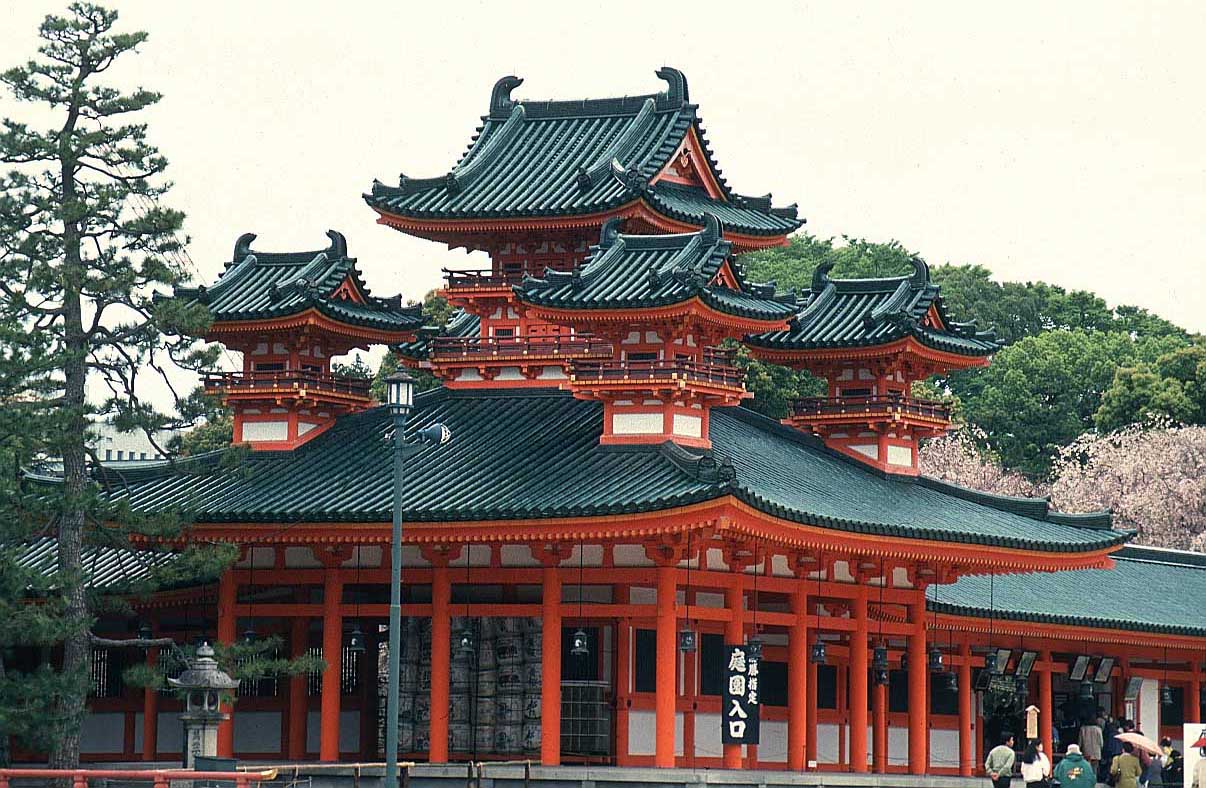
An important building in Japan are the temples, are very elaborated.
Click here to see an exemple of Japanese
temples.
TRADITION
Kimono and yukata are traditional Japanese clothing.
Kimono are made of silk and are usually very expensive. Nowadays they
are worn at formal or traditional occasions such as funerals, weddings
or tea ceremonies.
The yukata, on the other hand, is more of an informal leisure clothing.
It can even be worn without underwear and is very comfortable on hot
summer days.
The tea
ceremony (Sado) is a ritual way of preparing and drinking tea.
Nowadays, the tea ceremony is a relatively popular kind of hobby. Many
Japanese who are interested in their own culture, take tea ceremony
lessons with a teacher. Tea ceremonies are held in traditional Japanese
rooms in cultural community centres or private houses.
The cherry
blossom (sakura) is Japan's unofficial national flower. It has been
celebrated for many centuries and takes a very prominent position in
Japanese culture.
The
Japanese plum or ume (sometimes referred to as Japanese apricot) has
played an important role in Japanese culture for many centuries. It was
originally introduced from China.
Another
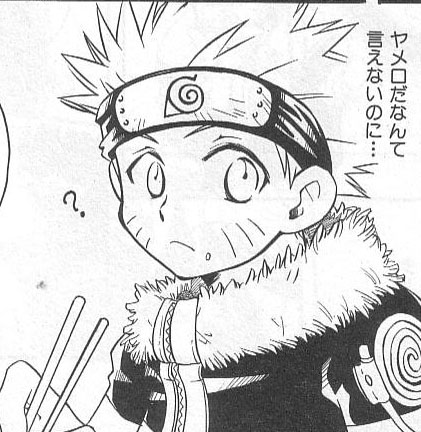
important fact in Japan is the manga, is a tipe of cartoon very famous
in Japan. The majority of manga writers are Japanese. Click here to see an exemple of manga.