FASHION DESIGNER
my favorite
Dior
John Galliano
-
全球時裝界舉足輕重的設計師,勇於製造驚喜,大膽創新,顏色運用得出神入化,配合化妝及髮型,份外賞心悅目。
Born in Gibraltar in 1960, Dior's chief
designer John Galliano graduated from London's prestigious St Martins College of
Art & Design with a first-class degree in 1983.
His graduation collection, called 'Les Incroyables' and inspired by the French
Revolution, met with immediate acclaim (Vogue's Spy column described
Galliano as "a modish costumier, with a preference for romanticism and
androgyny"). The collection was snapped up in its entirety by Joan Burstein, who
put the designs in the window of her South Molton Street boutique, Browns,
during London Fashion Week. Among those who saw the display was the French
designer Joseph, who placed an order with Galliano, sparking feverish interest
in the fabulously inventive young graduate.
Galliano officially launched his own label in 1984, producing historically
influenced designs laced with a contemporary edge. Part romantic, part maverick,
Galliano was always a couturier at heart and delicate bias-cut gowns and
superbly tailored suits fast became his trademark. In 1987, they won him his
first British Designer of The Year award. But his financial difficulties did not
end, so in 1990, Galliano turned his back on London and joined the ranks of
international designers seeking their fortunes at the ready-to-wear collections
in Paris.
Before securing a contract with luxury conglomerate LVMH Moet Hennessy Louis
Vuitton, Galliano faced bankruptcy on more than one occasion despite consistent
critical acclaim. His salvation was the loyalty he inspired in other figures
within the fashion business, like Kate Moss, who were prepared to work for
little more than love in the early years.
Happily, in 1995, Galliano was appointed chief designer at Givenchy, becoming
the first British designer to head a French couture house. He grabbed headlines
with a series of risqu?designs aimed to transform the profile and fortunes of
the back-dated company. A year later, on 14 October 1996, Galliano was awarded
the glittering prize of the house of Christian Dior - Givenchy's stablemate at
LVMH. His first couture show for Dior coincided with the label's 50th
anniversary, 20 January 1997.
These days, between his label and Dior, Galliano is responsible for producing
six couture and ready-to-wear collections a year and a new mid-season range
under his own name. He also follows a rigorous exercise regime, which sees him
rise at 6am each morning to complete a gruelling, 40-minute aerobic session with
his personal trainer, before embarking on a 10-minute stretch, 150 push-ups and
a six-mile jog along the banks of the Seine. "Working flat out, it was a
necessary step to take," he once said. "It helps to concentrate the mind and I
find that I have so much more energy and focus." In 2000, he went as far as to
claim that he also had found his inspiration for the couture collection of boho-meets-hobo
chic he unveiled that January during his jogging sessions, as he ran past les
clochards, the homeless people, lining the river, adding that he hoped to
expose the pure decadence of the couture by "turning it inside out".
Galliano won the title British Designer of The Year in 1987, 1994, and 1995. In
1997, he shared the award with Alexander McQueen, his successor at Givenchy.
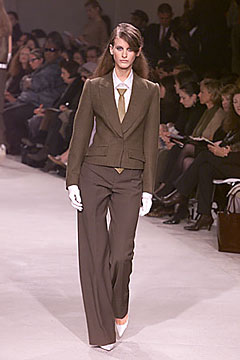
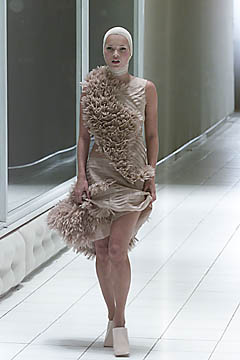
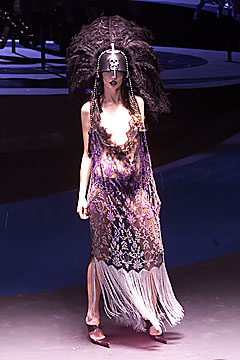
Alexander McQueen -
創作令人驚喜、震撼,賞心悅目又不失大膽構想,意念影響整個時裝界。
Born in the East End of London in 1970,
the son of a taxi driver, Alexander McQueen fast rose through the fashion ranks
to become one of the leading lights of international design.
He graduated from Central St Martins College of Art & Design in 1991, with a
display of such flair and innovation that he was immediately awarded an
apprenticeship with Savile Row tailors Anderson & Sheppard. He went on to work
for Romeo Gigli and Koji Tatsuno, before opening his own studio in East London.
Having introduced his label, McQueen managed to secure tabloid headlines with
the launch of his infamous, low-cut 'bumsters', while his beautifully crafted
and often outrageous designs attracted a small but fiercely loyal clientele,
including such influential fashion figures as stylist Isabella Blow, who was
sitting on the front row of his MA show. She wore one of the outfits he
presented in a Vogue shoot in November 1992 and has championed his work
ever since.
In October 1996, McQueen was named Best British Designer of the Year for the
first time. Days later, he was also named John Galliano's successor as the new
chief designer at Givenchy. What recommended him to the 40-year-old French
couture house was his "brilliant creativity and technical mastery". In 1997, a
year in which he produced four collections for Givenchy and two for his own
label, McQueen shared the Best British Designer award with Galliano. But it is
McQueen's carefully propagated image - as the raspberrying bad boy of fashion -
which made him a star in his own right, winning him such rock 'n' roll clients
as David Bowie and The Prodigy's Keith Flint.
Arriving at Givenchy, McQueen had the hubris to slam its founder, Hubert de
Givenchy, as "irrelevant". As if in response, his first collection for the
couture house was universally slated even by McQueen himself. "I know it was
crap," he told US Vogue in October 1997, promising to make amends the
following season.
Despite the shock tactics, however, McQueen is roundly recognised as a highly
innovative designer, with superb tailoring skills particularly by his new bosses
at the Gucci Group. In December 2000, shortly after McQueen voiced his malaise
with LVMH, Gucci confirmed that it had acquired 51 per cent of McQueen's
own-name business, enabling him at last to loose himself from the Givenchy
contract he claimed had constrained his creativity.

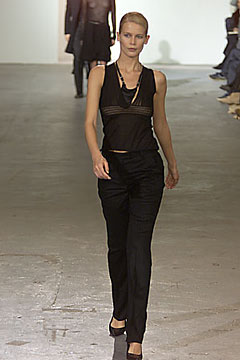
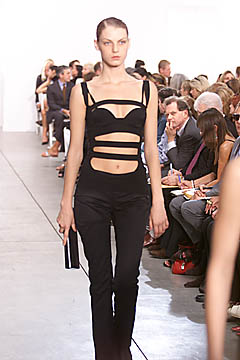
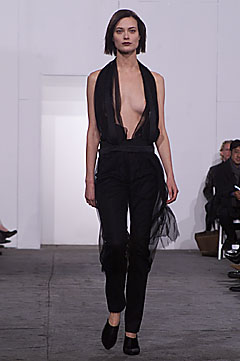
Helmut Lang -
善於運用簡單材料,剪裁出別具一格的時裝潮流,作品樸素但又顯出華麗感覺。
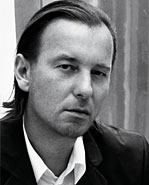
Helmut Lang was born in Vienna in 1956.
Having originally been trained for a financial career, Lang only decided to move
into fashion after he failed to find the perfect jacket and T-shirt in the shops
and was forced to make his own. "I wanted to be an artist but I was so in awe,"
he later explained to Vogue in September 1998. "I had a Catholic
education, which leaves you with a great big helping of guilt and unworthiness
that I went to business school instead."
Lang opened his first shop to such acclaim that, in 1986, the Austrian
government invited him to contribute to a national exhibition at the Pompidou
Centre in France. His designs went down a storm, and, by the end of the year, he
had staged his first catwalk show in Paris. But Lang was not built for the "heat
of the fashion cauldron". Though continuing to show there, he soon moved back to
Vienna. His early shows were intimate - even cramped - affairs. While executive
editor of Frank, his close friend Kim Stringer explained that this was
largely because "he was always worried that no one would turn up, so he invited
everyone he knew".
In keeping with his modest reputation, he remained based in Vienna, resisting
the lure of the four major international fashion capitals, until the late
Nineties, when he finally relocated to New York. In April 1998, three days
before he was due to show his first collection in the US, Lang decided to change
his plans and broadcast it to the world instead, live on the Internet. That
spring, Lang finally began to really cash-in on his achievements, with the
launch of his own lower-priced jeans collection.
The following season, Lang raised eyebrows once again, when he announced that he
wanted to leapfrog the collections in London, Milan and Paris and show in
mid-September, almost two months before the rest of the New York shows were
scheduled to start. Though a Manhattan newcomer, Lang proved to be something of
a pied piper, as a dozen designers, including Donna Karan, Calvin Klein,
Vivienne Tam and Nicole Miller soon followed suit.
In 1999, Lang sold a majority stake in his business to Prada.
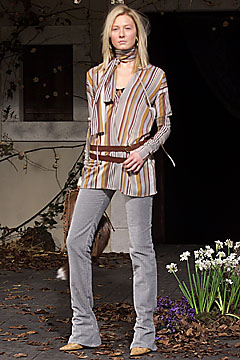
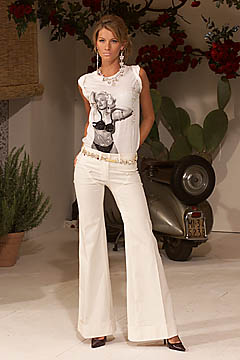
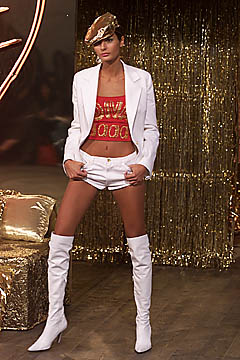
D&G
Domenico Dolce & Stefano Gabbana -
近年作品傾向反叛,大膽創新,吸引了一班年青一族喜愛。新一季SS'06/07,反樸歸真,以純白為主,一改以往作風。
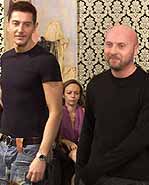
Design duo Domenico Dolce (b. 1958, near
Palermo, Sicily) and Stefano Gabbana (b.1962, Milan, Italy) are known for making
"stars look like stars". Their sexy styles are often to be seen on the likes of
Isabella Rossellini, Demi Moore, Nicole Kidman and Madonna, for whom they
created the now-famous "Kylie Minogue" tribute T-shirt. They also created the
costumes for Madonna's Girlie Show in 1993, as well as Whitney Houston's 1999
tour.
Partners both in life and in business, the pair met while working as assistants
in an atelier in Milan. Sharing a love of the baroque, they made their name
together in 1985, when the organisers of the Milano Collezioni invited them to
take part in a fashion show to launch "New Talents". The following year, they
presented their first independent women's ready-to-wear show. Since then, they
have introduced menswear and a line of signature fragrances, and opened shops in
Italy, Japan, Hong Kong and, in 1999, in London (the London salon, designed by
British architect David Chipperfield, is testament to the designers' love of
mixing their own Mediterranean spirit with English eccentricity).
Originally inspired by eclectic, thrift shop Bohemia, Dolce & Gabbana's deeply
coloured, animal prints have been described as "haute hippydom" taking
inspiration in particular from Italy's prestigious film history. "When we design
it's like a movie," says Domenico Dolce. "We think of a story and we design the
clothes to go with it." They claim to be more concerned about creating the best,
most flattering clothes than sparking trends, once admitting that they wouldn't
mind if their only contribution to fashion history was a black bra.
D&G trademarks include underwear-as-outerwear (such as corsets and bra
fastenings), gangster boss pinstripe suits, extravagantly printed and
embroidered coats, and black. Meanwhile their fetish-meets-femininity
collections are always backed by powerful ad campaigns, like the black-and-white
La Sicilia, featuring model Marpessa photographed by Ferdinando Scianna in 1987.
But fundamentally they are known for making women look, quite simply,
devastatingly sexy. "They find their way out of any black dress, any buttoned-up
blouse," says Rossellini. "The first piece of theirs I wore was a white shirt,
very chaste, but cut to make my breasts look as if they were bursting out of
it."
Once dubbed the "Gilbert and George of Italian fashion", Dolce and Gabbana gave
their fashion interests a musical turn in 1996, by recording their own single,
in which they intoned the words "D&G is love" over a techno beat. Newer to the
design game than other heavyweight Italian fashion houses such as Versace and
Armani, the pair acknowledge that luck has played its part in their phenomenal
success. By 1997, their company reported a turnover of ?00 million, prompting
both designers to announce that they planned to retire by the age of 40 - a
promise they happily did not keep.
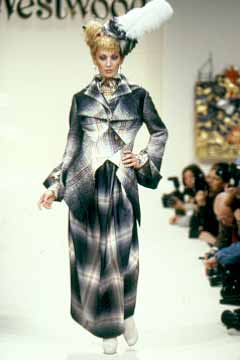
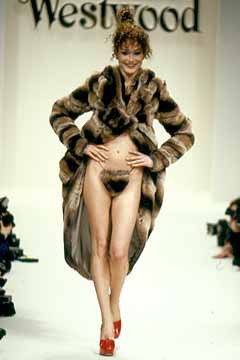
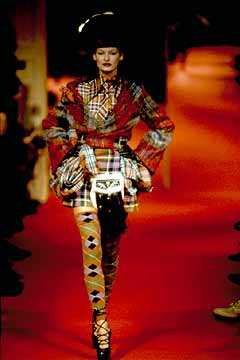
VIVIENNE WESTWOOD
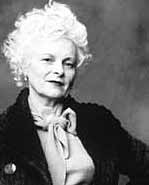
Vivinne Westwood -
70-80年代對Punk的態度,領導Punk潮流以至在時裝設計上亦有著獨特的一面。
Born Vivienne Isabel Swire in Glossop,
Derbyshire, on April 8, 1941, Vivienne Westwood is one of the most influential
and recognisable British designers of the past 20 years. She began designing
clothes in 1971 with the opening of her first shop, Let It Rock, at 430 King's
Road. The shop underwent several changes of name and style until it emerged in
1974 under name of Sex, a boutique selling bondage gear, ripped T-shirts and
other attire that became synonymous with the punk explosion.
In 1976, her then lover and business partner, Malcolm McLaren, guaranteed her
status among the stars when he dressed the Sex Pistols, the British band he
managed, in clothes from the boutique. By the time the punk storm had passed at
the end of the Seventies, Westwood was already recognised as a frontrunner among
fashion's avant-garde.
In 1981, Westwood showed her first collection in London, entitled Pirate. The
show put her firmly on the fashion map as an original and unusual design talent.
In 1983, she showed in Paris (the first British designer to do so since Mary
Quant) and in 1984 her clothes shared catwalk space with those of Calvin Klein
and Gianfranco Ferr?in Tokyo, where she is still now best loved. Her
uncompromising and often provocative designs long continued to hit the
headlines, securing a global audience for her clothes.
In 1990, by now more concerned with haute couture than streetstyle, Westwood
launched a menswear collection in Florence. In the same year, she was named
British Designer of the Year, a feat she repeated in 1991. The following
December, she was awarded an OBE in recognition of her services to British
fashion. Her use of quintessentially British wools, tweeds, tartans and linens
continues to make her a byword for British style and quality abroad; and in 1998
she won the Queen's Export Award.
Among other honours, Westwood also was awarded a place in the Victoria & Albert
museum, with the indigo mock croc lace-up platform boots that famously toppled
Naomi Campbell on the catwalk in 1993. When in 1999 Queen Elizabeth II went to
view the collection, wearing sensible court shoes, she was heard to mutter: "I'm
not surprised she fell."
As one of the most curious creatures this country has produced, among her
eccentricities is a desire to seem to live a modest life. She regularly cycles
into work. And, despite being awarded ?7,530 by Lambeth Council and the Heritage
Lottery fund to renovate her 300-year-old home in the historic Old Town area of
Clapham (which once belonged to Captain Cook's mother), Westwood claims that she
and her husband, Andreas Kronthaler, share their home with very little
furniture. "All I've got at home are two second-hand armchairs, a trestle table,
a fridge and a cooker," she once said.
Westwood's son by McLaren, Joe Corre, is the founder of Agent Provocateur.
HOME
2005©by
marco