

Kajira can be placed in any form of clothing, or no clothing
whatsoever, that the Master or Mistress desires them to be
placed in. Usually that will depend on the situation, and the
kajira. Moreover, there is nothing which says that the kajira
will not have a number of different outfits to wear, some worn
as directed, but some permitted to be worn by the kajira's
choice, so that the Master or Mistress can see the kajira's
state of mind and intent through thier choice of garb.
Here are some examples of Gorean clothing, some of which have
picture examples so that the kajira garb can be better known;

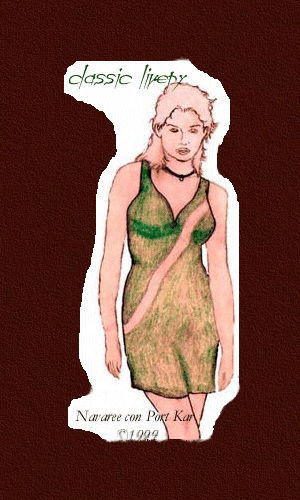
Classic standard slave livery - short dress goes down to 5" above the knee, sides slit to 1" below crotch level, deep plunging v-neckline, sleeveless, with a diagonal stripe across the front.
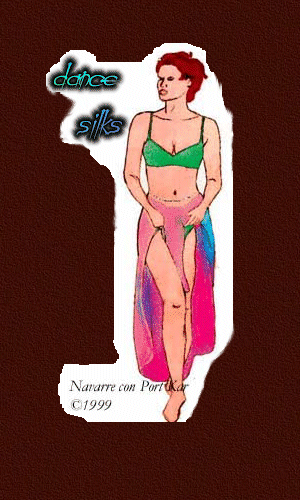
Dancing silks - hung low on bared hips, falls to ankles,
diaphanous, front corner taken behind and thrust, loose
and draped, into a rolled silk belt knotted about the
hips. The back corner is drawn before and in front, and
thrust, loosely, into the rolled silk at the right hip.
Low on the hips, a belt of small denomination coins,
threaded and overlapping, with strings of coins hanging
down all around the belt. Concealing veil, from head, held
by coined headband, falling and tucked into the coin-belt
on the right hip, and into the strap of a coined
halter-top on the left side. Arms hold numerous armlets
and bangles and bracelets, ankles are belled, as are
earrings.
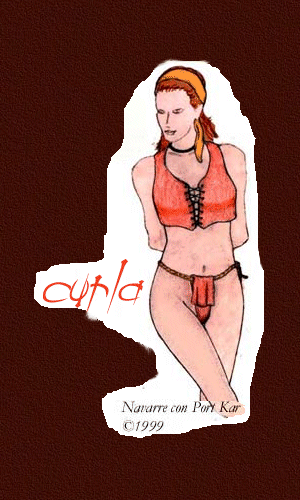
The curla and the chatra, kalmak and koora - The curla is
a rope of twisted silk, red, tied snugly about the belly
and knotted at the left hip. The chatra, black cloth or
soft supple leather, is about 4' in length, folded
narrowly to a width of about 6", and thrust under and over
the curla in front, drawn back and between her legs and
thrust under and over the curla in back. It is drawn
snugly tight. The kalmak is the vest of black leather,
open or closed. The koora is a strip of cloth, white,
yellow, or red, that ties the hair back. Add bangles, and
armbands, to complete it.
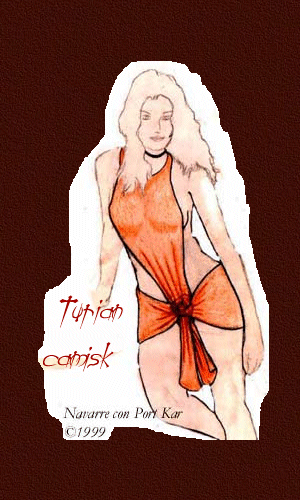
Turian camisk - An inverted T with neck-thong, drops
below the crotch and is drawn between legs and wrapped to
either side behind, the arms brought forward and tied in
front.
Slave skirt - 5' length of cloth, 1.5' wide, wrapped about
hips, tucked in to hold up, worn low to reveal the slave
belly. Note that only slaves reveal their navels, Free
Women do not.
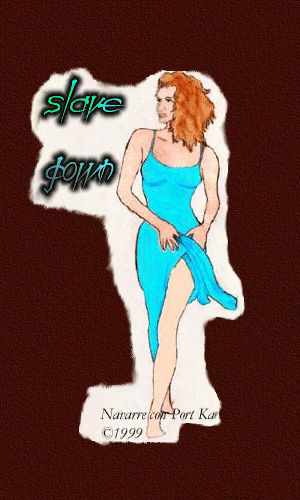
Slave gown - full length, shoulder strapped dress, a
single-layer gown, close and form-fitting.
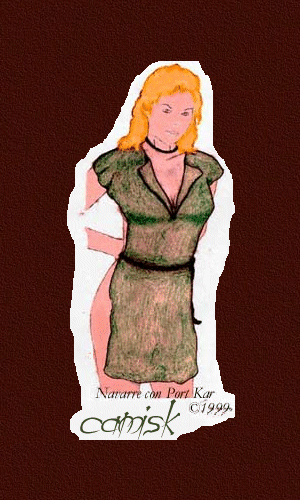
Standard camisk - rectangle of cloth with a hole in the
center for the head to go through, like a poncho, mid-calf
length, belted tight with a chain, or leather thong, or
binding fiber, or a rope. Note that the neckline is
usually cut deeply, sometimes as far down as the waist.
Trevan slave gown - long, sleeveless gown of single-layered cloth, slit to mid-thigh on the sides, with a deep head-cowl, usually belted with a chain..
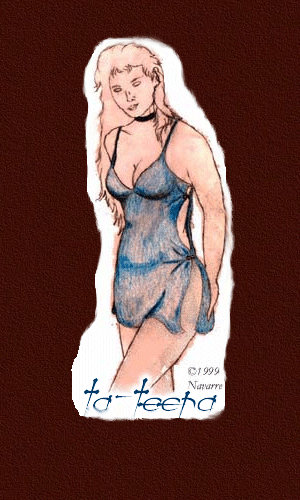
Ta-teera - slips over the head, wraps around on the right
side to fasten on the left with two small hooks, one at
breast-level and one at the hip/waist join. Adjusted to
fit snugly, mid-thigh or higher length, of a light clingy
cloth, usually rep-cloth or silk.
Slave peasant tunic - rough cloth tunic, falls to mid-calf, knotted at waist with thick coarse rope, also usually worn with a rope collar of the same thick, coarse material..
Silk talmit - Strip of cloth used to bind back the hair.
Slave work tunics - usually brown or grey.
Hunter's Catch - rope netting twisted around a girl like body netting, about 2.25" gap in netting, often worn over other silks..
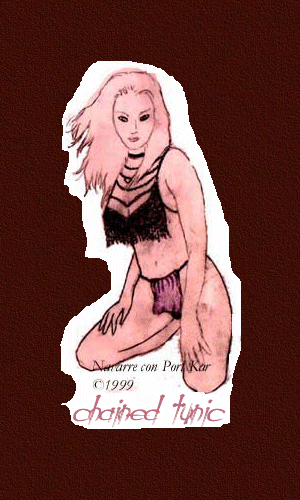
Chain tunics of Tyros - chain-linked tunic, light-weight
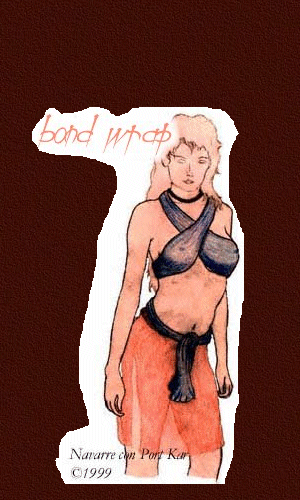
Bondage wrap - 10'-14'long, 6"-8" wide strip of cloth
wrapped behind neck, to cross in front as it covers the
breasts, then passes behind the back again, crossing to
return in front where it is tied off, hanging down between
the legs.
Slave sari - sheer, diaphanous sari with extra folds and slits at each side to facilitate dancing.
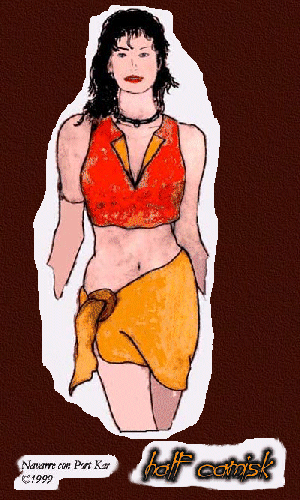
Half-camisk - Comes to just below breasts, as a halter top
would, sometimes called a half-tunic.
Full-camisk - Just like a regular camisk, except this drops further to the ground, usually tapering down to no more than 12" wide at the base. The length of the full-camisk is down to mid-calf as a minimum, usually ankle-length..
Slave kirtle - An ankle-length white kirtle, usually woolen, sleeveless, and split to her belly, sometimes split on the sides..
Light turbans - worn usually to conceal shorn hair, if permitted to a girl..
Slave bodice.
Dancing Belt - long cord with dangling coins on strings, looped twice around the body. The first looop is tight, around the waist, the second is low and loose, hanging on the hips below the belly. Usually accessoried by wrist and ankle bangles or bells..
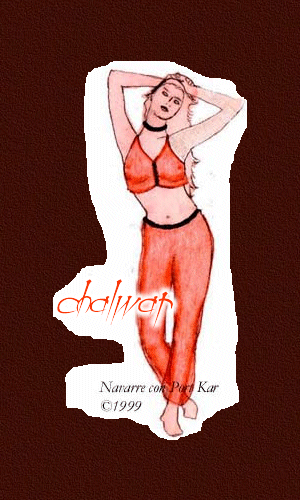
Chalwar - Diphanous trousers, gathered at the ankle in a
cuff
Vest - tight or open, leaving midriff bare
Slave livery - Brief skirted garment with no sleeves,
diagonally stripped, terminates inches above the knees
Dancing silks description, has veils
Description of slave veils
Kajir are often permitted to wear slave cosmetics, seldom include nail polish, but it is possible. Slave perfumes are also quite common, there are many famous scents which made specifically for slaves.
Usually, slave garments are made such that the slave will be available at any instant, totally, to the Master. This is an important consideration when dressing the slave, it will often determine whether or not the slave will be used, as well as whether the slave will be around only Men, or around Free Women as well.
The ropes or ties of a kajir garment are typically positioned on the kajira's left, which is the Master or Mistress' right when the kajira is facing the Owner. This makes it easy for the Free Person to reach out and untie or unfasten the garment. If the Owner is left handed, the ropes or ties of the garment will be on the kajira's right side, for the same reason.
Most of the time, kajira are kept barefooted, as occasion and circumstance permit, so that they do not forget their place, as well as remain physically sensitized. This last is of some importance, the Owner usually wants his kajira to be very sensitive and responsive.
Often a Master or Mistress will ornament the kajira, perhaps with jewelry, or cords, or ribbons, or chains, wrapped about the torso, arms, or legs.
Slave silks are any silken garmenture that the kajir is permitted to wear, at the Master or Mistress' discretion. The colour coding of slave silks means different things in different places. For instance....
In the Books;
white
- virginal or off-limits
yellow
- paga slave, available for the price of drink
red
- pleasure slave, highly trained
grey
- state-owned slave
black
- 'unowned' slave in the pens, for sale
online Gor;
white
- raw slave in training, chaste or off-limits
yellow
- semi-trained, may alcove/lap with permission
red
- fully trained in all the Arts, does not need
protection from the Owner, usually a pleasure
slave and has no restrictions from the Owner
The slave may, once owned, be given any colour, or even multiply coloured, silks. Patterns, designs, and blended colours abound. It is all up to the Owner. To leave the kajira in a white/yellow/red/grey/black status is to create many misimpressions amongst other Free People.
It is important to understand that these colours could just as easily apply to a camisk, or classical livery, or a slave gown, as anything else. The garb will vary, as will the colour of the garb. And, if a girl wears a specific Owner's collar, the garb is most likely simply a matter of the Owner's choice. Never assume that just because a girl is red-silk, she has permission to cybersex with anyone and everyone.
| Entrance to Gor |