Classical Age of Ground to Air,Air to Ground Combat
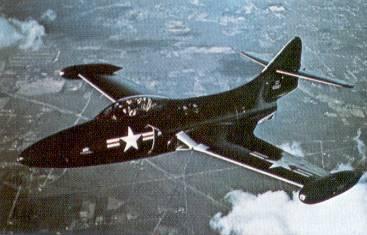 During the second world war USN, tactics were born of desperation ,the strike upon Pearl Harbour containing an element of luck ,lucky for the Americans that their carriers at the time of the attack were out on maneuvers. Midway was also a lucky break for the Americans, lucky that the Japanese commander was in two minds as to whether he should arm his aircraft for ship targets, or for land targets. Should await the results of reconnaissance flight? Should the aircraft now spotted on the flight deck be armed for the air-to-air role or should they be left as they were loaded with torpedoes and bombs? He chose the latter thus confirming the outcome of the war game played earlier on the bridge of the Japanese flagship predicting a Japanese defeat at Midway.
TBF Dive bombers of 'Torpedo Eight' commanded by Squadron Leader Hugh Waldron found the Japanese carrier,(some say due to the instinct of the commander who was part Indian).Plane after lumbering plane was shot out of the air as they flew inexorably at low level towards the Japanese carrier, the lone survivor, Lieutenant George Gay, watching the action from the ocean. He also watched as SBD dive-bombers bombed the crowded flight deck sinking one carrier and then, after refueling, finishing off the other three. After this action, the Japanese carrier was virtually a non-starter, Midway in effect being the world�s last carrier versus carrier action.
The Korean war followed and the correct tactics for jets had not yet been worked out, the war in the air a continuation of World War 2 conducted with jets. Not air-to-air combat occurred as the contest was greatly skewed in favour of the US, the majority of American pilots having seen service during World War 2. The Chinese pilots in some cases were barely able to fly their MiG15 aircraft, which, if used competently, were more than a match for the F86 Sabre. In the south air to air, combat was virtually non-exixtant.How ever as the war was a war fought between armies far from airbases the aircraft did not have a lot of input regarding the result.
At the beginning of the Vietnam conflict the thinking behind aviation, tactics were as envisioned for the European theatre. Jets would streak towards their target on the deck, drop their ordnance and then an egress the target area. This did not work out as the AAA and SAM (Anti aircraft artillery -Surface to air missile) always seemed to know not only from which direction the aircraft where coming and their altitude, but the time of the sorties .As they crossed the coastline the inevitable Fan Son radar in China would paint them with radar tendrils. (At the time, the spy Walker was transmitting the times of the incoming raids to his superiors in Moscow).
A policy evolved where the strike force would leave the carrier, climb to thirty thousand feet or so, and then, when over the coast, begin a slow descent to the target area. At five thousand feet, they would drop their ordnance and then climb to twenty thousand plus in order to avoid the AAA ,the main source of concern for US pilot. SAMs were only a problem above five thousand feet, and even then they could be evaded as these flying telegraph poles had a very small wing area and could be coaxed to fly into the sun by the F8 Crusader escort pilots offering themselves as a target then quickly diving out of range. The stubby wings of the SAMs prevented them from tracking the fighters, a case of those who could pull the highest G's deciding the matter.
Both the Navy and the Air force raided to the north, the USAF effort dominated by the F105 Thunder Chief fighter bombers; a high casualty affair as the raids were deep into North Viet Nam subject to heavy AAA/SAM. So heavy were the USAF casualties that the F105 barely survived the conflict becoming virtually extinct.
The USN participation consisted of the stationing of carriers off the northern and southern coasts. These cruises were designated as 'Zulu' and 'Yankee' stations ,the northern cruise being the Yankee station, the southern one Zulu. In the south, there was little fear of the NVAF (North Vietnamese Air force )or the NVA(North Vietnamese Army) as the US virtually controlled the south. In the north, it was a different matter.
In order to protect the aircraft a typical Yankee strike would involve a BARCAP, (barrier combat air patrol), which was designed to guard against an air attack while en route to the target, one of the least threatened spots. Following the bombers from above would be a MiG CAP (MiG combat air patrol)that would guard against any MiG attacks. At the target would be a TAR CAP, (target combat air patrol) a fighter cover for the bombers while over the target. Out of range would be the twin jet engine AE3 Sky Warrior aircraft that would try to jam enemy search homing radar signals. All was a great drain upon US resources ;part of the strategic plan, the North Vietnamese knowing there was a growing lack of support for the war in the US.
War in the air was sparse. At first the NVAF was game to attack, the USN .The kill ratio greatly favoured the Americans, in some cases at a ratio of 10:1. Even fighter-bomber A4 Sky-hawk pilots were not averse to loosening off their Zuni packs of rockets at intercepting MIGs.(These aircraft due to their very simplicity were invaluable as there down time was a fraction that of says the F8 Crusader fighters. Engines could be taken out and changed in a two-hour operation ,a thing that usually took a week or more for other aircraft).
Although ineffectual as an air threat, the North Vietnamese air units did force the Americans to expend resources in order to protect the bombers. USN casualties for air-to-air combat were much less than those of their USAF counter parts. Credit most go to the USN doctrine of continuing with ACM (air combat maneuvers) training even after the USAF had discontinued theirs putting their faith in the AMRAAM (Advanced Medium Range Air to Air Missile)These weapon did not work out as expected ,the rules of engagement stating that an attacking pilot must have visual identification of the target aircraft putting aircrews in the position of having to fly two sorties in order to shoot down one aircraft, one to spot aircraft, one to launch the weapon. In fact so dismal was the USAF performance the air to air ration for kills once was as low as 1:1.A revaluation of tactics and the setting up of a fighter school at Miramar in California soon rectified the situation putting the Air force back at its former level.
Since Viet Nam, there have been no wars where the US has been challenged in the air. During Desert Shield in the 1990's the city of Baghdad had more AAA then did Berlin during WWII; to no avail as the use precision guided weapons and stealth aircraft destroyed all of its supporting radar and communications within a one week period leaving the Iraqis firing blindly into the air.
China has viewed the results of Desert Shield and Desert Storm with great alarm and despondency. Its armed forces at the time were twenty-five years or so behind the US regarding technology based upon the use of overwhelming force on the ground. The sight of so many fleeing Iraqis at the hands of a relatively small number of pilots seemed to convince the PRC(Peoples Republic of China) to acquire advanced technology ,largely by covert means. Whole state of the art aircraft engines and advanced computer systems have been acquired with independent agents ,which the PRC strenuously denies, despite numerous convictions in US courts.
Will China now be of greater military threat than before it had the new technology? Military conflict involves equipment but is not decided solely on who has the best and the most. During WWII the US was initially inferior to Japan in the air regarding both the quality and the quantity of its equipment . The superior Zero and superior Japanese flying was over come by better USN aircraft armour and dogged determination .The F4F Hellcat fighter which though not more maneuverable than the Zero was more heavily armed and armoured ,especially around the pilot, allowing USN pilots to eventually gain air superiority in the Pacific. In Korea the Chinese had a superior aircraft in the form of the MiG 15 which could ,in the right hands, have won easily but unfortunately their pilots were not trained to the standards of the UN forces. Expensive technology was in fact a liability as it could not be used, the Chinese ,in most cases, staying out of range at a position suitable for a run the Yalu river in Manchuria beyond which the UN was forbidden to fly, in much the same way as were the USN pilots in Viet Nam forbidden to cross the border into China or even into the airspace of Major cities in some cases.
A conventional war between combatants having equal (if not similiar) strength has not been fought since the ending of World War Two.It is a moot point regarding how a modern conventional war will be fought if it does occur.No one knows as each battle has to be learned as the players go along.Suffice to say that the future combat between east and west will not be merely a contest of wills.It will be more a type of jujitsu where one force appies his best characteristics against an opponents weakest point in much the same way as did the US rely upon technology during the early encounter with Japan in order to overcome superior skill in the air:the superior armour on its aircraft .The north Vietnamese countered the USN superior skill and technology by using massive triple A batteries around their cities combined with a Byzantine diplomatic code which forbade the US from attacking Haiphong harbour where the equipment was off loaded. During the Korean conflict the balance between technology and guile favoured the USAF as it was virtually immune from the triple A and SAM threat ,but given a few years of development the story might have been different.
