<BGSOUND SRC="Lavolta.mid">
The Chapel
illuminated manuscript
St. George Slaying the Dragon (14century)
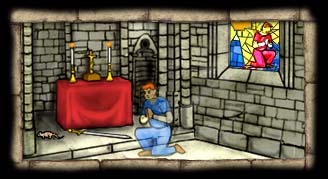
Chapels were an important part of life in a castle and the central place for community gatherings. Castle keeps had chapels, but sometimes they were located in the bailey, or outer ward. Other places chapels could be located were in the castle towers and gate houses.

Many castles had more than one chapel, and some were very large cathedral-type structures. Sometimes, the chapels were private and only used by the lord and his family, even when churches were located nearby.

Decoration and furniture in castle chapels were just as ornate as any other chapel that was built separate from the castle. Most had stained glass windows and wall paintings. Often, the castle chapel was the only room in the castle that had carved and vaulted decoration. Altars, piscinas, and aumbries were built-in. Some had crypts and barrel-vaulted naves.

Chaplains were an important appointment to the castle staff. They acted as a local parish priest, or as a chantry chaplain. They provided for confession, absolution, and communion. Chaplains sometimes took on other occupations within the castle, such as overseeing the building of structures, being a clerk, accountant, or a medical officer.
Mass was held every morning for the castle lord and his family in a small chapel built off the Great Hall. Services for the rest of the castle inhabitants would be held in chapels built on the bailey.
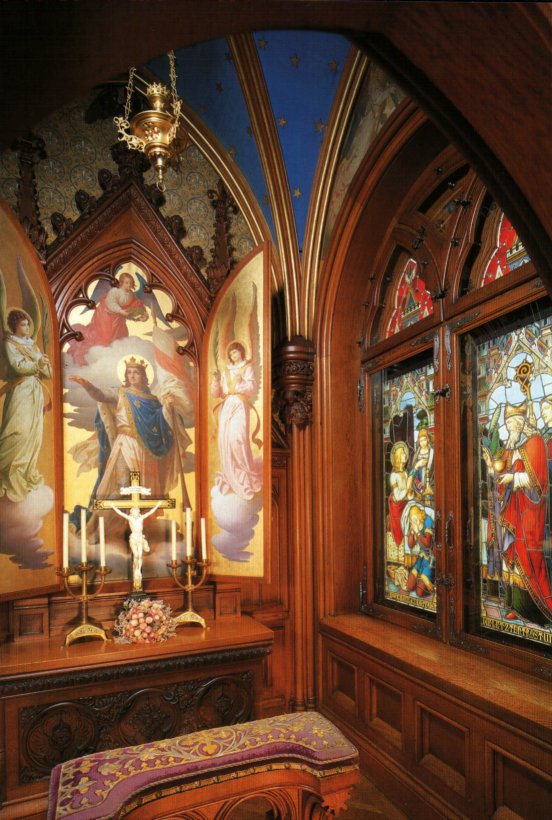
Neuschwanstein Chapel
The Chapel at Castle Neuschwanstein
dedicated to the Patron Saint of the King - Louis IX of France (St. Louis). The richly carved winged-altar is set into the decorated wall, and the altar paintings show scenes from the life of St. Louis. The stained glass windows to the right show St. Louis receiving the last sacraments. The windows are the work of the "Mayerischen" Court Art-Studio.

Click here for larger image. Must see!
Updated November 2004  AD
Back to Courtyard
"Hearken we beseech Thee, O Lord, to our prayers, and deign to bless with the right hand of Thy Majesty this sword with which They servant desires to be girded, that it may be a defense of churches, widows, orphans and all Thy servants against the scourge of pagans, that it may be the terror and dread of all evil-doers, and that it may be just in both attack and defense."

An ancient Medieval Prayer
Hosted by www.Geocities.ws

1