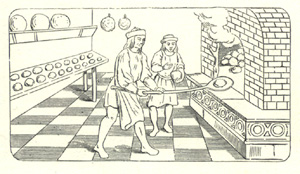
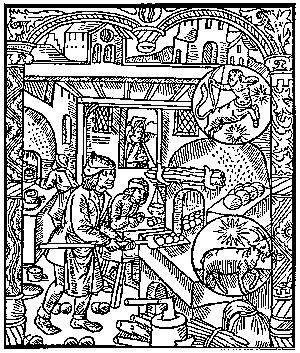
Some castles had there own bakerys seperate from the kitchen. The growth of towns and cities throughout the Middle Ages saw a steady increase in trade and bakers began to set up in business. Bakers� guilds were introduced to protect the interests of members and to regulate controls governing the price and weight of bread. By Tudor times, Britain was enjoying increased prosperity and bread had become a real status symbol: the nobility ate small, fine white loaves called manchets; merchants and tradesmen ate wheaten cobs while the poor had to be satisfied with bran loaves.
In 1150 AD, Bakers formed guilds to protect them from manorial barons and in 1155 bakers formed a brotherhood. White bread bakers and brown bread bakers were split into separate guilds. "The Assize of Bread', this body sat to regulate the weight and price of loaves. The first bread subsidy was given - 12 pennies for eight bushels of wheat made into bread. (A bushel of wheat is the actual weight of 8 gallons of wheat - this could vary according to the hardness or dryness of the grain). If a baker broke this law he could be pilloried and banned from baking for life.
|