Ferret FAQ
  Ferret FAQ
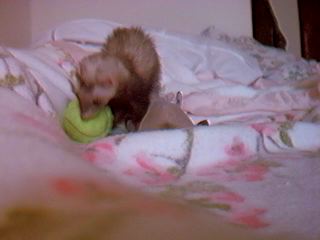
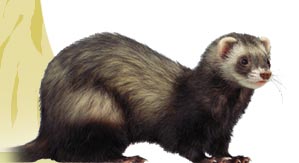
Here are some frequently asked questions about ferrets and their answers. Ferrets have a musky scent that is somewhat stronger than, say, wet-dog smell. It is an almost sweet-smelling odor. Some people hardly notice it, and some people find it almost nauseating. I was in this latter category when I first brought home my fert, and it took me a couple weeks to get to the point where it didn't bother me. If you are like me, please give your fert a chance to show you how fun and cute he can be, before you give him up due to his musky scent. Ferrets exhibit sexual dimorphism. This means that males can be up to twice as big as females. However, males who are neutured as babies are much smaller than their unneutered male counterparts. A female fert will weigh between one and a half and three pounds when full grown. A neutured male will probably not weigh more than three pounds when full grown. Unneutured males can weigh up to six pounds. There are several kinds of ferret chows available for sale, both dry chow and canned, moist food. They have their advantages and disadvantages. Dry chow is better for keeping the teeth clean, but can wear down the teeth eventually. Moist chow can lead to bad breath. It is probably best to go with either a mixture of mostly dry chow with some moist mixed in, or dry chow with maybe a little water added to soften it. Ferrets also eat all kinds of other things, generally anything they can fit in their mouths. You must be very careful of what you leave lying around. My ferret will attempt to eat anything sweet, including cookies, brownies, candy, gatorade and soda. These should be avoided because you will end up with a fat fert! Non citrus fruits like apples are good, in small quantities, but too much will give them diarrhea. Nuts and seeds should be avoided, since ferrets don't digest them very well. Cooked meat and eggs are also good, if your fert likes them. Expect your fert to be around for about 8 years barring illness or injury, though I have heard tales of ferts living to the ripe old age of twelve. Ferrets are very sociable and playful. Young ferrets, called kits, are especially energetic. In general, you should be prepared to spend at least two hours a day with your fert. You can let him run around in a safe, fert-proofed area of your home, and just keep an eye on him while he does his fert-like things. Ferts love to wrestle, chase after balls, and play tug of war. You should provide him with toys and spend time playing with him and handling him, so he becomes a friendly, well-adjusted fert. Do you have more questions about ferrets? Email me