Some famous stories


The Brown Lady of Raynham Hall

The Brown Lady of Raynham Hall

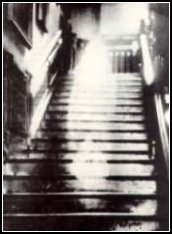
The Brown Lady of Raynham Hall is one of the most famous hauntings in Britain, because of the strange form captured by photographers from 'Country Life' magazine in 1936. Before that event the Brown Lady had been reported several times, but many of the written accounts vary considerably. later in 1936, the most famous event occurred in the potted history of the haunting. Two professional photographers, Captain Provand and his assistant Indre Shira, were taking photographs of the hall for 'Country Life' magazine. The date was the 19th September, and at 4.00pm that afternoon they were photographing the Hall's main staircase. They had completed one exposure, and were preparing for another, when Shira saw a misty form ascending the stairs. He shouted to the captain that there was something on the stairs, and asked if the Captain was ready, he replied "yes" and took the cap off the lens, while Shira pressed the trigger for the flash light.

After this the captain came up from under the protective cloth, and asked what all the fuss was about. Shira explained that he had seen a shadowy, see-through figure on the stairs. When the negative was developed it showed the famous image. There were three witnesses to the negatives development, as Shira had wanted an independent observer to verify the event. He ran and got a chemist called Benjamin Jones, who managed the premises above which the development studio was located. A full account of the experience was published in Country Life magazine on the 26th of December 1936.

The photo was later examined by experts at the Country Life offices, where it was declared unlikely to have been tampered with. There have been a few detractors saying that Shira hoaxed the image by smearing grease on the lens or moving in front of the camera, but there is unlikely to be a definitive explanation for the photo. It is still held in the offices of Country Life.
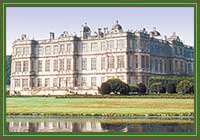


Built on the site of a former priory, Longleat House is a hive of ghostly activity.

 One corridor is named after the spirit of a green lady seen by several eyewitnesses. The ghost is believed to be Lady Louisa Carteret, who was married to the second Viscount of Weymouth.

The Viscount murdered Lady Carteret's illicit lover and buried his body in the cellar. Lady Carteret died during childbirth in 1736 and supposedly haunts the corridors looking for her lost love.

A bishop confined to the house during the persecution of the Catholics is reputed to haunt the library while the spirit of Cardinal Woolsey and a cavalier have also been spotted.

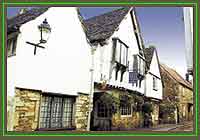
A former 15th Century wool merchant's home, this Lacock pub has experienced its fair share of bumps in the night.

 Converted to an inn nearly 50 years ago, guests have been reporting ghostly apparitions for the past 15 years.

In the 1980s a carpet fitter working in the pub fled screaming when he clapped eyes on the ghost of an old woman sitting in a chair.

Other diners and employees at the pub have seen a mystery woman sitting at a corner table.

Presences have been felt in upstairs bedrooms while a suspected poltergeist caused a disturbance in the dining room, which was locked at the time

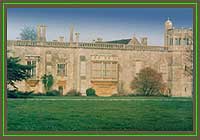
Lacock Abbey

Set in the medieval village of Lacock, the 13th Century Abbey is no stranger to sightings of the undead, according to local author Kathleen Wiltshire.

Her book 'Ghosts and Legends of the Wiltshire Countryside' tells several tales of ghosts in the abbey.

 It was said that two children staying at the abbey were frightened when an ugly little man walked through their room.

Many years later a skeleton was found buried in the wall of that particular bedroom - the skeleton of a deformed man.

The ghost of a young woman has been seen near the lake. Her identity is not known although it could be any number of fair maidens who died here, including Rosamund, the lover of Henry II.

She may have met her death at the hands of Queen Eleanor (formerly Eleanor of Aquitane, Henry's older and jealous wife)
.


In the year 1729, a Dutch ship called the Flying Dutchman1, captained by the infamous Vanderdecken, set sail towards the Cape of Good Hope, Africa's southernmost tip which has long been associated with difficult sailing conditions and shipwrecks. Vanderdecken was a violent and disturbed captain who feared nothing and refused to back away from any situation. As the ship approached the Cape a violent storm broke out. The fierce winds, gigantic waves and terrible lightening threatened to sink the Flying Dutchman, but the twisted and fearless captain had a threat of his own. There and then, Vanderdecken swore an oath to the Devil that he would round the Cape even if it took him until Doomsday (the day that the world will come to an end). This foolish act brought a terrible curse down upon the captain, his crew and his ship. From that moment forth they were forced to roam the mighty seas for all eternity as a ghost ship.

From that fateful day to the present, many sailors claim to have seen the Flying Dutchman haunting the seas. It is believed that anyone who sees the ship will have misfortune fall upon them. So powerful is this belief that King George V of England himself, as a young prince during his naval days, purported to have encountered it, although a prince is not someone who immediately springs to mind when considering unfortunate people.

So, the Flying Dutchman became the curse of the seas. Any ship that met him became a ship of ill fortune. No sailor would sail on her, any trader would refuse to deal in it's wares. In order to protect themselves against an encounter with the ghost ship, ships took to nailing horseshoes to their masts, which was said to bring luck, and prevent an unhappy meeting.


History Of Borley Rectory

The Rectory was built back in 1863 by Reverend Henry Bull, but was later destroyed by a large fire in February 1939.The house was located in Essex near the river Stour, and it was reported that a great deal of poltergeist and related phenomena did occur there even before anyone had moved in. In 1930, Reverend Lionel Foyster and his family moved there, but left only 5 years later after a staggering 2000 accounts of unexplained paranormal phenomena. From strange writing which appeared on a regular basis on the walls, to unusual apparitions and figures appearing to be moving through the gardens at night - the family were constantly plagued by these disturbing supernatural occurrences and events. The last people to live in Borley Rectory were Captain William Gregson and his family, and after the fire it was believed that the ghosts had actually moved across the road to the nearby Borley Church.

 One thing is for sure however, and that is the extent to which these haunting had occurred after and during the time when the Rectory had been occupied. Many dozens of mysterious photographs were taken throughout the years, some of them showing what appeared to be strange dark figures and apparitions in the grounds around the Rectory. Were these pictures nothing more than exaggerated remnants of someone's overactive imagination, or perhaps something of a much more spiritual nature ? It is doubtful that we will ever really know for sure, and Borley Rectory will probably remain one of the most haunted houses in history.


Hosted by www.Geocities.ws

1