 The world of WilliamThe world of William
It was Thomas Henry's illustrations that first lured me into
the world of William Brown 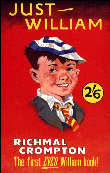 created by Richmal Crompton. Browsing through the
books in the school library, I was taken in by pictures of a
small, unruly boy dressed in jacket, shorts, long socks, shoes
and cap, with most of the items askew, to say the least.
Intrigued, I took home William the Conqueror and lost
myself in it. Thereafter William became a regular at home. There
was one problem, though. My father had become equally infatuated
with the little thug. To solve the problem, I had to bring in two
titles a time. At that time I wondered what a middle-aged man
could see in what I considered children's books. My query was
solved only when I reached his age and chanced on a facsimile
copy of the first edition of Just William published to
celebrate the centenary of the birth of Richmal Crompton in 1990.
It was after about 25 years that I read a William, and I found
him as fascinating as ever.
created by Richmal Crompton. Browsing through the
books in the school library, I was taken in by pictures of a
small, unruly boy dressed in jacket, shorts, long socks, shoes
and cap, with most of the items askew, to say the least.
Intrigued, I took home William the Conqueror and lost
myself in it. Thereafter William became a regular at home. There
was one problem, though. My father had become equally infatuated
with the little thug. To solve the problem, I had to bring in two
titles a time. At that time I wondered what a middle-aged man
could see in what I considered children's books. My query was
solved only when I reached his age and chanced on a facsimile
copy of the first edition of Just William published to
celebrate the centenary of the birth of Richmal Crompton in 1990.
It was after about 25 years that I read a William, and I found
him as fascinating as ever.
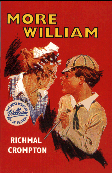 But really, Richmal Crompton
had initially not meant the William books to be just for children.
However, her heart was always with her anarchic protagonist
rather than with the adult characters, so children were always
more drawn towards her works. Yes, she wrote many other 'adult'
novels but they are largely forgettable. Her legacy therefore
remains William Brown; his gang of 'Outlaws' which includes
Ginger, Henry and Douglas; his mongrel, Jumble; Joan, the pretty
girl next door; the soppy, lisping Violet Elizabeth Bott,
daughter of a 'sauce magnate' who was his bete noire; William's
arch rival, the rich and spoilt Hubert Lane; his long suffering
family consisting of his parents, his 18-year-old elder brother,
Robert and his teenage sister, Ethel; and scores of other
characters -- neighbours, girl and boy friends of his elder
siblings, aunts and uncles, fire-fighters, farmers et al -- most
of whom just wished William away.
But really, Richmal Crompton
had initially not meant the William books to be just for children.
However, her heart was always with her anarchic protagonist
rather than with the adult characters, so children were always
more drawn towards her works. Yes, she wrote many other 'adult'
novels but they are largely forgettable. Her legacy therefore
remains William Brown; his gang of 'Outlaws' which includes
Ginger, Henry and Douglas; his mongrel, Jumble; Joan, the pretty
girl next door; the soppy, lisping Violet Elizabeth Bott,
daughter of a 'sauce magnate' who was his bete noire; William's
arch rival, the rich and spoilt Hubert Lane; his long suffering
family consisting of his parents, his 18-year-old elder brother,
Robert and his teenage sister, Ethel; and scores of other
characters -- neighbours, girl and boy friends of his elder
siblings, aunts and uncles, fire-fighters, farmers et al -- most
of whom just wished William away.
Crompton's books spanned 48 years from Just William
in 1922 to William -- The Lawless 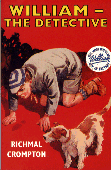 in 1970, published a year
after her death. Over these five decades, William remained the
unruly 11-year-old with all the other characters fixed at their
original ages. What did change, however, were the times. For
example, William Does His Bit, published in 1941 sets
the stories against the backdrop of World War II with William
determined to add his mite towards the war effort. Nobody wanted
his help -- such as it was -- but William persisted in his
endeavours to keep 'ole Hitler' out of Britain. He got
particularly involved when he heard the word quisling mentioned
by his family. The word, meaning traitor, originated after Major
Vidkun Quisling ruled Norway on behalf of the Nazis. William, in
his inimitable way, transformed the word into Grisling and then
to 'ole Grissel' whom he wanted to run to earth for his spying
ways. William did nab a suspect, but it turned out to be just an
innocent person, who, fortunately for William, applauded his
patriotic fervour and even rewarded him for it.
in 1970, published a year
after her death. Over these five decades, William remained the
unruly 11-year-old with all the other characters fixed at their
original ages. What did change, however, were the times. For
example, William Does His Bit, published in 1941 sets
the stories against the backdrop of World War II with William
determined to add his mite towards the war effort. Nobody wanted
his help -- such as it was -- but William persisted in his
endeavours to keep 'ole Hitler' out of Britain. He got
particularly involved when he heard the word quisling mentioned
by his family. The word, meaning traitor, originated after Major
Vidkun Quisling ruled Norway on behalf of the Nazis. William, in
his inimitable way, transformed the word into Grisling and then
to 'ole Grissel' whom he wanted to run to earth for his spying
ways. William did nab a suspect, but it turned out to be just an
innocent person, who, fortunately for William, applauded his
patriotic fervour and even rewarded him for it.
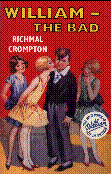 In a way, this is what makes
William's character so endearing to kids: In most cases, all his
mischief turns out for the best. Like his treating a troublesome
aunt, given to much sleeping and snoring, as an exhibit in a fund-raising
show with the caption: "Fat Wild Woman Torkin Natif
Langwidge." (Just William.) Though he expected to
be soundly punished when this worthy woke up and left the house
in a huff, his father was so pleased with the departure that he
rewarded his small son with a half-crown.
In a way, this is what makes
William's character so endearing to kids: In most cases, all his
mischief turns out for the best. Like his treating a troublesome
aunt, given to much sleeping and snoring, as an exhibit in a fund-raising
show with the caption: "Fat Wild Woman Torkin Natif
Langwidge." (Just William.) Though he expected to
be soundly punished when this worthy woke up and left the house
in a huff, his father was so pleased with the departure that he
rewarded his small son with a half-crown.
William was not always so fortunate, like when he tried to
start the Over-Ten Club (William the Globetrotter) as an
alternative to the Over-Sixty club. With a whole 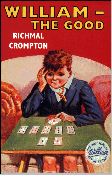 gang of kids he managed to
gate crash into a party which was meant for another group of
children who did not turn up. They had their fill of the goodies,
but instead of providing some docile dancing, they set about
playing a most violent game of 'Lions an' Tamers,' much to the
delight of the elderly audience. The party was most enjoyable,
but William was found out and he had to finally admit defeat and
put up this notice in front of their regular meeting place:
"The overtenn klub will be klozed til furthur nottis. cined
William Brown." You see, William did not lay great store by
finesse in spelling or grammar, so if you're looking to teach
your child these, try something more staid like Wren and Martin,
for instance.
gang of kids he managed to
gate crash into a party which was meant for another group of
children who did not turn up. They had their fill of the goodies,
but instead of providing some docile dancing, they set about
playing a most violent game of 'Lions an' Tamers,' much to the
delight of the elderly audience. The party was most enjoyable,
but William was found out and he had to finally admit defeat and
put up this notice in front of their regular meeting place:
"The overtenn klub will be klozed til furthur nottis. cined
William Brown." You see, William did not lay great store by
finesse in spelling or grammar, so if you're looking to teach
your child these, try something more staid like Wren and Martin,
for instance.
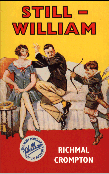 Crompton wrote 38 books
chronicling the exploits of her small boy and his friends. She
herself never married but remained close to her family, finding
inspiration for her characters in her many nephews. Though a
woman and an adult, Crompton very much shared the indomitable
spirit of her young creation. She contacted polio at the age of
33, which caused her left leg to be paralysed and forced her to
give up her teaching career. However, her books became so popular
that she could support herself in reasonable comfort at a large
house in Bromley, Kent where she lived with her mother and which
was the background for most of William's exploits. In her 40s she
developed cancer and underwent a mastectomy, but she survived
till the ripe age of 79, penning William books right till the end.
Crompton wrote 38 books
chronicling the exploits of her small boy and his friends. She
herself never married but remained close to her family, finding
inspiration for her characters in her many nephews. Though a
woman and an adult, Crompton very much shared the indomitable
spirit of her young creation. She contacted polio at the age of
33, which caused her left leg to be paralysed and forced her to
give up her teaching career. However, her books became so popular
that she could support herself in reasonable comfort at a large
house in Bromley, Kent where she lived with her mother and which
was the background for most of William's exploits. In her 40s she
developed cancer and underwent a mastectomy, but she survived
till the ripe age of 79, penning William books right till the end.
Contact: Manuel Fernandes
Updated 18/May/2000