Reaching for the skies
What was the
significance of the planet pile-up on 5 May? What's ol' Hubble up
to these days? Where can I find extra-solar planets? Here are
some sites which will help answer your queries about space
Spaceref
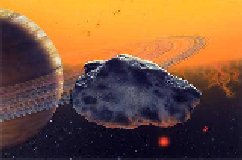 From the astronomy of the
ancient world,through the glimmering of the modern shy-watching
in the mediveal years, to the latest images of the asteroid Eros
from the Near Shoemaker spacecraft, this site has it all. There
is an extensive space directory and even a section labelled
‘Art & Humanities.' This section includes the work of
Lynette Cook who has done a series of paintings depicting
extrasolar planets that have recently been discovered. Depicted
alongside is the HD46375 which is located 109 light-years away in
the constellation Monoceros. Among the other sections you will
find a history of astronomy, astrobiology and life science, earth
science and future technology. The last covers antimatter,
chemical and magnetic propulsion and interstellar travel, among
other topics. The site has links to a lot of important space-related
websites.
From the astronomy of the
ancient world,through the glimmering of the modern shy-watching
in the mediveal years, to the latest images of the asteroid Eros
from the Near Shoemaker spacecraft, this site has it all. There
is an extensive space directory and even a section labelled
‘Art & Humanities.' This section includes the work of
Lynette Cook who has done a series of paintings depicting
extrasolar planets that have recently been discovered. Depicted
alongside is the HD46375 which is located 109 light-years away in
the constellation Monoceros. Among the other sections you will
find a history of astronomy, astrobiology and life science, earth
science and future technology. The last covers antimatter,
chemical and magnetic propulsion and interstellar travel, among
other topics. The site has links to a lot of important space-related
websites.
Space TelScience Institute
For the last ten years (24 April was its tenth anniversary) the Hubble Space Telescope has been wowing
earthlings with its images from deepest space. To get the
complete lowdown on this piece of technical wizardry check out
this site hoisted by the Space TelScience Institute which is
operated by Aura for Nasa. The information 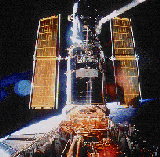 escope provided
here covers everything to do with the Hubble right from its
launchimages , its periodical servicing, the various transmitted
to earth and its latest exploitslatest? . So what's the Wellthe
vast , Hubble only just discovered the whereabouts of quantities
of hydrogen that were cooked up in the Big Bang but somehow
managed to disappear in the empty blackness of spacemultimedia
tour . The other features of the site include a of the
Cosmosmovies and , pictures sent by the Hubble, animations, and
links to interactive activities on the Web relating to space
study, which will be of particular interest to high school
students.
escope provided
here covers everything to do with the Hubble right from its
launchimages , its periodical servicing, the various transmitted
to earth and its latest exploitslatest? . So what's the Wellthe
vast , Hubble only just discovered the whereabouts of quantities
of hydrogen that were cooked up in the Big Bang but somehow
managed to disappear in the empty blackness of spacemultimedia
tour . The other features of the site include a of the
Cosmosmovies and , pictures sent by the Hubble, animations, and
links to interactive activities on the Web relating to space
study, which will be of particular interest to high school
students.
NASA
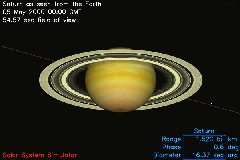 Of particular interest in
this NASA site is the space simulator using which you can check
out how planets and other space bodies look from various vantage
points in space whether it is the earth, moon, Jupiter or a human-launched
satellite. In short, you can view any heavenly body from any
other heavenly body including space crafts like the Galileo or
the Voyager 1 and 2. The images are simulated by using data from
various sources. You simply chose a space object, from where you
want to view it, the date and time, your field of view in degrees
and the size of the image, then enter your options like planet
and satellite orbits, constellation lines and extra brightness.
Then go, and within seconds your space body unfolds before you.
The simulator also lets you find out information like the exact
position of the Mars Surveyor 98 today. The FAQ section provides
lots of answers to space queries.
Of particular interest in
this NASA site is the space simulator using which you can check
out how planets and other space bodies look from various vantage
points in space whether it is the earth, moon, Jupiter or a human-launched
satellite. In short, you can view any heavenly body from any
other heavenly body including space crafts like the Galileo or
the Voyager 1 and 2. The images are simulated by using data from
various sources. You simply chose a space object, from where you
want to view it, the date and time, your field of view in degrees
and the size of the image, then enter your options like planet
and satellite orbits, constellation lines and extra brightness.
Then go, and within seconds your space body unfolds before you.
The simulator also lets you find out information like the exact
position of the Mars Surveyor 98 today. The FAQ section provides
lots of answers to space queries.
Astronomy Unbound
This site, from the University of Hertfordshire, UK, is called
Astronomy Unbound not 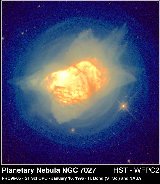 without
reason. It is a virtual bible for the student of the skies
whether he is attacking a scholastic curriculum or is just an
avid astronomer. There is a lot of star lore here, right from
some basic physics to the solar system, the sun, and ways of
measuring the planets. The info is mostly textual, but there are
links to multimedia-rich sites too, like The Nine Planets which
gives a highly entertaining overview of the history, mythology,
and current scientific knowledge of each of the planets and moons
in our solar system. There is a glossary of astronomical terms,
diagrams, animated gifs and a limited number of photographs.
Other astronomy links from around the world make Astronomy
Unbound well worth bookmarking for the star struck.
without
reason. It is a virtual bible for the student of the skies
whether he is attacking a scholastic curriculum or is just an
avid astronomer. There is a lot of star lore here, right from
some basic physics to the solar system, the sun, and ways of
measuring the planets. The info is mostly textual, but there are
links to multimedia-rich sites too, like The Nine Planets which
gives a highly entertaining overview of the history, mythology,
and current scientific knowledge of each of the planets and moons
in our solar system. There is a glossary of astronomical terms,
diagrams, animated gifs and a limited number of photographs.
Other astronomy links from around the world make Astronomy
Unbound well worth bookmarking for the star struck.
Sky Pub
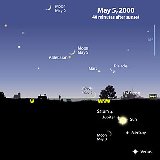 On Friday, 5 May, the sun,
moon and five of the brightest planets were grouped within a 26
degrees sector of sky, giving doomsday soothsayers one more
celestial event to gloat about. Of course, nothing happened. So
what's the truth behind the line-up, or as the editors of Sky
& Telescope (who have put up the Sky Pub site) call Planet
Pileup? There is a good article here which will go a good way
towards putting soothsayers out of business. Sky & Telescope
is a physical publication, but much of its contents are available
at this site. It is a great place for keeping abreast of things
celestial as it features a regular, day-to-day list of sky events.
Other features here include a skygazers almanac, special sky
events, the current moon phase, satellite observing, tips for
skywatching and information on meteors, comets and eclipses. The
site is well illustrated with pictures of heavenly bodies, and if
you have some good pics, you too can send them in. Yes, a page on
this site gives you tips for photographing the skies. And if you
want to know what's a Blue Moon, this is the site to come to.
On Friday, 5 May, the sun,
moon and five of the brightest planets were grouped within a 26
degrees sector of sky, giving doomsday soothsayers one more
celestial event to gloat about. Of course, nothing happened. So
what's the truth behind the line-up, or as the editors of Sky
& Telescope (who have put up the Sky Pub site) call Planet
Pileup? There is a good article here which will go a good way
towards putting soothsayers out of business. Sky & Telescope
is a physical publication, but much of its contents are available
at this site. It is a great place for keeping abreast of things
celestial as it features a regular, day-to-day list of sky events.
Other features here include a skygazers almanac, special sky
events, the current moon phase, satellite observing, tips for
skywatching and information on meteors, comets and eclipses. The
site is well illustrated with pictures of heavenly bodies, and if
you have some good pics, you too can send them in. Yes, a page on
this site gives you tips for photographing the skies. And if you
want to know what's a Blue Moon, this is the site to come to.
Contact: Manuel Fernandes
HOME
Updated 14/May/2000