 So,
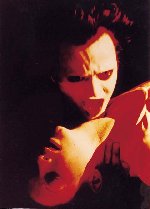
what's there to look forward to? The festival kicks off on on a
dark note with Nosferatu, The Vampyre from the American
Telluride Theatre Company. Adapted from F W Murnau's classic 1922
film of the same name and Bram Stoker's Dracula, by Rene
Migliaccio, who also directs, the play retains Murnau's
Expressionist style as it portrays the hidden shadow of the human
soul, that which we call evil, quartered between darkness and
light. The 'un-dead' character, however, has a chance of
spiritual renewal and even redemption through the luminous Mina.
The whole drama unfolds through gestures. Interestingly, the
group has used a 14-person chorus of local artists who were
participating in a workshop with the Americans for a few weeks
before the play.
So,
what's there to look forward to? The festival kicks off on on a
dark note with Nosferatu, The Vampyre from the American
Telluride Theatre Company. Adapted from F W Murnau's classic 1922
film of the same name and Bram Stoker's Dracula, by Rene
Migliaccio, who also directs, the play retains Murnau's
Expressionist style as it portrays the hidden shadow of the human
soul, that which we call evil, quartered between darkness and
light. The 'un-dead' character, however, has a chance of
spiritual renewal and even redemption through the luminous Mina.
The whole drama unfolds through gestures. Interestingly, the
group has used a 14-person chorus of local artists who were
participating in a workshop with the Americans for a few weeks
before the play.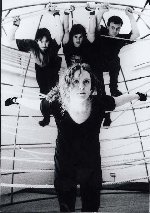 From Northern Ireland comes
the Big Telly Theatre Company's Fish. The play mixes
magic, multimedia and circus to provide a rich theatrical feast
of spectacle, dance, illusion and film. It tells the story of a
nightmare wedding from inside the muddled mind of the groom,
whose happiest day suddenly turns to hell. You'll find boxes
singing and coat rails dancing as this comedy of love lost and
found unfolds. The play is written by Paul McEneaney and Zoe
Seaton. The latter also directs.
From Northern Ireland comes
the Big Telly Theatre Company's Fish. The play mixes
magic, multimedia and circus to provide a rich theatrical feast
of spectacle, dance, illusion and film. It tells the story of a
nightmare wedding from inside the muddled mind of the groom,
whose happiest day suddenly turns to hell. You'll find boxes
singing and coat rails dancing as this comedy of love lost and
found unfolds. The play is written by Paul McEneaney and Zoe
Seaton. The latter also directs. 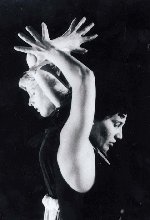 The Common Ground Sign Dance Theatre from the UK chips in with
two short plays, Distant Sisters and Borders &
Freeways. The former is performed in Spanish, English and
British Sign Language (not the same as the one used by deaf-mutes
here with which we may be familiar). The play deals with the
meeting in limbo of two highly incongruous and
contrasting women, Frida Khalo and Marilyn Monroe, who are
destined to keep doing the same show until there is world peace.
The play is adapted from Khalos's diary and Monroe's biography
and directed by Bill Hopkinson. The second play, from writer-director
Kaite O'Reiley, also uses British sign language. It's all about
three men divided by walls of newsprint that publish the
invisible divides between them. As the group's name indicates,
sign and dance is what dominates their performances.
The Common Ground Sign Dance Theatre from the UK chips in with
two short plays, Distant Sisters and Borders &
Freeways. The former is performed in Spanish, English and
British Sign Language (not the same as the one used by deaf-mutes
here with which we may be familiar). The play deals with the
meeting in limbo of two highly incongruous and
contrasting women, Frida Khalo and Marilyn Monroe, who are
destined to keep doing the same show until there is world peace.
The play is adapted from Khalos's diary and Monroe's biography
and directed by Bill Hopkinson. The second play, from writer-director
Kaite O'Reiley, also uses British sign language. It's all about
three men divided by walls of newsprint that publish the
invisible divides between them. As the group's name indicates,
sign and dance is what dominates their performances.Writer- director-actor Dayal Pasculli comes from Italy with Dark Side Of The Light, a one-man show focussing on the 20-year experiences of a multifaceted performer, Arturo Feroce (the Ferocious Arthur). He is accompanied by a Happy Band (which look anything but happy). The play provides a great opportunity to experience the classic traditions of mime and the popular Italian theatre form, Comedia Dell' Arte.
The last of the foreign plays to be showcased is Ellis and Bheki's Skadonk. The two-man play is based on a true story of one man's (Ben Moeketsie) journey to a landscape of opportunities and is closely tied to the rich, vibrant transformation of South African culture.
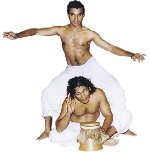 The Indian presence takes off
with the Pondicherry-based group Adishakti's Ganapati
directed by Veenapani Chawala. The play, performed to music and
percussion rhythms is an interpretation of the birth stories
related to the myths of Ganapati, who is also called Martanda.
The Indian presence takes off
with the Pondicherry-based group Adishakti's Ganapati
directed by Veenapani Chawala. The play, performed to music and
percussion rhythms is an interpretation of the birth stories
related to the myths of Ganapati, who is also called Martanda.Then comes Chapal Bhaduri's solo performance in Bengali, Ekmukhi Sitala. The play relates to the worship of Ma Sitala, the goddess of basanta rog or spring disease and that of 64 other varieties of pox. With lack of medical facilities, the only recourse of the poor is to intensify the worship of the goddess and hope for a quick cure. Bhaduri is one of the finest jatra artists of Bengal and made a formidable name for himself playing female roles.
And finally, there is the ever-popular Marathi play Vastraharan from Bhadrakali Productions. The play within a play has a group of actors trying to stage the famous episode from the Mahabharata, with absolutely hilarious results. The play, written by Gangaram Gaviankor and directed by the late Ramesh Randive, is performed partly in the Malvani dialect.
Though diverse, festival co-director Divya Bhatia pointed a pertinent common factor: All the groups are performing original plays. So the festival promises to be a vibrant cultural mix of modern drama, even if some of them are rooted in hoary tradition.
Besides the plays themselves, practically all the groups are holding theatre workshops for those involved in drama. Then, there are seminars, film shows on the art of theatre and play readings.
But doesn't all this cost? And there is, after all, a limit to gate collections from a 200-seat theatre. Both Kapoor and Bhatia are therefore quick to acknowledge the sponsorship extended to them for the past four years by Hutchinson Max and this year by Orange. As Kapoor says, "We need someone who is proactive in their support. Not people who can be pushy and want you to put up their bottle at the main entrance to your event. We've been lucky with our sponsor. they understand that we try to present our association in a dignified manner." And the government? Kapoor is dismissive of support from that quarter. She pointed out that there is an official government booklet denoting various grants for the performing arts, but it's very difficult to get hold of it, for, as the official she met in Delhi told her, "Do you know the number of applications we will get?!" So thanks to Orange and the intrepid folks at the Prithvi we have this rich theatre fare to look forward to this one more year.