On the museum beat
Some of the most enlightening places in the physical world are museums. Quite a few of them have now showcased their exhibits on the Web. Take a look
National Gallery of Art
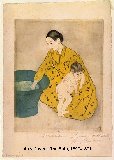 At The National Gallery of Art, Washington, you can feast your eyes on some of the best pieces of North American and European art. The works displayed and the accompanying commentaries illustrate major achievements in painting, sculpture and graphic arts from the Middle Ages to the present. You can search the 10,000-strong collection of objects here by specific artist, subject or title, and if you're more adventurous, you can use a combination of them to achieve your target. Or you can just take a tour like you would in physical space. Every week features a tour of the works of a specific artist. Like, when we looked at the site, we marvelled at the colour prints of Mary Cassatt a 19th century American artist of the French school. Reproduced alongside is Cassatt's The Bath. The Web advantage is that you can even view past exhibitions. A daily feature tells you about a significant event in the history of the gallery today.
Exploratorium
At The National Gallery of Art, Washington, you can feast your eyes on some of the best pieces of North American and European art. The works displayed and the accompanying commentaries illustrate major achievements in painting, sculpture and graphic arts from the Middle Ages to the present. You can search the 10,000-strong collection of objects here by specific artist, subject or title, and if you're more adventurous, you can use a combination of them to achieve your target. Or you can just take a tour like you would in physical space. Every week features a tour of the works of a specific artist. Like, when we looked at the site, we marvelled at the colour prints of Mary Cassatt a 19th century American artist of the French school. Reproduced alongside is Cassatt's The Bath. The Web advantage is that you can even view past exhibitions. A daily feature tells you about a significant event in the history of the gallery today.
Exploratorium
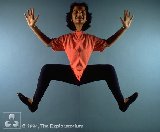 A museum with a difference is the Exploratorium which, at its real-world site at San Francisco attracts thousands of students and educationists to partake of its 'inquiry-based teaching and learning.' The Exploratorium is billed as a museum of science, art, and human perception with over 500 interactive 'hands on' exhibits. The museum's virtual site too offers much to explore and interact with. We checked out the digital library and came across an image of Floating Symmetry, which is simply a large, flat mirror where one can learn about symmetry in surprisingly humourous ways. At the sound library, you can experience the Doppler Effect. The astronomy section has a lot to offer whether it is about the aurora borealis or our solar system. The museum was founded in 1969 by noted physicist and educator Dr Frank Oppenheimer who was director until his death in 1985. (Picture: Floating Symmetry.)
National Museum of Natural History
A museum with a difference is the Exploratorium which, at its real-world site at San Francisco attracts thousands of students and educationists to partake of its 'inquiry-based teaching and learning.' The Exploratorium is billed as a museum of science, art, and human perception with over 500 interactive 'hands on' exhibits. The museum's virtual site too offers much to explore and interact with. We checked out the digital library and came across an image of Floating Symmetry, which is simply a large, flat mirror where one can learn about symmetry in surprisingly humourous ways. At the sound library, you can experience the Doppler Effect. The astronomy section has a lot to offer whether it is about the aurora borealis or our solar system. The museum was founded in 1969 by noted physicist and educator Dr Frank Oppenheimer who was director until his death in 1985. (Picture: Floating Symmetry.)
National Museum of Natural History
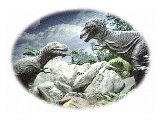 The National Museum of Natural History at the Smithsonian Institute has a wealth of exhibits and information about our planet. We spent quite a while at its Department of Paleobiology which studies fossils �as once living organisms, rather than simply as prehistoric death assemblages.� From the dinosaur section here we viewed lots of images and educational information about the old beast as a living creature. There are some great pictures of all known species of these pre-historic animals. Migrating to the paleoanthropology section, we checked out an interesting feature on the discovery of the 9000-year-old Kennewick or Richland Man which has shed light on the complexity of human immigration to the western hemisphere. From dinosaurs to the giant squid which is the last large animal left in its natural habitat, the sea, this museum is a treasure trove for the natural history aficionado. (Picture: Gorgosaurus and Tyrannosaurus compete for a meal.)
British National History Museum
The National Museum of Natural History at the Smithsonian Institute has a wealth of exhibits and information about our planet. We spent quite a while at its Department of Paleobiology which studies fossils �as once living organisms, rather than simply as prehistoric death assemblages.� From the dinosaur section here we viewed lots of images and educational information about the old beast as a living creature. There are some great pictures of all known species of these pre-historic animals. Migrating to the paleoanthropology section, we checked out an interesting feature on the discovery of the 9000-year-old Kennewick or Richland Man which has shed light on the complexity of human immigration to the western hemisphere. From dinosaurs to the giant squid which is the last large animal left in its natural habitat, the sea, this museum is a treasure trove for the natural history aficionado. (Picture: Gorgosaurus and Tyrannosaurus compete for a meal.)
British National History Museum
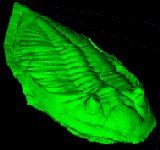 For more dinosaur lore, come to the British National History Museum Website The dinosaur data files here contain virtual card files on all the popular dinosaurs. And when you're done, download a dinosaur wallpaper. From the huge beasts, go to the tiny insects: ants. AntCast provides a live camera link to a web-window on the life of ants, while another section features a live video of the museum's leafcutter ant colony. The interactive section includes the earth lab datasite where you can investigate UK geology using an extensive online database Then, you can explore eclipses and how they affect the natural world; take part in QUEST � Questioning, Understanding and Exploring Simulated Things; join a Virtual Endeavour to explore the ship that sailed around the world and discovered Australia under the captaincy of James Cook; or look at the 3D virtual fossils which can be flipped and flopped in your VRML browser. The NHM along with British Gas, sponsors the annual Wildlife Photographer of the Year contest. The winning entries were brought to India last year, and we hope to see the exhibition again this year. (Picture: Virtual Reality fossil of Dalmanites myops.)
Bombay Museum
For more dinosaur lore, come to the British National History Museum Website The dinosaur data files here contain virtual card files on all the popular dinosaurs. And when you're done, download a dinosaur wallpaper. From the huge beasts, go to the tiny insects: ants. AntCast provides a live camera link to a web-window on the life of ants, while another section features a live video of the museum's leafcutter ant colony. The interactive section includes the earth lab datasite where you can investigate UK geology using an extensive online database Then, you can explore eclipses and how they affect the natural world; take part in QUEST � Questioning, Understanding and Exploring Simulated Things; join a Virtual Endeavour to explore the ship that sailed around the world and discovered Australia under the captaincy of James Cook; or look at the 3D virtual fossils which can be flipped and flopped in your VRML browser. The NHM along with British Gas, sponsors the annual Wildlife Photographer of the Year contest. The winning entries were brought to India last year, and we hope to see the exhibition again this year. (Picture: Virtual Reality fossil of Dalmanites myops.)
Bombay Museum
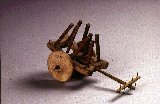 This site of the Prince of Wales Museum, Mumbai was set up at the museum's platinum jubilee celebrations in 1997 and has apparently not been looked at since. As such, it is a sad place compared to the exciting ones talked about above. Still, it is worth a peek into. An introductory tour starts with artefacts from the Indus Valley Civilisation. The other pages follow the sections available in the real museum like sculpture, Indian miniature painting, natural history, textiles, bronzes etc. Then, there is a note on the Indo Saracenic style of architecture effected by the building which sure has an imposing dome. Believe me, the real museum is far better than its virtual avatar. (Picture: Toycart.)
Contact: Manuel Fernandes
HOME
Updated 9/May/2000