20 February, 2000

Out of the classroom and into the Web

  • Scientific American
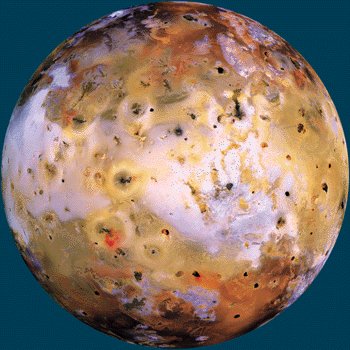
    The well-known print magazine Scientific American has now put its resources online and will be of particular use to those swotting for the science and mathematics examinations. To get clarifications or more info in any scientific field, whether it�s astronomy, geology, mathematics, physics, medicine, or computers, you just have to ask. Before doing so, you must check out the archives where experts have already answered numerous questions. The current issue as well as the archives of the print mag is also available here. There is a very good account of the Galileo space explorer and its findings on Jupiter�s moons.

  • Grammar
    The grammar section of St John Woods School of English, London, has been put online by Anthony Hughes and is available free of charge. You can search the table of contents scrolling through it, or by clicking on a letter of the alphabet which will take you to the alphabetical category in the subject index, or you can conduct a key-word search of the table by using your browser�s �find� option. There are also sound files to help you with your pronunciation with a handy link to the device for playing them.

  • Study Guides
    The University of St Thomas, Minnesota, has a goodly site which helps you learn a variety of topics. There are various sections like study preparations, working in the classroom, and just plain studying. Other sections help you in developing skills like testing, writing and reading. In the study preparations sections you are taught effective study habits, time management, stress management and how to avoiding procrastination. Other sections teach you critical thinking, memorising and the brushing up of your reading speed and comprehension. In short, what you can learn here is not what is generally taught in classrooms, but in fact will help you to study what is taught in there.

  • Study Web
    Among the vast resources for study available to students on the Web, we found Study Web remarkably comprehensive. There are 33 sections from agriculture to writing and writers, with an additional section devoted to other resources. Each of these broad sections have a number of sub sections which lead to lists of various sites appertaining. Like we checked just the puzzles and problems part of the maths section and found over 100 links from A+ Math and transcendental numbers to a place where you can design your own interactive puzzles and Zeno�s coffee house which is replete with math and logic challenges. A great site to bookmark.

  • Altapedia
  • Expedia Maps
  • Maps of India
    Here are some resources for students of geography: Atlapedia combines an encyclopaedia with an atlas. Here you will find full-colour physical and political maps as well as key facts and statistics on the geography, climate, people, demographic statistics, religion, language, history, military capabilities and economy of countries around the globe. The Indian map shows Kashmir incorrectly but there are other resources which give the correct picture.
    Like Expedia Maps, a slick Microsoft site. Besides just viewing the map � you can find any old map here � you can also create a map, add a map to your home page, e-mail the map to someone or just link it to some other page. Besides the map, you also get info about the country or city selected from the Encarta Concise Encyclopaedia. For those in the US, there is a handy section for finding directions while driving.
    Maps of India is a totally India-focussed map site. Besides the map of the country itself there are maps of all the states with district maps, railway network and national highways. Then you can check out the tourist centres, population statistics and per capita income. The site is a regular compendium of info about India and its regions, with a lot of useful links.

  • Voice of the shuttle
    A student of English literature in search of Web lore on literary criticism could do well by logging into the Voice of the Shuttle Literary Theory page, hoisted by the English dept of the University of California. The pages are grouped chronologically and almost every critique from Aristotle�s Poetics and Plato�s Republic to Marx�s Capital and Derrida�s deconstruction theories is well represented. Even if you do not have a literary bent, you can have a peek at these pages so that when a friend spouts post-modernism theories, you can airily tell him where to get off.

    Contact: Manuel Fernandes

  • HOME

    Updated 9/May/2000

    Hosted by www.Geocities.ws

    1