The hills are alive...
...with myriad flowers of diverse hues. The Alpine spring and summer of the Himalayan foothills present a heady treat for
even the most casual of trekkers
Text and photos by Manuel Fernandes
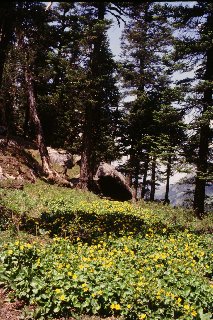
 It is in early April, when the snows start melting, that the foothills of the Himalayas from Kashmir to Sikkim come alive with the first sprouts of greenery. This is soon followed by bursts of colour as the flowers of spring start blooming. Some of the earliest blooms are the various species of rhododendron with some of them still swaying as late as mid-June. But around this time the spate of colour increases magnificently and with the onset of the summer rains the hillsides, meadows (called bugyals in the Garhwals) and river banks are strewn with a myriad variety of flowers. Though you will miss the Rhododendrons, July/August are the months when you will get the most varieties. The flowering continues until the end of September, when the snows start setting in again.
One of the most enduring images of Himalayan flowers is the Bhyundar valley, a serendipitous discovery of Frank Smythe in the 30s. He later on immortalised the valley in his 1938 book, The Valley of Flowers, a name by which it will forever be known. The Valley is in the Eastern Garhwals but the species available here flourish along the entire range of the Himalayan foothills.
Eschewing this more popular and much-visited valley, we had made expeditions in the Garhwal region of the Western Himalayas, first to Panwali Kantha (7,000ft) on the old pilgrim route to Kedarnath, and subsequently to Har ki Dun (11,700ft) which is at the foot of the magnificent Swargarohini mountain (20,500ft). The first trip was towards end-August and early September and the second was in early-June. There were not many flowers which bloomed in both the seasons.
Being naturalists, we were in no hurry to reach our destinations. We are staunch believers in Gerald Durrell�s dictum: �A naturalist in a hurry is no naturalist.� So much of the fun was dividing our time, during the trek, between watching the skies for Lammergeiers and scouring the ground for flowers, some of them so tiny that one had to really go down on one�s knees to marvel at their beauty. An occasional iris, a clump of senacio, a solitary mayapple hiding coyly behind a rock, a bush of wild roses or a field of marsh marigolds all made our day.
On this page we share with you only some of the beauties which made the hardy trekking such a worthwhile experience. For the sake of brevity, only the generic names are provided along with the common English names. Those who are enticed to know more can check out the definitive book, Flowers of the Himalaya (over a 1,000 flowers are listed and described) by Oleg Polunin and Adam Stainton published by the Oxford University Press.
(Click on the thumb-nails for bigger pictures.)
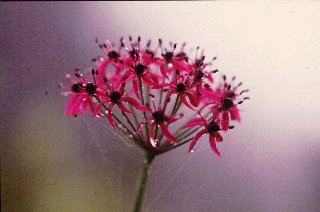
 Wallich's garlic (Alium sp.)
Yes, it�s hard to believe, but this striking flower belongs to the genus of garlic. Its umbel (cluster of flowers with spreading rays) measures 5-7cm across. The flowering season is August to September.
Wallich's garlic (Alium sp.)
Yes, it�s hard to believe, but this striking flower belongs to the genus of garlic. Its umbel (cluster of flowers with spreading rays) measures 5-7cm across. The flowering season is August to September.
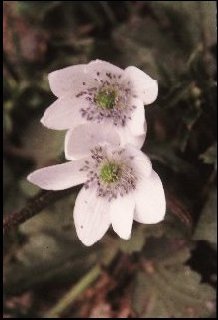
 Brook anemone (Anemone sp.)
As the name suggests, this white flower grows happily by the side of rivulets. The flowers measure 2-5cm across and bloom in May and June.
Brook anemone (Anemone sp.)
As the name suggests, this white flower grows happily by the side of rivulets. The flowers measure 2-5cm across and bloom in May and June.
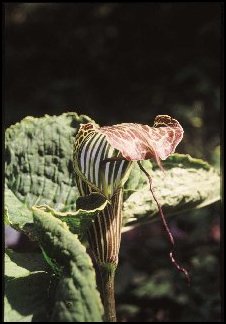
 Snake lily (Arisaema sp.)
This is a species in the family of snake lilies. It is so called because its thin, tail-like spadix which emerges from the large bract, resembles the marauding tongue of a snake from a rearing head. Although the flowers are tiny, the whole structure is about 15-45cm across. You can see it flowering in May and June.
Snake lily (Arisaema sp.)
This is a species in the family of snake lilies. It is so called because its thin, tail-like spadix which emerges from the large bract, resembles the marauding tongue of a snake from a rearing head. Although the flowers are tiny, the whole structure is about 15-45cm across. You can see it flowering in May and June.
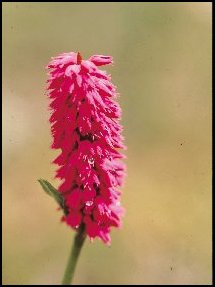
 Knotweed (Bistorta sp.)
Now this is a weed which flowers from June right up to September. It has numerous small flowers clustered in a cylindrical spike. Each cluster is about 2.5-4cm long.
Knotweed (Bistorta sp.)
Now this is a weed which flowers from June right up to September. It has numerous small flowers clustered in a cylindrical spike. Each cluster is about 2.5-4cm long.
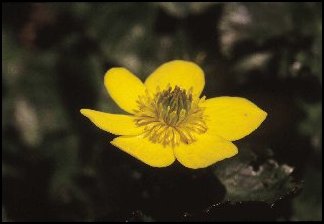
 Marsh marigold (Caltha sp.)
Nothing is more pleasing than coming across a carpet of these yellow flowers which grow in particularly damp meadows. The flowers are 2.5-4cm across and can be seen between May to August.
Marsh marigold (Caltha sp.)
Nothing is more pleasing than coming across a carpet of these yellow flowers which grow in particularly damp meadows. The flowers are 2.5-4cm across and can be seen between May to August.
 Sow thistle (Cicerbita sp.)
You�ll find these mauve-blue flowers growing in clumps between July and September. The flowers measure just 1.3-2cm across.
Sow thistle (Cicerbita sp.)
You�ll find these mauve-blue flowers growing in clumps between July and September. The flowers measure just 1.3-2cm across.
 Willow herb (Epilobium sp.)
These tiny flowers measure only 6-6mm across and can be found between July and August growing on erect or semi-erect stems reaching up to 60cm.
Willow herb (Epilobium sp.)
These tiny flowers measure only 6-6mm across and can be found between July and August growing on erect or semi-erect stems reaching up to 60cm.
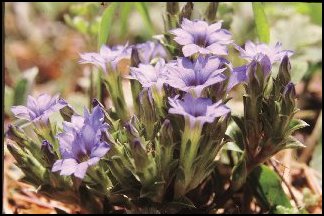
 Gentians (Gentiana sp.)
The various species of gentians flower at different times right from June to September. The one pictured here was found in June, each flower being less than 1.5cm across.
Gentians (Gentiana sp.)
The various species of gentians flower at different times right from June to September. The one pictured here was found in June, each flower being less than 1.5cm across.
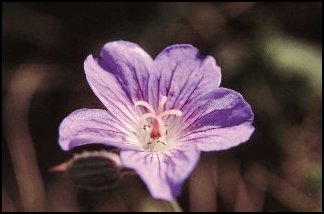
 Cranesbill (Geranium sp.)
The cranesbill blooms between June and August. The plant grows up to one metre tall, while the flowers measure 5-8cm across.
Cranesbill (Geranium sp.)
The cranesbill blooms between June and August. The plant grows up to one metre tall, while the flowers measure 5-8cm across.
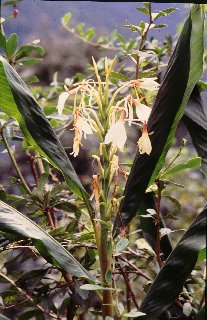
 Spiked ginger lily (Hedychium sp.)
These fragrant white flowers with an orange base measure about 7cm across. They bloom in July and August.
Spiked ginger lily (Hedychium sp.)
These fragrant white flowers with an orange base measure about 7cm across. They bloom in July and August.
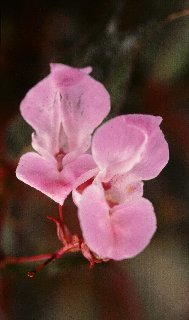
 Balsam (Impatiens sp.)
Species of the Balsam family can even be found in the Sahayadris. The one pictured here, though, flourishs in the Himalayas between July and September. The flowers are about 3-4cm long and come in many colours.
Balsam (Impatiens sp.)
Species of the Balsam family can even be found in the Sahayadris. The one pictured here, though, flourishs in the Himalayas between July and September. The flowers are about 3-4cm long and come in many colours.
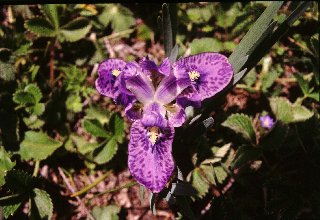
 Iris (Iris sp.)
After seeing all those tiny flowers, it is nice to come across this nice big bloom which can measure up to 10cm across. The various species are found between April to July.
Iris (Iris sp.)
After seeing all those tiny flowers, it is nice to come across this nice big bloom which can measure up to 10cm across. The various species are found between April to July.
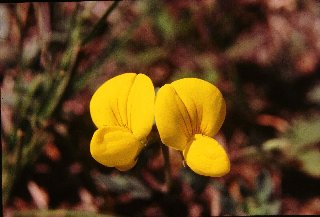
 Common bird's foot clover (Lotus sp.)
Yes, this hilly plant belongs to the genus of Lotus. They are tiny flowers, barely a centimetre across and are found in June.
Common bird's foot clover (Lotus sp.)
Yes, this hilly plant belongs to the genus of Lotus. They are tiny flowers, barely a centimetre across and are found in June.
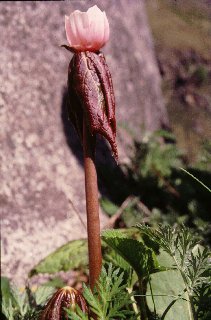
 Himalayan mayapple (Podophyllum sp.)
It was found hiding behind a shady rock in June. The solitary flower measures 2-4cm across. You can see them bloom between May and July.
Himalayan mayapple (Podophyllum sp.)
It was found hiding behind a shady rock in June. The solitary flower measures 2-4cm across. You can see them bloom between May and July.
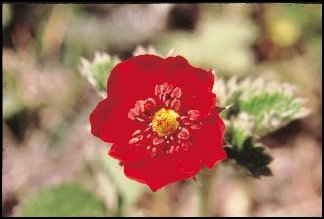
 Potentila (Potentila sp.)
This striking red flower is just 2-4cm across and blooms between June and August. You will also find yellow and orange varieties of potentila.
Potentila (Potentila sp.)
This striking red flower is just 2-4cm across and blooms between June and August. You will also find yellow and orange varieties of potentila.
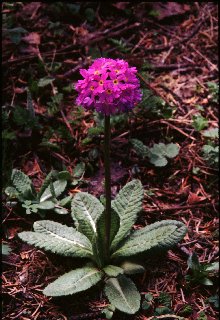
 Primrose (Primula sp.)
These lavender coloured flowers, measuring about 2cm across, cluster on a globular head at the top of a long stem. There are many species of primroses, flowering between May and July.
Primrose (Primula sp.)
These lavender coloured flowers, measuring about 2cm across, cluster on a globular head at the top of a long stem. There are many species of primroses, flowering between May and July.
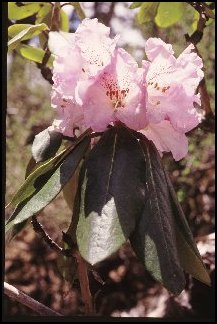
 Bell rhododendron (Rhododendron sp.)
The various species of Rhododendron flower right from February to June. The one pictured here grows on a 2-6m shrub. Though each flower is about 4cm across, the loose cluster they grow in give them an additional dimension.
Bell rhododendron (Rhododendron sp.)
The various species of Rhododendron flower right from February to June. The one pictured here grows on a 2-6m shrub. Though each flower is about 4cm across, the loose cluster they grow in give them an additional dimension.
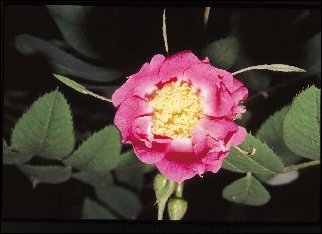
 Large-leaved rose (Rosa sp.)
While roses are nothing new to an urban dweller, it is always a pleasure to find one growing wild. This species blooms in June and July and has solitary flowers measuring 3-7cm across.
Large-leaved rose (Rosa sp.)
While roses are nothing new to an urban dweller, it is always a pleasure to find one growing wild. This species blooms in June and July and has solitary flowers measuring 3-7cm across.
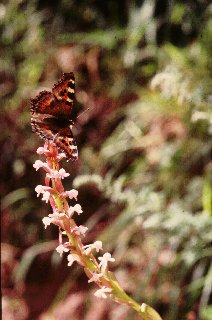
 Satyrium orchid
The Tortoise-shell butterfly is happily feeding on this ground orchid. The plant grows to a height of 50-75cm with tiny flowers around 1.3cm across which bloom from July to September.
Satyrium orchid
The Tortoise-shell butterfly is happily feeding on this ground orchid. The plant grows to a height of 50-75cm with tiny flowers around 1.3cm across which bloom from July to September.
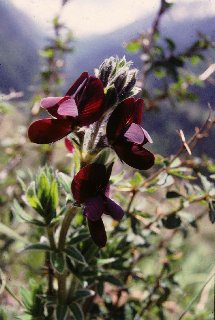
 Black pea (Thermopsis sp.)
The unusual colour of these flowers range from chocolate-brown to violet-purple. The 2-3cm flowers are clustered at the apex of the plant. You will find them between May to June.
Black pea (Thermopsis sp.)
The unusual colour of these flowers range from chocolate-brown to violet-purple. The 2-3cm flowers are clustered at the apex of the plant. You will find them between May to June.
Contact: Manuel Fernandes
HOME
Updated 9/May/2000
 It is in early April, when the snows start melting, that the foothills of the Himalayas from Kashmir to Sikkim come alive with the first sprouts of greenery. This is soon followed by bursts of colour as the flowers of spring start blooming. Some of the earliest blooms are the various species of rhododendron with some of them still swaying as late as mid-June. But around this time the spate of colour increases magnificently and with the onset of the summer rains the hillsides, meadows (called bugyals in the Garhwals) and river banks are strewn with a myriad variety of flowers. Though you will miss the Rhododendrons, July/August are the months when you will get the most varieties. The flowering continues until the end of September, when the snows start setting in again.