 |
|
|
|
|
|
|
|
|
|
|
|
|
|
|
|
|
|
|
|
|
|
|
|
|
|
|
|
|
|
|
|
|
|
|
|
|
|
|
|
|
|
|
|
|
|
|
|
|
|
|
|
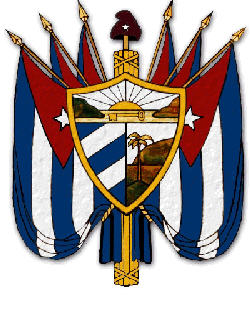
Cuba�s Struggle for Independence and American Imperialism |
|
|
|
 |
|
|
|
THESIS |
|
|
|
Although Cubans would spend the better part of the 19th century in a struggle for independence from Spanish colonial rule, it would be United States� imperialist desires, as ultimately manifested in the Platt Amendment, that would welcome Cuba into the family of nations, not as an independent republic, but as a political and economic pawn of her neighbor to the north. |
|
|
|
BACKGROUND: 1492 - 1800
SPANISH DOMINANCE |
|
|
|
1492 -
August 3. With three ships, Crist�bal Col�n (aka Christopher Columbus) sails into the unknown.
October 12. The expedition lands in what Col�n calls "San Salvador," and the natives call "Guanahani" (and may possibly be the Watling Island).
October 14. Col�n continues his expedition, soon along the shores of Cuba, which he calls "Juana," thinking that he's found Asia's mainland.
October 29. Crist�bal Col�n lands in Cuba, claims island for Spain. |
|
|
|
1512 -
February 12. Hatuey is burned at the stake. Most of the indians (Ciboneys and Ta�no Arawaks) that inhabit the island are eventually wiped out, and Cuba remains under Spanish rule for the next four centuries.
December 12. King Ferdinand of Spain thanks Diego Vel�squez for the occupation of Cuba and for his "humane treatment of the natives."
|
|
|
|
1513 - The first record of slavery in Cuba. Landowner Amador de Lares gets permission to bring four African slaves from Hispaniola. |
|
|
|
1603 - In order to end smuggling activities (mostly in Bayamo) the government decrees that the sale of tobacco to foreigners is punishable by death. |
|
|
|
1614 - A 10-year ban against tobacco cultivation is lifted, but the entire crop must be shipped to Seville. |
|
|
|
1715 - Spanish authorities create a monopoly known as the Factoria. This agency purchases all Cuban tobacco at fixed prices and sells it abroad. |
|
|
|
1740 - Based on the "Factoria" model, another monopoly company is created to handle all imports and exports in Havana. The "Royal Compa��a de Comercio " soon acquires a bad reputation with Cubans, who complain they are being fleeced and that commerce is restricted in order to keep prices high. |
|
|
|
1777 - Cuba's government changes to an independent colonial administration under a captain general. |
|
|
|
1784 - January. Spanish authorities end legal trade between Cuba and all countries other than Spain. |
|
|
|
Key Points -
Spain considered Cuba her possession
Spain appointed royal officials to govern over Cuba in a system �which was designed to inspire obedience rather than respond to popular desires.�
This system of government imposed upon the Cuban people �did little to inculcate habits of self-government.�
All commerce with the island was controlled by the Spanish crown.
Taxes were levied on real and personal property and on industries and commerce of all kinds.
Stamp taxes, municipal taxes, �derecho de averia�. |
|
|
|
TRANSITION |
|
|
|
1792 to 1815-
The period of the Napoleonic Wars brings prosperity to Cuba despite restrictions and obstacles placed by the crown. Demand for sugar, tobacco and coffee increases, and more capital is injected into crop production. More slaves are introduced, and trade between the U.S. and Cuba increases. |
|
|
|
1800 to 1900
ROAD TO INDEPENDENCE ? |
|
|
|
1809 - Thomas Jefferson wrote: �I candidly confess that I have ever looked upon Cuba as the most interesting addition that can be made to our system of States, the possession of which (with Florida Point), would give us control over the Gulf of Mexico and the countries and isthmus bordering upon it, and would fill up the measure of our political well-being.� |
|
|
|
1810 (and again in 1821) - wealthy Cuban planters informed the U.S. Consul in Havana that they were ready to launch an �annexationist conspiracy�. The movement failed to gain any momentum after the United States offered no guarantee of support for the movement against the Spanish colonial powers, or against Great Britain�s intervention. |
|
|
|
1810 - Cuban delegates were accepted to the Spanish Cortes for the fist time and were allowed to take part in the framing of the [Spanish] Constitution of 1812. Although the Constitution was annulled in 1814, Cuba would once again have representation in the Cortes from 1820 to 1823, and also from 1834 to 1837. During the years from 1810 to 1814, Cuban creoles were exposed to limited self-government experiences, such as provincial legislatures, municipal councils, and local militias. |
|
|
|
1817 - The Cuban tobacco monopoly, known as Factoria, is abolished. |
|
|
|
1818 - February 10. A Royal Decree allows Creoles the right to trade with vessels from other nations at the various Cuban ports. |
|
|
|
1819 - A Royal Decree finally grants Creoles full legal rights to the lands they occupy (until this time, all property was considered royal property). |
|
|
|
1823 -
Cuban poet Jos� Mar�a Heredia and Jos� Francisco Lemus organize a secret society known as �Suns and Rays of Bol�var.� The society plans a rebellion for independence and seeks union with the famed liberator.
U.S. Secretary of State John Quincy Adams makes the policy of the U.S. perfectly clear, �These islands (Cuba and Puerto Rico) are natural appendages of the North American continent, and one of them (Cuba) almost within sight of our shores, from a multitude of considerations has become an object of transcendent importance to the commercial and political interests of our Union.�
December 2. In what becomes known as the Monroe Doctrine, President James Monroe stakes out the Western Hemisphere as a U.S. sphere of influence by warning Europe not to interfere in the affairs of any of the American nations that have recently become independent.
Between 1823 and 1836, clear practical and philosophical divisions develop and grow between Cubans and Spaniards. |
|
|
|
1824 - December 9. With the battle of Ayacucho in Peru, Spanish forces are decisively defeated and thrown out of the American mainland�north, central and south. Spain still controls two islands in the West Indies: Cuba and Puerto Rico. |
|
|
|
1825 - May 28. A Royal Decree expands the powers of the Captain General of Cuba. |
|
|
|
1830 - Spain increases taxation, imposes arbitrary rules for its own benefit and completely denies the Creoles (native born Cubans of mixed ancestry) any voice in the government. |
|
|
|
1834 -
March 21. The Spanish crown increases the authority of the Cuban Captain-General to dictatorial status.
June. General Miguel Tac�n is appointed Captain-General of Cuba. Tac�n's administration marks a new political direction for the island's government that lasts until the end Spanish rule over Cuba in 1898. Tac�n is mistrustful of the Cubans and deals with them severely. In his eyes, Cubans are the enemy of Spain and must be kept from participating in public affairs.
[Until about this time, Cubans born to Spanish parents were considered Spanish like their parents. After Tac�n's period, it was popular for Cubans born of Spanish parents to have a more "Cuban" identity. They were more likely to believe that Spanish laws were good for Spain, and that Cubans should be able to have a separate identity.] |
|
|
|
US PURCHASE ATTEMPTS
Senator Yulee of Florida - 1845 proposal, but the issue would not reach the point of senate debate.
1848 President Polk, acting on a proposal to purchase Cuba in an attempt to appease Southern slaveholders, also recommend that Cuba be purchased from Spain.
1854, a secret document know as the Ostend Manifesto would outline a plan to purchase Cuba from Spain for $130 million. The document, which declared that �Cuba is as necessary to the North American republic as any of its present members, and that it belongs naturally to that great family of states of which the Union is the Providential Nursery.� also suggested that if Spain were not willing to sell Cuba, then the United States would be �justified in wrestling� the island from her. |
|
|
|
FILIBUSTERING 1849 trough the mid 1850s
Filibuster expeditions were organized throughout the southern United States in an attempt to invade Cuba and seize power from the Spanish colonial authorities.
Were backed by Southern annexationists groups in an effort to bring Cuba into the Union as a slave state.
An American by the name of John Claiborne wrote a passage in 1851 that exemplified the United States attitude during the mid-1800s with regard to Cuba�s future:
�The truth is that our people want Cuba free not only because they detest the Despotism of its government, but for reasons of the strongest political necessity. If the Cubans wish to become free and to be admitted to share our civil rights, very well. If not, they must go away from Cuba which must be ours whether its present inhabitants desire it or not. Such is the reasoning of the great mass of our Southern and western men.�
|
|
|
|
1866 -for the creoles when a Junta de Informaci�n was convened in Madrid to address Cuban complaints and reform requests. This body, composed of elected creole representatives, as well as appointed former Cuban royal officials addressed issues pertaining to Cuban autonomy, as well as commercial and slave issues. |
|
|
|
1868 - creole Cubans would rise up against Spanish rule in what would become know as the Ten Years� War. |
|
|
|
1878 - Pact of Zanj�n, would bring hostilities to a close. Although the Pact of Zanj�n promised �greater civil, political, and administrative privileges for the Cubans with forgetfulness of the past and amnesty for all then under sentence for political offense�# the reality was that little change occurred on the island. Spain still retained supreme power through the office of Governor-General. |
|
|
|
1880s - would see a growth of American investment in Cuban agricultural concerns, especially the sugar industry, as well as many other Cuban industries. In the wake of the war-torn economy in Cuba, Americans were buying sugar plantations, while capital from sugar importers in the United States assisted in the establishment of high volume sugar milling centers on the island. |
|
|
|
1895-1898 - War for Independence |
|
|
|
Following the sinking of the battleship Maine in Havana harbor, the United States, with sweeping public support, would accept the Teller Amendment and declare war on Spain. The Teller Amendment stated: �That the United States hereby disclaims any disposition or intention to exercise sovereignty, jurisdiction, or control over said Island [Cuba] except for the pacification thereof, and asserts its determination, when that is accomplished, to leave the government and control of the Island to its people. |
|
|
|
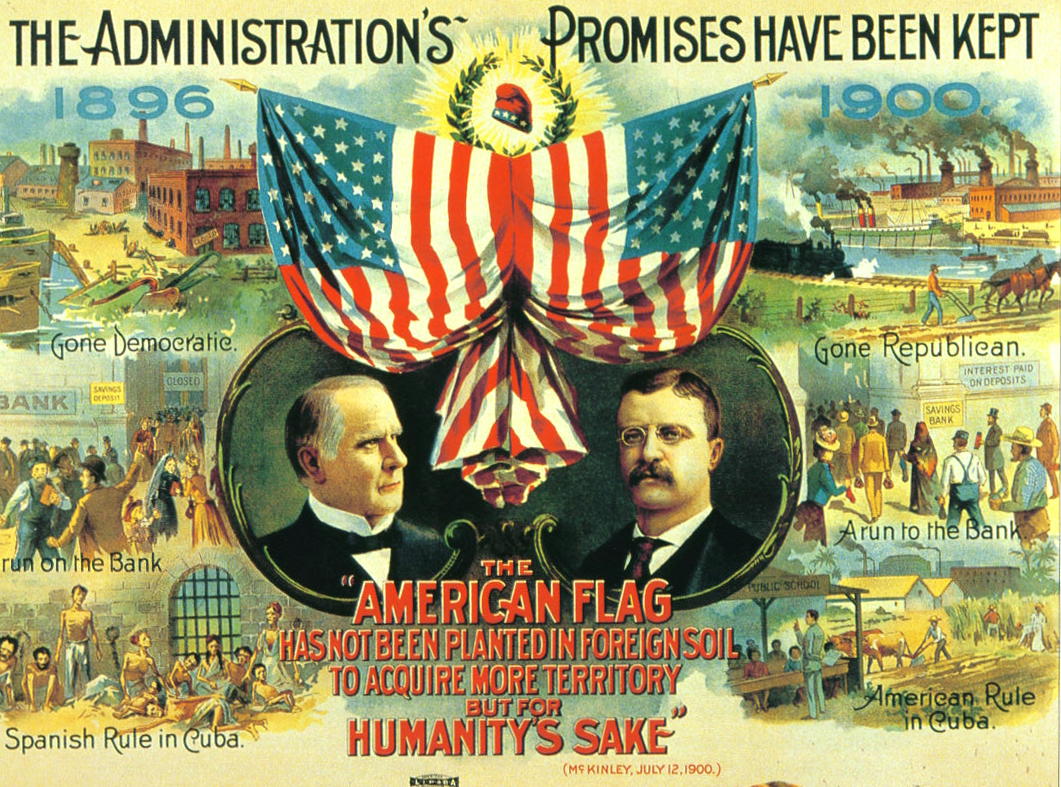
After Spanish forces left Cuba following their defeat in 1898, American troops began their occupation. In 1901, the Platt Amendment replaced the Teller Amendment with respect to United States policy regarding Cuba. The amendment:
�ceded to the U.S. the naval base in Cuba [Guant�namo Bay], stipulated that Cuba would not transfer Cuban land to any power other than the U.S., mandated that Cuba would contract no foreign debt without guarantees that the interest could be served from ordinary revenues, ensured U.S. intervention in Cuban affairs when the U.S. deemed necessary, prohibited Cuba from negotiating treaties with any country other than the United States, and provided for a formal treaty detailing all the foregoing provisions. |
|
|
|
CONCLUSION |
|
|
|
Throughout her history, Cuba had been defined by the colonial power that controlled her. Under Spanish colonial authority, she had been reduced to a source of wealth that would be administered at the whim of the crown, with little or no regard for the desire of his subjects. While Cuba started down the road to eventual independence, The United States, from the early 1800s cast an imperialistic eye in her direction. Though annexationists could not absorb her, money could not buy her, and filibusters would fail in invading her, eventually she would be negated the opportunity of real political freedom. Instead of breaking the chains of Spanish colonial authority and coming upon the world stage as a free and independent nation, the Platt Amendment assured that Cuba had simply traded one master for another, and that true independence would allude her still. |
|
|
 |
|