How DNA is Used
DNA is used as an identification tool. It is used much like a fingerprint as evidence in many crimes. The advent of DNA technology has revolutionized crime fighting and has also led to exonorations of wrongly convicted citizens. There are two main types of DNA testing, Restriction Fragment Length Polymorphism and Short Tandem Repeat analyses. DFLP alalysis was one of the first methods used to analyze DNA. In this method, first DNA is dissolved and broken down into strands at specific points using restriction enzymes. The lengths of these strands are compared and by comparing these identification can be made. STR analysis was more recently developed, and is more prevalant today. STR analysis examines how often base pairs repeat in specific loci, or locatoins on a DNA strand. These can be in repetitions of two three, four, or five base pairs.
- Extract DNA from the cells in sample
- Quantify the DNA
- Put DNA sample through a Polymerase Chain Reaction, which makes a greater quantity of identical DNA
- Use capillary electrophoresis to extract the amplified DNA
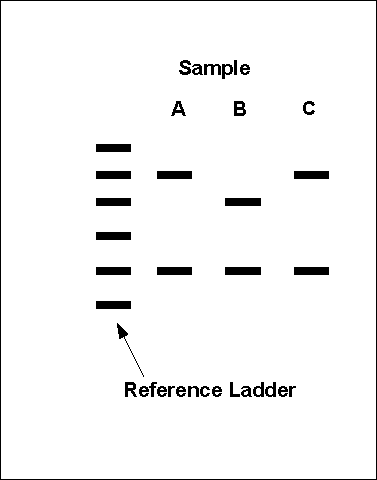
- Compare the repeated loci by separating them according to size on an electrophoretic gel. (See Below)