



|
|
Maledpun Music ทางเลือกประสบการณ์ฟังเพลงคุณภาพ | ||||||
|
|
|
|
|||||
CD |
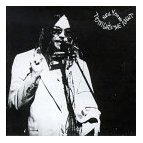
Tonight's the Night Neil Young - 1975
|
||||||||
| อัลบั้มที่ใครฟังก็ต้องชอบ | |||||||||
| อัลบั้มแยกตามแนวดนตรี | |||||||||
| MP3 | |||||||||
| เพื่อนักดนตรี | |||||||||
| DVD & VCD | |||||||||
| คอนเสิร์ตและ MV คุณภาพ | |||||||||
Rolling Stone "I'm sorry. You don't know these people. This means nothing to you." —Neil Young, in the liner notes. Tonight's the Night finds Neil Young on his knees at the top of the heap, struggling to get back to his feet. The musical difficulties of last year's On the Beach have been resolved as directly as possible by a return to recording with Crazy Horse and Nils Lofgren, with whom Young recorded his 1970 masterpiece, After the Gold Rush. Yet even Crazy Horse isn't what it once was: Lead guitarist Danny Whitten died last year of a drug overdose. The track on which he appears, "Come on Baby, Let's Go Downtown," recorded at Fillmore East four years ago, serves as a metaphor for the album's haunted, frightened emotional themes. Musically, Whitten's guitar and voice complement, challenge and inspire Young. The rest of the album strains to keep up. It does so only occasionally but the effort is almost quixotically exhilarating. The successes—the ironic "Tired Eyes," the deceptively sweet "Albuquerque," the thunderous "Lookout Joe" and the two versions of the title song—are Young's best music since Gold Rush. Lofgren's guitar and piano are forceful and direct, Ralph Molina's drumming apt on both the rockers and the weepers (the latter driven by Ben Keith's steel guitar). Young's playing, on piano, harp and guitar, is simple but constantly charged. Still, the album shares with On the Beach a fully developed sense of despair: The stargazer of "Helpless" finds no solace here. The music has a feeling of offhand, first-take crudity matched recently only by Blood on the Tracks, almost as though Young wanted us to miss its ultimate majesty in order to emphasize its ragged edge of desolation. "Borrowed Tune," for example, is set against Young's stark harp and piano. The tandem guitar and bass on the opening version of the title song sounds like the crack of doom itself and Young's singing—especially on the concluding version — alternates between sheer panic and awful Old Testament threat. "Tonight's the night," he shouts, threats, begs, moans and curses, telling the story of roadie Bruce Berry, who ODed "out on the mainline." Sometimes it feels as though Young is still absorbing the shock of his friend's death, sometimes as though he is railing against mortality itself, sometimes as though he's accepted it. But never as though he believes it. More than any of Young's earlier songs and albums—even the despondent On the Beach and the mordant, rancorous Time Fades Away—Tonight's the Night is preoccupied with death and disaster. Dedicated to the dead Berry and Whitten, its cover, liner and label are starkly black and white. The characters of the songs are shell-shocked, losers, wasted, insane, homeless—except for the ones who are already corpses. The happiest man in any of them, the father in "New Mama," acknowledges that he's "living in a dreamland." Ultimately, he too is tracked down by the ghosts from outside as he sits staring out at his frozen lake. Young is simultaneously terrified by this pernicious landscape and fascinated by the disgust and lust it evokes. The only resolution seems to be ennui and the ritual of the music, which pounds incessantly, until the sanity of everything, including (or maybe especially) the singer and the listener, is called into question. Tonight's the night, all right, but for what? Just another kick? Searching for a way to make sense of it, a lost Raymond Chandler story, "Red Wind," offers a clue: "It was one of those hot, dry Santa Anas that come down through the mountain passes and curl your hair and make your nerves jump and your skin itch. On nights like that every booze party ends in a fight. Meek little wives feel the edge of the carving knife and study their husbands' necks. Anything can happen." This is desert music, for certain, and the roughest part of the desert at that. What finally happens, in "Tired Eyes," is material for a novel; in fact, as Bud Scoppa has pointed out elsewhere, the similarity to the plot of Robert Stone's Dog Soldiers — a novel which shares Young's obsession with heroin and the refuse of the war—is startling. "Well, he shot four men in a cocaine deal," Young sings matter-of-factly. "He left 'em lyin' in an open field/ Full of old cars with bullet holes in the mirrors." The whole album has pointed to this, song after song building the tightness with the endless repetition of phrases—musical and lyric—until the rasp of the guitars on the rockers and the sweetness of the singing on the weepers begins to grate, aching for release. Young's whole career may have been spent in pursuit of this story—remember the sinister black limousines lurking in the shadows of "Mr. Soul" and "Broken Arrow"?—but it is only now that he has found a way to tell the tale so directly. Much has been made of Young's turn from pretty melodies on the last three albums. On this album, there are hints of the same kind of beauty that, overused, finally bloated Harvest with its own saccharine excesses. "World on a String" and "Roll Another Number" wouldn't have sounded out of place on that album, except that they would have exploded its pretensions. If the songs here aren't pretty, they are tough and powerful, with a metallic guitar sound more akin to the abrasiveness of the Rolling Stones than the placid harmonies of CSNY. The melodies haven't disappeared (as they seemed to on On the Beach), but they are only sketched in, hints of what could be. There is no sense of retreat, no apology, no excuses offered and no quarter given. If anything, these are the old ideas with a new sense of aggressiveness. The jitteriness of the music, its sloppy, unarranged (but decidedly structured) feeling is clearly calculated. The music draws us in, with the wonderful guitar line crashing through the ominous "Lookout Joe," with the steel guitar on "Albuquerque," the almost folkish suggestion of melody that drives "Tired Eyes" but—and here is where it is new—it also spits us back out again, makes us look at the ugliness on the surface and beneath it. Yet the musical change doesn't reflect a similar toughening of subject matter, though that is what the casual listener might think. The tensions have always been there. only they are now unrelieved. To suggest, as some have, that Young's current music is an apology for the sweetness of his success—much less to suggest that he has only recently discovered a world in opposition to the rock scene—is to ignore the bulk of his work. The titles alone tell the story: " Broken Arrow ," "Out of My Mind," "Everybody Knows This Is Nowhere," "Only Love Can Break Your Heart" (with no hint that anything can mend it again), even "Helpless." " Ohio ," Young's other great CSNY contribution, speaks explicitly of the same horrors: "What if you knew her and found her dead on the ground/ How can you run when you know?" Finally, those four dead in " Ohio " equate directly with the four dead coke dealers in "Tired Eyes": casualties in different battles of the same war. All of this is half incoherent because all of the names Young could put to it are clichés. It is the measure of Young's achievement that when he sings, so calmly it's spooky, "Please take my advice/ Open up the tired eyes," it brings this message home to us in a new way. Suddenly the evil is no longer banal but awful and ironic, in simultaneous recognition that the advice is silly, or that if taken, it might not help or it might only aid in enlarging the wounds. Crying over the death of his real and imagined friends, Neil Young seems at once heroic and mock heroic, brave and absurd. Like the best of both, he leaves us as he found us, ravaged but rocking.
All Music Written and recorded in 1973 shortly after the death of roadie Bruce Berry, Neil Young's second close associate to die of a heroin overdose in six months (the first was Crazy Horse guitarist Danny Whitten), Tonight's the Night was Young's musical expression of grief, combined with his rejection of the stardom he had achieved in the late '60s and early '70s. The title track, performed twice, was a direct narrative about Berry: "Bruce Berry was a working man/He used to load that Econoline van." Whitten was heard singing "Come On Baby Let's Go Downtown," a live track recorded years earlier. Elsewhere, Young frequently referred to drug use and used phrases that might have described his friends, such as the chorus of "Tired Eyes," "He tried to do his best, but he could not." Performing with the remains of Crazy Horse, bassist Billy Talbot and drummer Ralph Molina, along with Nils Lofgren (guitar and piano) and Ben Keith (steel guitar), Young performed in the ragged manner familiar from Time Fades Away — his voice was often hoarse and he strained to reach high notes, while the playing was loose, with mistakes and shifting tempos. But the style worked perfectly for the material, emphasizing the emotional tone of Young's mourning and contrasting with the polished sound of CSNY and Harvest that Young also disparaged. He remained unimpressed with his commercial success, noting in "World on a String," "The world on a string/Doesn't mean anything." In "Roll Another Number," he said he was "a million miles away/From that helicopter day" when he and CSN had played Woodstock. And in " Albuquerque," he said he had been "starvin' to be alone/Independent from the scene that I've known" and spoke of his desire to "find somewhere where they don't care who I am." Songs like "Speakin' Out" and "New Hama" seemed to find some hope in family life, but Tonight's the Night did not offer solutions to the personal and professional problems it posed. It was the work of a man trying to turn his torment into art and doing so unflinchingly. Depending on which story you believe, Reprise Records rejected it or Young withdrew it from its scheduled release at the start of 1974 after touring with the material in the U.S. and Europe. In 1975, after a massive CSNY tour, Young at the last minute dumped a newly recorded album and finally put Tonight's the Night out instead. Though it did not become one of his bigger commercial successes, the album immediately was recognized as a unique masterpiece by critics, and it has continued to be ranked as one of the greatest rock & roll albums ever made.
Adrian’s Album Reviews Recorded in 1973 and having undergone a number of changes to the tracklisting, eventually deemed fit for release by Neil and friends. Any doubts they might have had are mysterious to me - because this is the single most powerful and real album statement Neil ever put out. An album that works as both a tribute and commentary on the drug related death of Crazy Horse guitarist Danny Whitten and the similar Rock N Roll related death of associate Bruce Berry - 'Tonight's The Night' sees Neil and Crazy Horse 'get there'. They had a rehearsal room, got drunk, and recorded after midnight once everyone was off their heads and sufficiently loose. They kept the tape rolling and recorded everything. Everything. Producer David Briggs wanted a far looser version of the album to be released, the original version. That version included drunken raps, spoken parts, linking the songs. This version probably is better, probably. It goes someway to being a proper record, without being an ordinary record, if that makes sense. David Briggs saw it as a compromise, but the fact remains. This is the best album Neil Young ever made. Take the opening title track. It's a bass line and croaked and off key vocals, but the bass line and the vocals? The piano?? It's so ominous, and the piano is great - makes the song. 'Speakin Out' goes for blues piano - and seems initially unremarkable, until repeated listens get the vocals into your brain, the feel of the song. The lyrics seem, well, just describing stuff. Nothing more than that - but it's believable. The guitar and piano combine - loose and beautifully felt. |
http://www.geocities.com/maledpunmusic/
Updated October 2004