



|
|
Maledpun Music ทางเลือกประสบการณ์ฟังเพลงคุณภาพ | ||||||
|
|
|
|
|||||
CD |
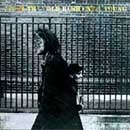
After the Gold Rush Neil Young - 1970
|
||||||||
| อัลบั้มที่ใครฟังก็ต้องชอบ | |||||||||
| อัลบั้มแยกตามแนวดนตรี | |||||||||
| MP3 | |||||||||
| เพื่อนักดนตรี | |||||||||
| DVD & VCD | |||||||||
| คอนเสิร์ตและ MV คุณภาพ | |||||||||
Rolling Stone Neil Young devotees will probably spend the nest few weeks trying desperately to convince themselves that After the Gold Rush is good music. But they'll be kidding themselves. For despite the fact that the album contains some potentially first rate material, none of the songs here rise above the uniformly dull surface. In my listening, the problem appears to be that most of this music was simply not ready to be recorded at the time of the session. It needed time to mature. On the album the band never really gets behind the songs and Young himself has trouble singing many of them. Set before the buying public before it was done, this pie is only half-baked. "Southern Man" is a good example. As a composition, it is possibly one of the best things Neil Young has ever written. In recent appearances with Crosby , Stills and Nash, the piece has had an overwhelmingly powerful impact on audiences. But the recording of "Southern Man" on After The Gold Rush fulfills very little of this promise. By today's standards, the ensemble playing is sloppy and disconnected. The piano, bass and drums search for each other like lovers lost in the sand dunes, but although they see each others' footprints now and then, they never really come together. Young tries to recover the dynamics of the piece with his voice alone, but can't quite make it: On this and the other really interesting tunes on the album-"Don't Let It Bring You Down," and "I Believe In You"-the listener hears only a faint whisper of what the song will become. Another disturbing characteristic of the record, oddly enough, is Young's voice. In his best work Young's singing contains genuine elements of pathos, darkness and mystery, If Kafka's story "The Hunger Artist" could be made into an opera, I would want Neil Young to sing the title role. But on this album his intonation often sounds like pre-adolescent whining. The song "After The Gold Rush," for instance, reminds one of nothing so much as Mrs. Miller moaning and wheezing her way through "I'm A Lonely Little Petunia In An Onion Patch." Apparently no one bothered to tell Neil Young that he was singing a half octave above his highest acceptable range. At that point his pathos becomes irritating pathos. I can't listen to it at all. There are thousands of persons in this country who will buy and enjoy this record. More power to them, I suppose. But for me the test of an album is whether or not its quality is such that it allows you to grow into it a little more with each subsequent listening
All Music In the 15 months between the release of Everybody Knows This Is Nowhere and After the Gold Rush, Neil Young issued a series of recordings in different styles that could have prepared his listeners for the differences between the two LPs. His two compositions on the Crosby, Stills, Nash & Young album Déjà Vu, "Helpless" and "Country Girl," returned him to the folk and country styles he had pursued before delving into the hard rock of Everybody Knows; two other singles, "Sugar Mountain" and "Oh, Lonesome Me," also emphasized those roots. But " Ohio ," a CSNY single, rocked as hard as anything on the second album. After the Gold Rush was recorded with the aid of Nils Lofgren, a 17-year-old unknown whose piano was a major instrument, turning one of the few real rockers, "Southern Man" (which had unsparing protest lyrics typical of Phil Ochs), into a more stately effort than anything on the previous album and giving a classic tone to the title track, a mystical ballad that featured some of Young's most imaginative lyrics and became one of his most memorable songs. But much of After the Gold Rush consisted of country-folk love songs, which consolidated the audience Young had earned through his tours and recordings with CSNY; its dark yet hopeful tone matched the tenor of the times in 1970, making it one of the definitive singer/songwriter albums, and it has remained among Young's major achievements. |
http://www.geocities.com/maledpunmusic/
Updated October 2004