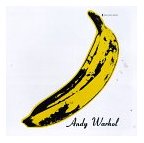
“ อัลบั้มที่เคยสร้างความงุนงงกับผมมาแล้ว ว่าศิลปินที่โด่งดังอย่าง Andy Warhol ซึ่งทำงานศิลปะด้านวาดและพิมพ์ภาพและไม่น่าจะมีความรู้ทางด้านดนตรีมากนัก แล้วเขาจะทำงานอย่างไรเวลาเป็น Producer ให้กับ The Velvet Underground ซึ่งในที่สุดผมก็ได้เรียนรู้อย่างกระจ่างแจ้งว่า Andy Warhol ที่ไม่มีความรู้ด้านดนตรีแม้แต่นิดเดียว เขาไม่ได้ทำอะไรเลยในแง่การผลิตดนตรี เพียงแค่กระตุ้นด้วยการพูดคุยและเป็นแรงบันดาลใจให้กับ Lou Reed ซึ่งเป็นคนแต่งเพลงทั้งหมดในอัลบั้มนี้ แล้วก็ฟังเดโมด้วยหูธรรมดาของเขาและให้คำวิจารณ์จากความรู้สึกที่เขามีในแง่ศิลปะ แค่นั้นจริงๆ นี่แหละศิลปะของการสร้างงานศิลปะ และอัลบั้มหน้าปกรูปกล้วยที่เป็นผลงานภาพพิมพ์ของ Andy นี่แหละที่สร้างซาวนด์ดนตรีใหม่ให้กับยุค ’60 และมีอิทธิพลต่อวงดนตรีดังๆมากมาย โดยเฉพาะวงในแนว Alternative ”
1. Sunday Morning
2. I'm Waiting for the Man
3. Femme Fatale
4. Venus in Furs
5. Run Run Run
6. All Tomorrow's Parties
7. Heroin
8. There She Goes Again
9. I'll Be Your Mirror
10. Black Angels Death Song
11. European Son
Rolling Stone
Reviled by their hippie contemporaries, barely acknowledged by their
record company, pegged by the media as a pop nightmare sprung
full-blown from the pasty forehead of Andy Warhol, the members of
the Velvet Underground worked hard and paid heavily for their place
in rock history. It seems incredible now that in the band's troubled
lifetime (basically extending from late 1965 to the release of
Loaded in 1970) they managed to record four of rock's most enduring
albums, zigzagging between dramatically ugly guitar noise and
transcendent moments of folk-pop beauty. The Velvet Underground and
Nico, recorded nearly twenty years ago, remains the official road
map of New York City's bohemian underworld. Artists as diverse as
David Bowie, the Cars, New Order and R.E.M. have openly drawn on the
Velvets' legacy and singer-guitarist Lou Reed's historic repertoire.
Most hard-core and No Wave fringe rock today has nothing on White
Light/White Heat for sheer industrial discord and locomotive
propulsion.
But if the Velvets' influence has never been matched in sales or
thoughtful record-company promotion, the release of V.U. - a
collection of newly discovered tracks from 1968 and '69 - and the
repackaging of the group's first three albums helps redress the
imbalance. The remastering (from high-quality Japanese pressings) of
The Velvet Underground and Nico, White Light/White Heat and The
Velvet Underground is certainly a blessing for anyone whose original
pressings are now at death's door. Unfortunately, no quality control
at this stage will ever compensate for the inability of studios at
the time to cope with the Velvets' death-ray fuzz guitar or the evil
scrape of John Cale's viola in "Heroin" and "European Son" on the
Nico album. But the refreshing clarity of these new versions
frequently provides revealing glimpses into the guts of the Velvets'
remarkable sound and prophetic vision.
In "Sunday Morning," also on the Nico album, you can hear much more
clearly the mournful bowing of Cale's viola under the abrupt Duane
Eddy cluck of Reed's guitar. Together, these two elements illustrate
the precarious balance between the smudged elegance of the band's
pop essence and the graphic honesty of Reed's drug and sex tableaux.
The mad barrelhouse piano comping in "I'm Waiting for the Man"
practically leaps out of the brittle mix, while the eerie doubling
of Nico's breathy Dietrich vocal heightens the haunting air of the
song's sad martial cadence.
As a statement of artistic purpose, indeed rebellion, considering
the year it was made (1967), The Velvet Underground and Nico is
still a powerful summation of art and fear - rock & roll reduced to
its most primitive state to grapple with New York's brutal realism.
Some of the record's original savagery and wonder has eroded with
time, becoming too familiar through imitation. However, the simple
physical impact of the band's conviction remains undiminished. The
crucial details brought out by the remastering - like Cale's viola
skipping with medieval glee through the serrated atonality of "The
Black Angel's Death Song" - help make that experience new.
The same can be said for The Velvet Underground, the predominantly
acoustic album they released in 1969, and White Light/White Heat.
Because they sit at opposite ends of the Velvets' musical seesaw,
these albums seem strangely incomplete, lacking both the panoramic
spread of the Nico album and the sharp commercial focus of Loaded.
Nevertheless, there is a lot to be learned from these reissues.
No amount of studio voodoo will ever make White Light/White Heat
suitable for AOR airplay; with higher fidelity, Reed's slasher solo
in "I Heard Her Call My Name" sounds even more abrasive. But in the
case of "Sister Ray," the Velvets' seventeen-minute orgiastic
perversion of rock's cerebral late-Sixties jamming, the remastering
has sanded down some of Reed's and Sterling Morrison's guitar
distortion to expose a vicious metal groove. Drummer Maureen Tucker
is so deliciously crude, so frenzied in her dedication to the
simplicity of the pulse, that she almost sounds like a tape loop.
That, by the way, is a compliment.
The Velvet Underground, on the other hand, is gently expansive.
Constructed as a highly personal song cycle, it is surprisingly
caressing, even on uptempo tracks like the frisky "Beginning to See
the Light" and "What Goes On." The tender harmonies and overlapping,
lacelike guitar patterns recall the intimate Nico ballads on the
first album, yet the starkness of the production provides an
unexpected entrance into the heart of Reed's more lyrical
songwriting. The ironic pairing of "Pale Blue Eyes" and "Jesus,"
both soft and fragile, both confessing different kinds of love, best
summarizes the hopeful warmth at the center of the Velvets' rage.
Until now, the Velvet Underground story had ended with Loaded
(except for posthumously issued live albums and shoddy
compilations). But the release of V.U. is a major event, because its
ten previously unissued tracks - bootleg appearances notwithstanding
- constitute the missing link between the band's late-Sixties mood
swings and Loaded's commercial near-breakthrough. Except for two
songs recorded with John Cale in 1968 (Doug Yule replaced him later
that year), the material on V.U. is the bulk of a projected fourth
Verve/MGM album that was never finished; it became known among fans
as the Great Lost Velvet Underground Album.
Had it been completed and released, the Lost Album might have
seriously altered the Velvets' fortunes for the better. Although
Loaded included some of Reed's biggest hits in "Sweet Jane" and
"Rock and Roll," it was just too late: Reed quit shortly before its
release. But V.U. captures the band at the height of its powers,
refining the edginess of the early records with a polished,
accessible sound that doesn't compromise its spirit of adventure.
For the first time on record, the Velvets sound like a real band,
not a concept in overdrive.
"I Can't Stand It" and "Foggy Notion" are proof of this. Both songs
are power-drill rockers based on the same urgent pulse as "Sister
Ray," the former rolling along with a snotty glide that easily whips
Reed's later rerecording on his debut solo album. There are also
unexpected flashes of humor - "I live with thirteen dead cats/A
purple dog that wears spats/They're livin' out in the hall/And I
can't stand it anymore." The real surprise, though, is the way Reed
and Sterling Morrison match up as a guitar team. Their creatively
rhythmic strumming has a forceful snowball effect, and while Reed
tends to take the more spectacular solos, Morrison plays effective
fills with sharp, Keith Richards-style intuition.
The two songs featuring Cale slot nicely into V.U.'s cohesive tone.
"Temptation inside Your Heart" combines playful R&B goofiness with a
bright, busy beat and a great strangled guitar solo. The
chamber-music pop of "Stephanie Says" is not too distant from that
of "Sunday Morning"; still, there is a special resonance in Cale's
tiptoe viola and the painful resignation in Reed's voice and lyric
("Stephanie says/That she wants to know/Why she's given half her
life/To people she hates now"). The casual horror in so many of
Reed's early songs sometimes made it hard to indulge his more
reflective moods. But performances like "Stephanie Says" and Reed's
charming duet with Maureen Tucker, the childlike "I'm Sticking with
You," show how tender he could really be and how sensitively the
Velvets could translate that feeling.
Most of the other tracks on V.U. glow with that same vigorous
spirit, if not the relentless drive. "One of These Days" is a lively
parody of a cowboy drinking song, complete with sagebrush harmonies
and a boozy slide-guitar break. "Ocean," a gorgeous evocation of
dark ennui, dramatically showcases the Velvets' grasp of Reed's
occasional romantic turns. With his thoughtful vocal and Maureen
Tucker's imitation on her cymbals of rolling surf, the song
anticipates Reed's later epic ballads.
Rock historians and fans alike owe Polygram A&R manager Bill
Levenson, the executive producer of V.U., a debt of thanks for
resurrecting these tracks and for giving the band's first three LPs
the proper reissue they've long deserved. At $5.98 list price, The
Velvet Underground and Nico, White Light/White Heat and The Velvet
Underground are essential purchases - certainly essential listening
for any study of Seventies and Eighties punk evolution. As for V.U.,
the Great Lost Velvet Underground Album is no longer lost. It is
simply great 5/5
Q
The first three Velvet Underground albums remastered and
re-issued with picture back boxes and picture discs. The sound
quality may be different: however it's hard to tell, possibly
the result of the lack of different drugs, better stereo
equipment, the advent of CD - but the music at least is the
same. Having a reason to hear them again is a boon, since
these albums are superb. The debut (The Velvet Underground And
Nico) offers Sunday Morning, Venus In Furs, There She Goes
Again and I'll Be Your Mirror. White Light/White Heat has The
Gift and Lady Godiva's Operation and their third album (The
Velvet Underground) proffers Pale Blue Eyes, Beginning To See
The Light and That's The Story Of My Life. Three albums in
three years (1967-'69) that have been traced over by every
art-school band ever since. 5/5
Barnes & Noble
On one song, Nico gently croons, "I'll be your mirror/ Reflect what you are/ In case you don't know," while on another Lou Reed grumbles, "I'm waiting for my man/ Twenty-six dollars in my hand/ Up to Lexington, one-two-five/ Feel sick and dirty/ More dead than alive." The Velvet Underground delighted in bringing to light the things people felt but denied about themselves -- and in doing so became one of the most influential bands of all time. The members -- Lou Reed, John Cale, Sterling Morrison, Moe Tucker, and, for this 1967 recording only, Nico -- were part of Andy Warhol's Exploding Plastic Inevitable, and that association gave them license to experiment with feedback and distortion in their music and taboo subject matter in their lyrics, with "Heroin" romanticizing the pleasures of smack and "Venus in Furs" exploring the role-playing and intricacies of S&M. Warhol had never produced a recording before, so he used his imprimatur -- in this case the classic banana cover -- to ward off interference. Brian Eno once said that only a few dozen people bought this record -- but that all of them were then inspired to start their own band. Martin Johnson
All Muisc Guide
One would be hard pressed to name a rock album whose influence has been as broad and pervasive as The Velvet Underground and Nico. While it reportedly took over a decade for the album's sales to crack six figures, glam, punk, new wave, goth, noise, and nearly every other left-of-center rock movement owes an audible debt to this set. While The Velvet Underground had as distinctive a sound as any band, what's most surprising about this album is its diversity. Here, the Velvets dipped their toes into dreamy pop ("Sunday Morning"), tough garage rock ("Waiting for the Man"), stripped-down R&B ("There She Goes Again"), and understated love songs ("I'll Be Your Mirror") when they weren't busy creating sounds without pop precedent. Lou Reed's lyrical exploration of drugs and kinky sex (then risky stuff in film and literature, let alone "teen music") always received the most press attention, but the music Reed, John Cale, Sterling Morrison, and Maureen Tucker played was as radical as the words they accompanied. The bracing discord of "European Son," the troubling beauty of "All Tomorrow's Parties," and the expressive dynamics of "Heroin," all remain as compelling as the day they were recorded. While the significance of Nico's contributions have been debated over the years, she meshes with the band's outlook in that she hardly sounds like a typical rock vocalist, and if Andy Warhol's presence as producer was primarily a matter of signing the checks, his notoriety allowed The Velvet Underground to record their material without compromise, which would have been impossible under most other circumstances. Few rock albums are as important as The Velvet Underground and Nico, and fewer still have lost so little of their power to surprise and intrigue more than 30 years after first hitting the racks. Mark Deming
Amazon
When the Velvets recorded this debut, they were best known as the protégés
of Andy Warhol (who designed the sleeve), and as a grating, combustive
live band. Fueled by drummer Moe Tucker's no-nonsense wham and John Cale's
howling viola, some of the straight-up rock & roll and arty noise
extravaganzas here bear that out. But before Lou Reed was singing about
sadomasochism and drug deals and writing lyrics inspired by his favorite
poets, he was a pop songwriter, and this album has some of his prettiest
tunes, mostly sung by Nico, the German dark angel who left the band after
this disc. Even the sordid rockers are underscored by graceful pop tricks,
like the two-chord flutter at the center of the classic "Heroin."
--Douglas Wolk
Muisccritic.com
Like many visionary artists, musicians or otherwise, the
Velvet Underground were never fully appreciated while they
were alive and well. But thanks in part to the solo successes
of band members Lou Reed and John Cale, and in part to the
numerous artists who cited them as influences (including REM,
who covered three of their songs on the "Dead Letter Office"
LP), the impact they have had on rock music is still being
felt more than 30 years later. The five CD "Peel Slowly and
See" box set contains all four Velvets LPs and more outtakes
and B-sides than most of us would know what to do with, and it
is perhaps more vital to own than any multi-disc retrospective
of a rock artist other than the Beatles. But if budget permits
only one Velvet Underground album for the time being, make it
the one with the banana.
Where to start? "Sunday Morning," the record's opener, may
very well be the only rock song ever with a celeste, a
xylophone-like instrument that Cale found sitting around in
the studio. "Heroin" is the most familiar track here, a
haunting tale of drug addiction set to Lou Reed's quivering
voice and two simple chords, repeated over and over. But it's
far from repetitive; alternating between slow and fast, loud
and quiet, it keeps the listener hanging on Reed's every word.
The most accessible tracks other than "Heroin" are the poppier
ones, such as "Waiting for the Man" and "Femme Fatale." The
former is a blues-like alienation dirge sung by Reed, while
Nico, the German singer who was only with the Velvets for this
one album, takes the vocals on the latter and sings an amusing
story of a woman is "just a little tease / see the way she
walks / hear the way she talks." Nico also sings on the
ingenious "All Tomorrow's Parties," a playful jab at the
hipper-than-thou New York artsy social scene, of which Andy
Warhol tried to make the Velvets a part.
The more ambitious songs take a while to get used to, but are
ultimately even more satisfying. "Venus in Furs" and "The
Black Angel's Death Song" are the album's centerpieces, and
are like no music ever recorded, before or since. The slow
pulsing of the tambourine, Maureen Tucker's delicate drumming,
Lou Reed's somber vocals, Sterling Morrison's insistent bass,
and most distinct of all, Cale's electric violin. "European
Son," described by Reed years later as "musical masturbation,"
is a seven minute wall of noise, not an unusual piece by
today's standards, but this was 1967 after all, the same year
that "Windy" and "Kind of a Drag" hit number one. For a rock
band to write about anything remotely disturbing other than a
broken heart, or to attempt any sort of song structure not
reliant on simple verses and choruses, was unheard of. It
would be a gross understatement to say that the Velvet
Underground were ahead of their time.
Though it was probably unintentional, there has never been a
rock album so brilliantly sequenced. Rather than beginning
with a bang, the album starts off slow and builds to a climax
- "Venus in Furs" arrives just in time, and the album's most
intense moments are evenly spaced among the comparatively
lightweight. "Heroin" is followed by "There She Goes Again,"
perhaps the album's most 'normal' song, but then comes Nico's
"I'll Be Your Mirror," a cute but extremely eccentric acoustic
love song. "The Black Angel's Death Song" tears that
immediately to pieces, and then "European Son" comes along and
pandemonium ensues.
To fully explore all the nuances of "The Velvet Underground
and Nico" would take longer than the eight hours it took to
record the album in the first place, an album that was
probably never intended for this kind of analysis. Perhaps
then, the true essence of what this album means is that of a
blueprint for dozens, possibly hundreds of budding musicians,
to embrace the do-it-yourself aesthetic in their songs. The
Velvets often drew crowds of less than 100 to their shows, but
among the teenagers in their audiences were future Pretender
Chrissie Hynde and future Car Ric Ocasek, and many others who
went forth and started their own bands. We still hear the
influence of the Velvet Underground today in the informal
garage band clutter of independent label artists as a contrast
to highly polished studio musicians. You could make a good
case for the Velvet Underground as the pioneers of
"alternative rock," and thus for The Velvet Underground and
Nico as the first alternative album. But labels aside, there
is nothing quite like it.
Pitch Fork Media
In the more than three decades since Lou Reed left the band, the Velvet
Underground's secured place in rock's canon has become pretty much
watertight. Their towering reputation as rock legends is now irrefutable.
Not too shabby for a band who, in their day, only sold a handful of
records, and whose live shows were meagerly attended. The Velvets' current
status has stemmed primarily from their four studio albums and their
wicked, junk-inspired depravity. But what tends to get lost in the praise
is the band's reputed brilliance as a live act, a reputation that should
only grow exponentially after people have a chance to hear Robert Quine's
tapes.
Prior to this release, only a few "official" live Velvets releases
existed: the incredible double-disc set 1969 and the tour documents from
their mid-90s reunion being the most readily available. And then there's
the dreadful Live at Max's Kansas City, which, while allegedly Reed's
documented last stand with the group, is of interest only to those with
dire historical interest or those with a need to hear table conversation
revolving around drug scores. So now, with The Quine Tapes, the innocent
public can finally find out what those confounded bootleggers have been
shouting out for nearly thirty years: the Velvet Underground live on stage
were a staggering dynamic presence, unpredictable and explosive.
While mentioning bootlegs, I guess I'd better say that what the title of
this box set suggests is exactly what you get. Unlike Dylan's Live 1966 or
the majority of officially released, artist-sanctioned "bootlegs," this
release is a murky, sometimes shitty-sounding audience recording by Robert
Quine, a rabid VU fan who would later play guitar with both Richard Hell
and Lou Reed. So, the caveat: if you're looking for a pristine audio
document, this isn't it. But if you're keen on hearing a record that's
crammed with beautiful group interchange and a series of magical moments,
The Quine Tapes has it all in droves.
Capturing the band on a jaunt through the West Coast, Quine and VU
archivist Bill Levinson have hand-selected a three-disc set of songs that
finds the Velvets setting up camp in San Francisco amongst the hippies and
peaceniks at two different venues: the Matrix and Family Dog. It shatters
the illusion of the Velvets as decadent East Coast degenerates; on the
contrary, Reed sounds surprisingly at ease, peppering the performances
with friendly between-song banter and issuing often-revealing song
introductions. The easiness spills over into the actual performances as
well, which find the band stretching out into relaxed improvisations,
often transforming arrangements and adlibbing lines. Of course, there are
still the blistering sonic assaults that you'd expect from the Velvet
Underground, but ultimately, Reed, Morrison, Tucker and John Cale
replacement Doug Yule sound right at home.
What with Reed's seedy lyrics about blowjobs, sadomasochism and an NYC
world of hookers and junkie cravings, a tranquil setting isn't exactly
what you might expect from a Velvets concert. But the majority of tracks
here move along at an easy, flowing pace-- rarely hurried and always
allowing time for the band's meandering explorations. The two versions of
"I'm Waiting for the Man" (both of which are universes apart from the
anxious edginess evidenced on The Velvet Underground & Nico) are leisurely
and laid-back, almost entirely abandoning the hard-edged grit of the
original. In particular, the delightful version from the Matrix on the
third disc is a gorgeous, loping stroll that finds Lou Reed in a
remarkably jovial mood, whistling in between a set of improvised verses.
Elsewhere, the Velvets slam their feet on the gas pedal and push
everything furiously into overdrive. With Cale's atonal viola scrapings
and dissonant experiments gone from the fray, what we've got here is Reed
and Sterling Morrison urging the others on with full-throttled,
bursting-at-the-seams guitar fuzz. "I Can't Stand It" moves at a fever
pitch for over six minutes with Tucker and Yule thumping away on
percussive duties while Reed unleashes a frantic guitar solo. "Foggy
Notion" is out of the gates in a heady blaze with Morrison and Reed
swapping riffs in a Chuck Berry-esque rock and roll boogie.
The dim points on The Quine Tapes are few and far-flung. With the band
stretching out into extended jams with re-arranged tempos and rhythms, the
misses occur much less often than you might imagine. One of these few
instances-- "Follow the Leader," which opens disc two-- unfortunately
drags on ad infinitum, the band drudging along in a clamorous din as if
they never quite achieved liftoff. Some might consider Cale's absence a
drawback to these recordings, especially on the renditions of earlier
songs like "Black Angel's Death Song," "Heroin" and "Venus in Furs";
however, with Yule thudding away at the bass and organ, the rest of the
Velvets crank up the intensity (and volume), substituting massive
distortion and fuzz for Cale's screeching viola.
The best tracks here are the ones in which the band allows space for
everything to unfold in a lazy haze, playing with sheer exuberance and
joy. On the third disc, they sound completely rapt with the still fresh
"New Age" and drift in a hypnotic trance while Reed repeats the mantra:
"It's the beginning of the new age."
Still, what's most likely to delight fans on this set is the track Quine
and Levinson have reserved for the final spot on each of the three discs,
"Sister Ray," which clocks in respectively at 24, 38 and 28 minutes.
"Sister Ray" is pure rock enchantment, the band casting a spell on their
audience and then freeing the rein on a guitar roller-coaster joyride.
Like the Matrix version of "I'm Waiting for the Man," each take of "Sister
Ray" focuses more heavily on slipshod, careless joy than on the
brilliantly concentrated intensity of the studio version. On the third
disc's version (taken from Quine's tape of Washington University at St.
Louis in May '69), Reed starts it with the warning, "This is going to go
on for awhile." And it does, eventually climaxing into a churning
maelstrom of distorted fuzz.
"Sister Ray" was seemingly used to end each show, a cathartic spree into
the outer limits of the band's sonic imagination. Beginning as a
slow-burner each time, Reed spits out the debauched lyrics while the band
jumpstarts the locomotive engine and lets the train begin its steady roll.
Serving as a showcase for Reed's hyper-electric guitar-fuzz rave-ups, the
band chugs along behind him, Yule both bashing and tickling notes out of
the organ while Moe Tucker beats her kit in time with the engine. On two
of the song's three takes, "Sister Ray" erupts into the twisted elation of
"Foggy Notion." It's all such a magnificent, zigzagging mess that there's
no wonder the Velvets seemed in such high spirits.
By the time the locomotive draws to a stop over four hours after the box
set's first track, you're left in a wake of blistering guitar solos and
pure rock and roll energy. Robert Quine was one of the lucky few to have
experienced the Velvets live and, from the evidence gathered here, it
looks like he caught them at their musical zenith. If the name of this box
is any hint at all (and let's hope that it is), what we have here is the
first in a series of archival releases that will serve to finally shed
light on the Velvet Underground's ludicrously mind-boggling live
incarnation. With their legendary status already secured, The Quine Tapes
serves to ensure that it's never questioned.
-Luke Buckman 9.4/10
Ink Bot Magazine
This much we know about The Velvet Underground: 1) Lou Reed's jaded junkie observations changed the rules for pop lyricists. 2) John Cale's dissonant noisescapes gave birth to the rock underground. 3) This album, dropped by Andy Warhol into the public consciousness like a live rat in a restaurant, changed the course of music without so much as a whiff of the pop charts.
Here's some things you might discover next time you listen to The Velvet Underground and Nico: 1) Reed was a great guitarist, spinning leads on "I'm Waiting For the Man" and "Run Run Run" like Chuck Berry with heartburn, layering venom on top of great rock 'n' roll riffs. 2) Mo Tucker and Sterling Morrison were a revelatory rhythm machine, as exciting at their quixotic best ("I'm Waiting For the Man," "There She Goes Again," "Heroin") as Bonham and Jones or Entwhistle, Townshend and Moon. 3) Andy Warhol was a nipple. Shoehorning "chanteuse" Nico into the lineup could have ruined some great chemistry (it didn't - she holds her own), and his eagerness to promote the band with his name was, in hindsight, ineffective and crass. But then Warhol was all about surface, and this album shows him to be out of his depth alongside the greatest art-rock band ever.
CD Universe
The digitally remastered VELVET UNDERGROUND & NICO is also included in its entirety on the 5 disc set PEEL SLOWLY AND SEE.
Velvet Underground & Nico: Lou Reed (vocals, guitar); Nico (vocals); John Cale (electric viola, piano, bass, background vocals); Sterling Morrison (guitar, bass, background vocals); Maureen Tucker (percussion, background vocals).
Originally released on Verve (5008).
Digitally remastered by Bob Ludwig (Gateway Mastering, Portland, Maine).
Brian Eno once said that only a hundred people bought Velvet Underground records when they first came out, but those hundred people all went out and formed their own bands. The rest, of course, is history; the Velvet Underground was the catalyst that helped spark punk rock, and began the growth of an alternative branch within rock and roll's grand family tree. VU's was an unparalleled glimpse into the Summer Of Love's alter ego, complete with graphic, unapologetic descriptions of intravenous drug-use and risque sexual situations. Their 1967 debut, VELVET UNDERGROUND & NICO, was a tour de force that may never be equaled for its sheer radicalism in the face of rock convention.
The Velvet Underground also mapped out unconquered sonic territories. Bassist John Cale was weaned on deconstructing classical theory--the perfect avant-garde foil to help bring Reed's terse songs to life. Even more noticeable when he would switch to electric viola, Cale's sound evoked the terror of Reed's compositions, with the bowed strings screeching like a runaway subway car. Drummer Maureen Tucker played like no one before her. Her frantic swipes could mimic a galloping rush in "Heroin," or work with the delicate, hesitant charm of "All Tomorrow's Parties." Guitarist Sterling Morrison was a master of his craft, ably switching from oddly Middle-Eastern plucking (the eerie "All Tomorrow's Parties") to head-on rock (the ultra-edgy "Waiting For The Man"), always adding just the right element to fatten the cacophony. VELVET UNDERGROUND & NICO is one of rock's most significant debuts.
|