1. Acrobat
2. Even Better Than The Real Thing
3. Love Is Blindness
4. Mysterious Ways
5. One
6. So Cruel
7. The Fly
8. Tryin' To Throw Your Arms Around The World
9. Ultraviolet (Light My Way)
10. Until The End Of The World
11. Who's Gonna Ride Your Wild Horses
12. Zoo Station
adrians album reviews
U2, on the cusp of a new decade said in what seemed like a farewell live performance that they were gonna go away and dream it up all over again. The wait for new material seemed like a hell of a long time to me personally, broken only by a weird Bono version of the Cole Porter song 'Night And Day', which was proof enough by itself that the new material U2 were working on would indeed be different. With dance music really breaking and making itself heard in the charts all through 1989 and 1990, especially, sweeping away such Eighties stadium acts as Simple Minds in the process, it was indeed important, almost essential, that U2 came back with a different sound. Well, let's put it this way. At their biggest, Simple Minds were pretty much as big as U2 for a while there, but Simple Minds never managed to survive with their reputation or fan-base intact into the nineties. They never made the transition smoothly, daringly or naturally. U2, when they did eventually break their silence with the release of 'The Fly' excited many, alienated a few, but the net result was the maintaining of a significant portion of their fan-base whilst attracting a good many new fans into the bargain. It was a big deal. BBC Radio one had the worldwide exclusive airing of 'The Fly', and I was very annoyed when some of my friends didn't like it, or worse, said that it sounded like INXS. 'The Fly' does not sound like INXS. Lets take a look at 'The Fly' in particular here. Yep, there's a dance beat! But, what's this? A huge, cavernous guitar part from The Edge, dirty horrible guitar all over the place, a new guitar sound not heard on previous U2 records. Bono goes into this little beautiful Falsetto part, singing harmony over himself. The bass sounds supernova, groovy as hell. It doesn't sound like a U2 bass sound, although a few previous U2 songs had certainly hinted at what a great bass player they had themselves. The drum beats continue, the guitar keeps coming back in. CRUNCH! Here comes the solo! 'The Fly' retained elements of every single aspect of U2, possibly bar the lyrics which are totally different to anything we'd heard from them before at the time. U2, seemingly effortlessly ( although, they'd spent a HELL of a lot of time in the studio for this album ), had acheived a dance/rock crossover that worked, worked at a time the likes of Happy Mondays, Stone Roses and others were breaking big and threatening to become 'the new music'. U2 with 'The Fly' pissed off a few, pissed off many, but won over far more fans than they alienated.
All of the singles from 'Achtung Baby' were appreciable and sizable hit singles. This series of singles helped push sales of the album forwards, onwards - the album outsold 'Rattle And Hum' in any event. 'Mysterious Ways', 'Even Better Than The Real Thing'. Both are superbly produced tracks and very good songs. 'One' is a beautiful song, more usual in it's sound and the song many U2 fans latched onto upon their first exposure to the 'Achtung Baby' album. Another such song to comfort old U2 fans was 'Who's Gonna Ride Your Wild Horses' - a much more usual U2 song than even 'One', although 'Who's Gonna Ride Your Wild Horses' is just plain dumb and irritating. You imagine a whole U2 album released in 1991 that sounded like 'Who's Gonna Ride Your Wild Horses'? They'd have gone the same way as 'Simple Minds'. As far as the album tracks are concerned, they are all good. All of them, this is a very consistent album for the most part. 'Zoo Station' with it's guitar switching between and across your speakers, Bono sounding beautiful singing these 'weird' U2 lyrics, playful, nonsensical lyrics but they should make you smile. They make me smile. 'Until The End Of The World' is stupendously dark and menacing - again the guitar mixes well with dance programming and technology. Neither Rock nor Dance music this song, it was a genuinely new sound at the time. U2 didn't invent that sound of course, loads of groups were attempting it, i've already mentioned The Stone Roses, for one. U2 happily embraced this sound though and ended up sounding different, very different to how they'd sounded before but still ended up being recognizably U2. It shouldn't be underestimated how WELL they did this whole thing! 'Cruel' is a lilting little mid-tempo song, certainly no favourite of mine even though it's not exactly bad, just a little 'plodding' perhaps? Same comments apply to 'Trying To Throw Your Arms Around The World' actually, only this time the bass parts sound better, and the lyric is better, a silly funny lyric, a charming and 'nice' lyric. All three of the closing songs are great, and for me, it's these songs that really push 'Achtung Baby' into classic status. 'Ultra Violet' is another great dance/rock mix, 'Acrobat' becomes a furious and enjoyably aggressive assualt, 'Love Is Blindless' is dark and funeral like, most closely resembling that Bono version of 'Night And Day' I heard, though quite a bit more desolate and beautiful. 9.5/10
all music guide
Reinventions rarely come as thorough and effective as Achtung Baby, an album that completely changed U2's sound and style. The crashing, unrecognizable distorted guitars that open "Zoo Station" are a clear signal that U2 have traded their Americana pretensions for post-modern, contemporary European music. Drawing equally from Bowie's electronic, avant-garde explorations of the late '70s and the neo-psychedelic sounds of the thriving rave and Madchester club scenes of early '90s England, Achtung Baby sounds vibrant and endlessly inventive. Unlike their inspirations, U2 rarely experiment with song structures over the course of the album. Instead, they use the thick dance beats, swirling guitars, layers of effects and found sounds to break traditional songs out of their constraints, revealing the tortured emotional core of their songs with the hyper-loaded arrangements. In such a dense musical setting, it isn't surprising that U2 have abandoned the political for the personal on Achtung Baby, since the music, even with its inviting rhythms, is more introspective than anthemic. Bono has never been as emotionally naked as he is on Achtung Baby, creating a feverish nightmare of broken hearts and desperate loneliness; unlike other U2 albums, it's filled with sexual imagery, much of it quite disturbing, and it ends on a disquieting note. Few bands as far into their career as U2 have recorded an album as adventurous or fulfilled their ambitions quite as successfully as they do on Achtung Baby, and the result is arguably their best album 5/5
teenink
If you're a U2 fan, be sure to get their new album "Achtung Baby." In my opinion, this is their best album yet. You may have heard of their number one single "Mysterious Ways." Well, if you liked that song, you'll definitely like the rest of the album. Their upcoming concert, entitled the "Zoo Tour," is all based on their new album. The lead singer, Bono, sings a series of great hits. Their upcoming hit entitled "One" is soon to hit the charts. Other songs on the album include: "Zoo Station," "Even Better than the Real Thing," "Until the End of the World," "Who's Gonna Ride Your Wild Horses," "So Cruel," "Tryin' to Throw Your Arms Around the World," "Ultraviolet," and "Love is Blindness." So if you are a U2 fan, be sure not miss out on their new album, "Achtung Baby." n
Amazon
"I'm ready / Ready for what's next," Bono announces at the outset of Achtung Baby, the album that proved the so-called "band of the '80s" was capable of blazing into the '90s by replacing its flag-waving arena-rock stance with screaming synths, clubby rhythms, and industrial skronk. The group advances its sound without losing accessibility on "Who's Gonna Ride Your Wild Horses," "Even Better Than the Real Thing," and "Mysterious Ways," while pushing the envelope a bit more on "The Fly," "Zoo Station," and "Acrobat." The moody ballad "One" is arguably the finest song the band has produced, full of sorrow, compassion, and hope all at the same time
Q
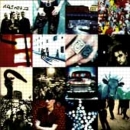
With each new U2 album there has been a growing buzz of anticipation, a sense of event stoked by the way the band has stamped each new offering with the imprimatur of Resounding Significance. The governing theme - if not "concept" - of War was, well, war; The Unforgettable Fire, the shadow of the bomb; The Joshua Tree, the ghosts of absent friends; and Rattle And Hum, the ancestral voices of rock itself. But the very title Achtung Baby strives for lack of significance and - just as insignificantly - the sleeve itself is not the usual single cinematic image of heroic import but rather a grid of snapshots evoking, if a little cleanly, the slapdash glory that was Robert Frank's artwork for the Stones' Exile On Main Street. So informal, indeed, is the new U2 pose that - quick before it's banned -you get to see Adam Clayton's willy. Don't be fooled though. This is U2's heaviest album to date. And best. Lyrics have always been the band's weakest suit, and U2 remain no stranger to such infelicities as "your gypsy heart", "your salt water kisses" and even "your wild horses" -all within the space of a single song (Who's Gonna Ride Your Wild Horses). Achtung Baby commences with the romantic urban rush of Zoo Station, which intensifies with the transparently desperate eulogising of Even Better Than The Real Thing; but by the closing Love Is Blindness one would have to be an iron-clad Romeo indeed to find an ember of heart-warming solace. Over the LP's near-hour duration what accumulates -despite the odd stab at wackiness like the elderly "A woman needs a man like a fish needs a bicycle" in Tryin' To Throw Your Arms Around The World - is an all-pervasive mood of love blighted and betrayed, of judgment clouded by obsession, and of sight only restored with a legacy of bitterness. The End Of The World tries for U2's habitual mystical gloss -it imagines the conversation between Jesus and his betrayer Judas in the Garden Of Gethsemane - but maybe the true inspiration for these songs of love and hate lies closer to home. Bono does not take sole credit for the lyrics as has been the case recently; meanwhile The Edge split up from his wife Aislinn last Easter. What a bummer this record could have been. But, produced again by Daniel Lanois (with the occasional assistance of the Canadian's mentor, Brian Eno, and their regular predecessor Steve Lillywhite), U2 get their payload of blues airborne with music of drama, depth, intensity and, believe it, funkiness. The Edge's guitar is more than ever a superbly flighted aerial sprite of gleaming, streamlined rhythm play and a stylistic range that draws as much from the wah-wah psychedelicists of the Hendrix school as the industrial-strength calculated savagery of a cheesed-off Robert Fripp. Messrs Mullen and Clayton, meanwhile, have clearly clocked that Funky Drummer rhythm as appropriated by The Stone Roses and their disciples, and the dub-deep sound thus recorded is so subterranean it will give your speakers stretch-marks. Bono's singing has been flexible and assured for quite some time -and his hymnal descant over the main melody works better than ever -but could he, perhaps unconsciously, be imitating David Sylvian on the verse and Martin Fry on the chorus of Mysterious Ways? His quieter moments - One, Tryin' To Throw Your Arms Around the World - have never been so persuasively tender, but where the songs are weakest, as in Ultra Violet (Light My Way), Bono falls back on his old habit of trying to be "inspirational" by banging up the heat from simmer to meltdown between the verse and chorus. Far more successful is So Cruel, where he explores that old seam of male pop heartache also mined by Bruce Springsteen, echoing Gene Pitney and The Walker Brothers of No Regrets. You suddenly remember that it was Bono of all people who penned and produced that loveliest of Roy Orbison's swansongs, She's A Mystery To Me. Which, in a nutshell, could have been Achtung Baby's alternative title. It's U2's Blood On The Tracks, their Tunnel Of Love. For their sakes, here's hoping they won't have to get this sort of record out of their systems again. 5/5
rolling stone
Having spent a good part of the Eighties as one of the most iconic bands in the world, U2 hardly needs to resort to a cheekily absurd title to draw attention to its first album in three years. Then again, subtlety has never been one of the group's virtues. In its early days and in its basic musical approach - a guitar, a few chords and the truth, to paraphrase one of Bono's more garish assertions - U2 fell in with other young bands that cropped up in the wake of punk. But U2 immediately distinguished itself with its huge sound and an unabashed idealism rooted in spiritual aspiration. At their best, these Irishmen have proven - just as Springsteen and the Who did - that the same penchant for epic musical and verbal gestures that leads many artists to self-parody can, in more inspired hands, fuel the unforgettable fire that defines great rock & roll.
At their worst ... well, the half-live double album Rattle and Hum (1988) - the product of U2's self-conscious infatuation with American roots music - wasn't a full-out disaster, but it was misguided and bombastic enough to warrant concern. With Achtung Baby, U2 is once again trying to broaden its musical palette, but this time its ambitions are realized. Working with producers who have lent discipline and nuance to the group's previous albums - Daniel Lanois oversees the entire album, with Brian Eno and Steve Lillywhite assisting on a number of songs - U2 sets out to experiment rather than pay homage. In doing so, the band is able to draw confidently and consistently on its own native strengths.
Most conspicuous among the new elements that U2 incorporates on Achtung are hip-hop-derived electronic beats. The band uses these dance-music staples on about half of the album's twelve tracks, often layering them into guitar heavy mixes the way that many young English bands like Happy Mondays and Jesus Jones have done in recent years. "Mysterious Ways" is a standout among these songs, sporting an ebullient hook and a guitar solo in which the Edge segues from one of his signature bursts of light into an insidious funk riff.
Elsewhere, as in the fit of distortion and feedback that opens "Who's Gonna Ride Your Wild Horses," Edge evokes the cacophony and electronic daring of noise bands like Sonic Youth. Indeed Edge's boldness on Achtung is key to the album's adventurous spirit. His plangent, minimalist guitar style - among the most distinctive and imitated in modern rock - has always made inspired use of devices like echo and reverb; his shimmering washes of color on "Until the End of the World" and soaring peals on "Even Better Than the Real Thing" and "Ultraviolet (Light My Way)" are instantly recognizable. But other tracks find the guitarist crafting harder textures and flashing a new arsenal of effects. On the first cut, "Zoo Station," he uses his guitar as a rhythm instrument, repeating a dark, buzzing phrase that drives the beat while his more lyrical playing on the chorus enhances the melody. Similarly, "The Fly" features grinding riffs that bounce off Adam Clayton's thick bass line and echo and embellish Larry Mullen Jr.'s drumming.
Bono's task, then, is to lend his sensuous tenor and melodramatic romanticism to expressions that match this sonic fervor. He announces on "Zoo Station" that he's "ready to let go/Of the steering wheel"; what follows are the most fearlessly introspective lyrics he's written. In the past, U2's frontman has turned out fiercely pointed social and political diatribes, but his more confessional and romantic songs, however felt, have been evasive. On Achtung, though, Bono deals more directly with his private feelings - not to mention his hormones. "The hunter will sin ... for your ivory skin," he sings on "Wild Horses," and boasts on "Even Better Than the Real Thing" that "I'm gonna make you sing/Give me half a chance/To ride on the waves that you bring."
Almost as surprising, and even more affecting, are Bono's reflections on being an artist. On "Acrobat," over an arrangement that recalls the apocalyptic frenzy of "Bullet the Blue Sky," he pleads for inspiration: "What are we going to do now it's all been said?" On "The Fly" self-doubt gives way to self-indictment: "Every artist is a cannibal," he sings in a whispered groan, "every poet is a thief." Squarely acknowledging his own potential for hypocrisy and inadequacy, and addressing basic human weaknesses rather than the failings of society at large, Bono sounds humbler and more vulnerable than in the past. "Desperation is a tender trap," he sings on "So Cruel." "It gets you every time."
That's not to say that U2 has forsaken its faith or that Bono has abandoned his quest to find what he's looking for. On the radiant ballad "One," the band invests an unexceptional message - "We're one/But we're not the same/We get to carry each other" - with such urgency that it sounds like a revelation. Few bands can marshal such sublime power, but it's just one of the many moments on Achtung Baby when we're reminded why, before these guys were the butt of cynical jokes, they were rock & roll heroes - as they still are
austin chronicle
It's impossible for me to be objective about Achtung Baby. So much of my early experience with the album is directly linked to the hormonal roller coaster of being in high school; I didn't fully appreciate its musical depth and emotional potency until years afterward. Songs that once prompted me to hit the skip button, like "Even Better Than the Real Thing" and "Who's Gonna Ride Your Wild Horses," now number among my favorites. Others, like the distantly mournful piano figure of "So Cruel" or exhilarating rush of "The Fly," have long been among my first choices of places to turn for both solace and invigoration. Larry Mullen Jr.'s seismic turn on "Until the End of the World," Edge's morose guitar on "Love Is Blindness," and the conga-laced funk of "Mysterious Ways" are but three instances where U2 has never sounded better -- the rumbling forge where the band shaped its new identity. Plus, when you're falling in love for the first time, "One" isn't a bad song to mark the occasion.
nude as the news
With 1987's brilliant The Joshua Tree and the ensuing Rattle And Hum tour and album, this four-piece from Dublin that formed in high school in 1976 earned the unwieldy mantle of "The Biggest Rock and Roll Band In The World". How does one artistically answer or live up to that title? This challenge is the true test of a band's mettle, and U2 proved it could handle anything with 1991's stunning Achtung Baby.
Achtung Baby is nothing less than a rebirth. In the powerful aura of a reunited Berlin, U2 repaired to the studio with a masterful production team and strode boldly into the information age. On one hand, the band had almost nothing to prove, having already cemented its place in rock history. But, on the other hand, U2 had everything to prove, largely because Rattle And Hum was such a mixed effort, and not the kind of artistic leap for which the group had become known.
In the three years afterward, music and pop culture struggled to move away from all things '80s. But when Achtung was dropped, all was clear: U2 understood what was going on, and they were able to captivate with a rock album of a different breed. As Bono proclaimed in opener "Zoo Station," they were ready for the laughing gas.
Where once were chiming, clean guitars and imagery of the sun rising over Utah hills, now were metallic, shimmering walls of sound, bold rhythms and nighttime in the modern city.
The guttural riff that introduces the record and the siren wail of "Even Better Than The Real Thing" display The Edge's innovative guitar playing at a new level. He still loves the echo loops, but the tones he stretches out on Achtung are much more diverse and cinematic than on the few previous U2 records. His riffing on "Until The End Of The World" and "Mysterious Ways" prefaced the rhythmic intensity of '90s axe whiz Tom Morello of Rage Against The Machine.
As rhythmically astute as they were on previous U2 albums, bassist Adam Clayton and drummer Larry Mullen Jr. infuse Achtung Baby with a more pronounced beat. The attention to bottom end manifests itself in dance rhythms, bass and keyboard loops, and synthetic percussion. While the band's infatuation with machine music was taken almost too far on 1997's Pop, Achtung strikes a perfect medium, seamlessly blending the organic with the electronic.
And it wasn't all murky. Rising out of such dark surroundings, "One" might be the love song of the '90s. That simple, lilting minor-key melody found the lovesick dreamer in all of us, wallowing in bleak self-deprecation ("You gave me nothing, now it's all I got") but yearning for the promised land of love ("One life, with each other / sister, brother").
Where "The Fly" is a spooky electro-glam-goth rave-up, "So Cruel" is a tension-building exercise with a phat backbeat. "Who's Gonna Ride Your Wild Horses" rides in on caressing waves of phased guitar and disorted keyboard tones, more My Bloody Valentine than Bowie.
The all-star production crew of Brian Eno, Daniel Lanois, Steve Lillywhite and Flood helps all these sonic experiments find form. The song structures for the most part stay rooted in U2's anthemic rock realm, but the instrumentation and sounds brought a completely new palate to rock's table, inspiring such '90s mainstays as Radiohead and R.E.M.
On Achtung Baby, U2 reminds us why we fight. The album slinks through desolate cityscapes but pauses to look up at the stars and ponder immortality. It reminds us that there is still beauty in the concrete night.
|