



|
|
Maledpun Music ทางเลือกประสบการณ์ฟังเพลงคุณภาพ | ||||||
|
|
|
|
|||||
CD |
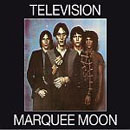
Marquee Moon Television - 1977
|
||||||||
| อัลบั้มที่ใครฟังก็ต้องชอบ | |||||||||
| อัลบั้มแยกตามแนวดนตรี | |||||||||
| MP3 | |||||||||
| เพื่อนักดนตรี | |||||||||
| DVD & VCD | |||||||||
| คอนเสิร์ตและ MV คุณภาพ | |||||||||
|
“Marquee Moon เป็นอัลบั้มที่กำเนิดในช่วงกำเนิดพังคร็อค์อย่าง Ramones แต่ด้วยแนวทางการเล่นและซาวนด์เพลง ที่ แตกต่างอย่างสิ้นเชิงทำให้อัลบั้มเปิดตัวชุดนี้ได้รับการยกย่องเป็นอย่างยิ่ง ในแง่ของการบุกเบิกแนวทางดนตรีใหม่ๆ ถึงแม้โครงสร้างของเพลงจะง่ายๆ ด้วยคอร์ดแพทเทอร์น แต่ทีมกีร์ต้าคู่ริทึ่มและโซโล่ เล่นได้สอดประสานสร้างสีสันให้กับอัลบั้มเป็นอย่างดียิ่ง ต้องถือว่าเป็นอัลบั้มจากยุค ’70 ที่โดดเด่น ที่มีซาวนด์ดนตรีที่เป็นเอกลักษณ์โดดเด่น และเป็นแม่แบบให้กับหลายวงในปัจจุบัน อธิบายยังไงก็ไม่มีทางรู้สึกเหมือนกับการรับฟังด้วยตนเอง ”
all music Not that Television were only about musicianship. Tom Verlaine's songs mix lyrics inspired by the fantasias of the French poets with clangy, droned guitars inspired by the realities of the big city. Verlaine and Richard Lloyd are both phenomenal guitarists, but they're not overly concerned with technicalities when pure ragged soul will do. "Marquee Moon," the song, is ten minutes of pretty much perfect guitar rock, with tricky modal leads from Lloyd and a long, trembling solo from Verlaine that the begins as a tentative one-note shuffle and blooms to envelop the listener. Lyrically, Tom shoots for urban mythology, with verses invoking lightning, graveyards, and the rain along with Cadillacs and railroad tracks. (Although the vinyl version of this album, still available as a German import, sounds a bit better, the CD is preferable because it includes a complete, clean ending to "Moon" rather than the original fadeout.) The rest of the record, while not as epic, is no less intense. "See No Evil" shows that TV's precise, interlocking guitar and spare bass/drum groove can produce convincing pop music. "Prove It" shows that Verlaine does indeed have a sense of humor. "Venus" is a fine slice of punk romanticism, "Torn Curtain" pure heartbreak. Throughout, the guitarists' riffs are as reliable in the foreground as the rhythm section is locked-in in the background. I've read other critics who've said that Television presupposed techno -- they're just that precise. But I don't agree with the insinuation that TV's music is inflexible. The variations don't hit you over the head, they build up slowly, in a way that's not shared by any other guitar band. Sure, Tom Verlaine is not a traditionally gifted singer, and his warbling, nasal intonations take a fair bit of getting used to. But his songwriting and his lyrics more than make up for it. Marquee Moon is an important record. It was then and is now. It's namechecked by indie musicians to a degree unheard of for any band save the Velvet Underground. In short, it's a classic. If you don't have it, I don't as much encourage you to buy it as wonder why you don't have it already. As punk attempted to destroy rock for good, a very few visionary bands saw that that wasn't necessary -- that there was a third way, a right way, and to them we owe the existence of all indie today. In America, the greatest of those visionaries was Television. Blondie is a quintet which juggles genres of fast rock, from a thick, Spector-ish vision of street crime called "X Offender" to a thick, Who-like vision of womanhood called "Rip Her to Shreds." Blondie is for the most part a playful exploration of Sixties pop interlarded with trendy nihilism. Everything is sung by Deborah Harry, possessor of a bombshell zombie's voice that can sound dreamily seductive and woodenly Mansonite within the same song. It's an interesting combination and forces all the songs on Blondie to work on at least two levels: as peppy but rough pop, and as distanced, artless avant-rock. The group's original material has no trouble yielding to this malleability of meaning since the songs are so broad in theme-the plots of "Kung Fu Girls," "Rip Her to Shreds" and "The Attack of the Giant Ants" are exactly what their titles suggest: the aural equivalents of tabloid newspapers. Absolutely anything, from joke to political manifesto to hoax, can be ascribed to them. Two things save Blondie's music from a lack of focus and sincerity. One is producer Richard Gottehrer's adroit echoing of decade-old pop songs, replete with hooks and innocent melodrama. The other is Deborah Harry's utter aplomb and involvement throughout: even when she's portraying a character consummately obnoxious and spaced-out, there is a wink of awareness that is comforting and amusing yet never condescending. The Ramones' second album contains 14 songs, all around two minutes long. So did their first. They have lost none of their intensity, and if to "leave home" implies a certain broadening of experience, its main evidence on the new record is an occasional use of harmony and the boys' discovery of carbona ("Carbona Not Glue"), a substitute for airplane glue in getting high. The Ramones are as direct and witty as before. They've also lost just a pinch of their studied rawness: whether this is a sign of maturity or sellout is a matter for debate. The Ramones make rousing music and damn good jokes, but they're in a bind: the hard rock of this group is so pure it may be perceived as a freak novelty by an awful lot of people. Marquee Moon, Television's debut album, is the most interesting and audacious of this triad, and the most unsettling. Leader Tom Verlaine wrote all the songs, coproduced with Andy Johns, plays lead guitar in a harrowingly mesmerizing stream-of-nightmare style and sings all his verses like an intelligent chicken being strangled: clearly, he dominates this quartet. Television is his vehicle for the portrayal of an arid, despairing sensibility, musically rendered by loud, stark repetitive guitar riffs that build in every one of Marquee Moon's eight songs to nearly out-of-control climaxes. The songs often concern concepts or inanimate objects-"Friction," "Elevation," "Venus" (de Milo, that is)-and when pressed Verlaine even opts for the mechanical over the natural: in the title song, he doesn't think that a movie marquee glows like the moon; he feels that the moon resonates with the same evocative force as a movie marquee. When one can make out the lyrics, they often prove to be only non sequiturs, or phrases that fit metrically but express little, or puffy aphorisms or chants. (The chorus of "Prove It" repeats, to a delightful sprung-reggae beat: "Prove it/Just the facts/The confidential" a few times.) All this could serve to distance or repel us, and taken with Verlaine's guitar solos, which flirt with an improvisational formlessness, could easily bore. But he structures his compositions around these spooky, spare riffs, and they stick to the back of your skull. On Marquee Moon, Verlaine becomes all that much better for a new commercial impulse that gives his music its catchy, if slashing, hook. Television treks across the same cluttered, hostile terrain as bands like the Velvet Underground and the New York Dolls, but the times may be on the side of Verlaine: we have been prepared for Television's harsh subway sound by a grudging, after-the-fact-of-their-careers acceptance of those older bands. At their best, these three bands do indeed have things in common: a lack of pretension plus an abundance of vigor and adventurousness that have obviously been stoked by popular manifestations of print, film and TV: comic books, detective stories, science fiction, westerns and their attendant stock figures-hoods, dicks, cowboys, aliens: heroes, super and anti. Rock has always traded on a certain amount of this spirit-the naming of a band is just as stirring to its members as the sewing of his first cape is to a fresh superhero-but these three bands use this popular art in a way very few rock & rollers have done-with consistency and accuracy. (The Kiss boys read comics and even dress like them, but their secret identities are those of four businessmen dedicated to taking as few risks as possible.) The Dolls did a bangup job on a song like "Bad Detective" but they never approached the sinister precision Tom Verlaine achieves to wrap up the scenario of "Torn Curtain"; "Prove It" is a paean to a never elucidated "case" Detective Tom has "been workin' on so long." Blondie owes its moniker no less to its peroxide-soaked lead singer than to the marriage partner of Dagwood Bumstead. But in the wisecracking snipes of Deborah Harry, the band knows damn well it has found an image closer to that of a feminist Marvel Comic for the ears. The brutality and willful cruelty of the Ramones' music can find its direct antecedent in the films of Samuel Fuller; Joey Ramone writhing out "Commando" is the real soundtrack for Fuller's yahoo, prowar nose-thumber, Steel Helmet. The lyrics of these bands are rather beside the point-they are drowned out by the instruments and secondary to the gradations of angst projected by all three lead singers' technically poor voices. But the best of the few lyrics one can decipher have a pulpy richness-certainly not conventional rock sentiments or even examples of "good writing." Verlaine yowls: "I remember/How the darkness doubled/I recall/Lightning struck itself." Is this profound imagery, or just a particularly ripe balloon of dialogue from a Silver Surfer comic book? I would tend toward the latter opinion, even as I am convinced that the song, "Marquee Moon," is a small masterpiece, and the album a medium-sized one.5/5 But Marquee Moon is not music for guitar shop clerks. Punk rockers, maybe. Poets, probably. People who appreciate melody piled on melody, and songs crammed full of an album's worth of ideas - definitely. Verlaine and Television were originals in 1977, and Marquee Moon still sounds special today. You can hear them defining punk and new wave: "I get your point/You're so sharp" from "See No Evil" pretty much invented the new wave lyric, and the occasional afterbeat guitars and and high hat shuffles show them experimenting with reggae before The Clash brought it to the punk masses. Meanwhile, the guitars spiral into a different atmosphere altogether. Verlaine and Lloyd push at the edges of "Friction," "Marquee Moon" and "Guiding Light," stuffing them full of melodic invention but never cutting the tethers that keep them grounded in simple, classic rock 'n' roll. Excited but focused, this may be the best guitar playing ever put to a rock record, and it makes a special set of songs into a magical, must-have album. |
http://www.geocities.com/maledpunmusic/
Updated October 2004