



|
|
Maledpun Music ทางเลือกประสบการณ์ฟังเพลงคุณภาพ | ||||||
|
|
|
|
|||||
CD |
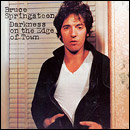
Darkness on the Edge of Town Springteen Bruce - 1978
|
||||||||
| อัลบั้มที่ใครฟังก็ต้องชอบ | |||||||||
| อัลบั้มแยกตามแนวดนตรี | |||||||||
| MP3 | |||||||||
| เพื่อนักดนตรี | |||||||||
| DVD & VCD | |||||||||
| คอนเสิร์ตและ MV คุณภาพ | |||||||||
Rolling Stone For his fourth record, Bruce Springsteen cut off his beard -- and also shaved the shaggy romantic epics of Born to Run . What emerged were ten taut rock songs about people crushed by family, by lust, by living in this world every day. (He was so focused on the theme of living with broken dreams, he left off "Fire" and "Because the Night," which became hit singles for the Pointer Sisters and Patti Smith, respectively.) Despite its lyrical weight and dour title, Darkness on the Edge of Town is not a bleak record. Its characters are groping toward redemption: "I believe in the hope that can save me," Springsteen sings on " Badlands ." The narrator of "Racing in the Street" may never find the absolution he seeks by winning small-time drag races, but his vision of a better life is what keeps him driving and what keeps him alive. The album isn't punk -- Springsteen got a shave, not a mohawk -- but it's colored by the raw sound happening in rock at the time. The E Street Band members play each song like it's their last chance to make music before their hands get cut off. Max Weinberg drums with particular passion, anchoring the record that stands as the E Street's best. More than half the songs make some reference to driving, from streets of fire to the dusty road from Monroe to Angeline. But while Bob Dylan had Highway 61 and AC/DC had a highway to hell, Springsteen knew that the highway went everywhere: heaven, hell and the world men make for themselves.
All Music Coming three years and one extended court battle after Born to Run, Darkness on the Edge of Town was highly anticipated. Some attributed the album's embattled tone to Springsteen's legal troubles, but it carried on from Born to Run, in which Springsteen had first begun to view his colorful cast of characters as "losers." On Darkness, he began to see them as the working class: his characters, some of whom he inhabited and sang for in the first person, had little and were in danger of losing even that. Their only hope for redemption lay in working harder, and their only escape lay in driving. Springsteen presented these hard truths in hard-rock settings, the tracks paced by powerful drumming and searing guitar solos. Though not as heavily produced as Born to Run, Darkness was given a full-bodied sound; Springsteen's stories were becoming less heroic, but his musical style remained grand — the sound, and the conviction in his singing, added weight to songs like "Racing in the Street" and the title track, transforming the pathetic into the tragic. But despite the rock & roll fervor, Darkness was no easy listen, and it served notice that Springsteen was already willing to risk his popularity for his principles. |
http://www.geocities.com/maledpunmusic/
Updated October 2004