



|
|
Maledpun Music ทางเลือกประสบการณ์ฟังเพลงคุณภาพ | ||||||
|
|
|
|
|||||
CD |
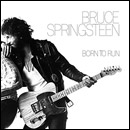
Born to Run Springteen Bruce - 1975
|
||||||||
| อัลบั้มที่ใครฟังก็ต้องชอบ | |||||||||
| อัลบั้มแยกตามแนวดนตรี | |||||||||
| MP3 | |||||||||
| เพื่อนักดนตรี | |||||||||
| DVD & VCD | |||||||||
| คอนเสิร์ตและ MV คุณภาพ | |||||||||
Rolling Stone Certainly, I couldn't find the reasons on Springsteen's first two albums, despite Columbia's "New Dylan" promotional campaign for the debut disc and the equally thoughtful "Street Poet" cover of the second. Both radiated self-consciousness, whereas the ballyhoo led one to hope for the grand egotism of historic rock & roll stars; both seemed at once flat and more than a little hysterical, full of sound and fury, and signifying, if not nothing, not much. A bit guiltily, I found anything by Roxy Music far more satisfying. They could at least hit what they aimed for; while it was clear Springsteen was after bigger game, the records made me wonder if he knew what it was. Whether he did or not, with two "you gotta see him live" albums behind him, the question of whether Springsteen would ever make his mark on rock & roll-or hang onto the chance to do so-rested on that third LP, which was somehow "long awaited" before the ink was dry on the second. Very soon, he would have to come across, put up or shut up. It is the rock & roller's great shoot-out with himself: The kid with promise hits the dirt and the hero turns slowly, blows the smoke from his pistol, and goes on his way. Or else, the kid and the hero go down together, twitching in the dust while the onlookers turn their heads and talk safely of what might have been. The end. Fade-out. Springsteen's answer is Born to Run. It is a magnificent album that pays off on every bet ever placed on him-a '57 Chevy running on melted down Crystals records that shuts down every claim that has been made. And it should crack his future wide open. The song titles by themselves-"Thunder Road," "Night," "Backstreets," "Born to Run," "Jungleland"-suggest the extraordinary dramatic authority that is at the heart of Springsteen's new music. It is the drama that counts; the stories Springsteen is telling are nothing new, though no one has ever told them better or made them matter more. Their familiar romance is half their power: The promise and the threat of the night; the lure of the road; the quest for a chance worth taking and the lust to pay its price; girls glimpsed once at 80 miles an hour and never forgotten; the city streets as the last, permanent American frontier. We know the story: one thousand and one American nights, one long night of fear and love. What is new is the majesty Springsteen and his band have brought to this story. Springsteen's singing, his words and the band's music have turned the dreams and failures two generations have dropped along the road into an epic-an epic that began when that car went over the cliff in Rebel without a Cause. One feels that all it ever meant, all it ever had to say, is on this album, brought forth with a determination one would have thought was burnt out years ago. One feels that the music Springsteen has made from this long story has outstripped the story; that it is, in all its fire, a demand for something new. In one sense, all this talk of epic comes down to sound. Rolling Stone contributing editor Jon Landau, Mike Appel and Springsteen produced Born to Run in a style as close to mono as anyone can get these days; the result is a sound full of grandeur. For all it owes to Phil Spector, it can be compared only to the music of Bob Dylan & the Hawks made onstage in 1965 and '66. With that sound, Springsteen has achieved something very special. He has touched his world with glory, without glorifying anything: not the romance of escape, not the unbearable pathos of the street fight in "Jungleland," not the scared young lovers of "Backstreets" and not himself. "Born to Run" is the motto that speaks for the album's tales, just as the guitar figure that runs through the title song-the finest compression of the rock & roll thrill since the opening riffs of "Layla"-speaks for its music. But "Born to Run" is uncomfortably close to another talisman of the lost kids that careen across this record, a slogan Springsteen's motto inevitably suggests. It is an old tattoo: "Born to Lose." Springsteen's songs-filled with recurring images of people stranded, huddled, scared, crying, dying-take place in the space between "Born to Run" and "Born to Lose," as if to say, the only run worth making is the one that forces you to risk losing everything you have. Only by taking that risk can you hold on to the faith that you have something left to lose. Springsteen's heroes and heroines face terror and survive it, face delight and die by its hand, and then watch as the process is reversed, understanding finally that they are paying the price of romanticizing their own fear.. Those are a few lines from "Backstreets," a song that begins with music so stately, so heartbreaking, that it might be the prelude to a rock & roll version of The Iliad. Once the piano and organ have established the theme the entire band comes and plays the theme again. There is an overwhelming sense of recognition: No, you've never heard anything like this before, but you understand it instantly, because this music-or Springsteen crying, singing wordlessly, moaning over the last guitar lines of "Born to Run," or the astonishing chords that follow each verse of "Jungleland," or the opening of "Thunder Road"-is what rock & roll is supposed to sound like. The songs, the best of them, are adventures in the dark, incidents of wasted fury. Tales of kids born to run who lose anyway, the songs can, as with "Backstreets," hit so hard and fast that it is almost impossible to sit through them without weeping. And yet the music is exhilarating. You may find yourself shaking your head in wonder, smiling through tears at the beauty of it all. I'm not talking about lyrics; they're buried, as they should be, hard to hear for the first dozen playings or so, coming out in bits and pieces. To hear Springsteen sing the line "Hiding on the backstreets" is to be captured by an image; the details can come later. Who needed to figure out all the words to "Like a Rolling Stone" to understand it? It is a measure of Springsteen's ability to make his music bleed that "Backstreets," which is about friendship and betrayal between a boy and a girl, is far more deathly than "Jungleland," which is about a gang war. The music isn't "better," nor is the singing-but it is more passionate, more deathly and, necessarily, more alive. That, if anything, might be the key to this music: As a ride through terror, it resolves itself finally as a ride into delight. "Oh-o, come on, take my hand," Springsteen sings, "Riding out to case the promised land." And there, in a line, is Born to Run. You take what you find, but you never give up your demand for something better because you know, in your heart, that you deserve it. That contradiction is what keeps Springsteen's story, and the promised land's, alive. Springsteen took what he found and made something better himself. This album is it. (RS 197) 5/5 The fact of the matter is that over 25 years later, Born To Run continues to define the beautiful rawness, fiery and conviction of Jersey's latest native son. Making the songs come alive, the E-Street Band thrusts and jells with all the skill of a tight and cohesive bar band. The album is a combination of the brilliant piano work of Roy Bittan, the biting sax of Clarence Clemons (with a lots of filler horns courtesy of the infamous Brecker Brothers), and extra helpings of patchy and distinctive guitar from Stevie Van Zant. In the middle of it all is Springsteen, Telecaster in hand, throwing his heart and soul into each verse, regaled with emotion and character. Starting off strongly with "Thunder Road" and "Tenth Avenue Freeze-out," and dovetailing into "Night" and "Backstreets," Born To Run has all the makings of an exhausting and exhilarating roller coaster, that comes to a stop every once in awhile, but never for too long. Inevitably, the entire album falls onto the shoulders of the title track. The song, "Born To Run," reverberates with a strange glow of sustained optimism and mystique, all wrapped in a riddle that sort of evolves into an enigmatic anthem. The suspended guitar lick that blows through each stanza is only heightened by a middle break that harmonically jettisons, dodges and opens up vistas for miles around. It is quickly followed by "She's The One," carrying the working class idea one step further, as it takes on a sort of Spectorish quality, production-wise, suspending bits of the Atlantic City mentality and meshing it together on a much bigger playing field. Barnstorming through "Jungleland" clearly proves that Springsteen is the Boss. While Springsteen's subsequent releases would yield and succeed to differences of their own, Born To Run was and has always been held up as his most momentous recording. It was with this album that Springsteen's songs first portrayed a glorious yet very real side of the suffering American, down on his luck, with his dreams shattered and hopes lost. In 1975, much of rock and roll isolated itself from that type of politicizing. Rock, of course, took a dramatic turn in the next couple years, and was shaken down to its visceral roots. Born To Run could have very well launched a new form of consciousness toward the excessive styles of music without even trying. That's quite a feat in itself. |
http://www.geocities.com/maledpunmusic/
Updated October 2004