



|
|
Maledpun Music ทางเลือกประสบการณ์ฟังเพลงคุณภาพ | ||||||
|
|
|
|
|||||
CD |
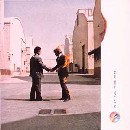
Wish You Were Here Pink Floyd - 1975
|
||||||||
| อัลบั้มที่ใครฟังก็ต้องชอบ | |||||||||
| อัลบั้มแยกตามแนวดนตรี | |||||||||
| MP3 | |||||||||
| เพื่อนักดนตรี | |||||||||
| DVD & VCD | |||||||||
| คอนเสิร์ตและ MV คุณภาพ | |||||||||
Adrians Album Reviews Of the three shorter songs, I really love both 'Welcome To The Machine' and 'Wish You Were Here'. 'Welcome To The Machine' is monotone, lacking in melody. But then, the idea was oppression and technological fear. 'Welcome To The Machine' I find to be very addictive listening, very cold and dark yet able to provoke an emotional response, certainly. The title song is beautiful, the lyrics if you read them as laid out on paper work as poetry. They sound great when sung, which is important as well, but this is a good set of lyrics, no question. There is a folky atmosphere, a weary vocal, a few touches of the blues about Gilmour's guitar work. The title song is better than the already decent 'Welcome To The Machine' and very nearly a match for the opening 'Shine On You Crazy Diamond' ( parts 1-5, if you really wanted to know ). 'Have A Cigar' is the clear weakpoint of the album. A dog of a song, seemingly an attempt at providing a little groovy funk aka 'Money', but it falls flat on its face. The funky aspect is clumsily executed - neither the guitar nor keyboard parts sound comfortable. The vocals are provided by Roy Harper, and don't sound great either. Roger Waters was apparently meant to sing the song, but never got a satisfactory vocal down. The closing 'Shine On You Crazy Diamond' ( parts 6-9, this time ) is less beautiful than the opening sequence, but still impressive and gorgeous all the same. It ties up the album very well. Splitting 'Shine On You Crazy Diamond' was a great idea, actually. It gives the illusion that 'Wish You Were Here' is a more cohesive work than it really is! This is no 'Dark Side Of The Moon' conceptually or in terms of easy flow one track to the next. The transition from 'Have A Cigar' through to the title song is a case in point. 'Have A Cigar' fades out to the sound of a transistor radio, 'Wish You Were Here' opens with the sound of a transitor radio amid voices and crackles - but the songs don't naturally lend themselves to be joined in such fashion. Anyways! 'Wish You Were Here' on the strength of the title track and 'Shine On You Crazy Diamond' alone is more than impressive. Add in 'Welcome To The Machine' with its fear and paranoia, and you can forgive them 'Have A Cigar', really you can. A step down from 'Dark Side Of The Moon' this may be, but it's not that much of a step - this is still mighty stuff. Rolling Stone Talk has it that the waiting period was prolonged by the band's own paranoia. To release anything would commit them to a competition with their own past that they could not hope to win. If so, their fears have been realized. Excerpts from a KWST-FM Call-In Program: Julie Foreman, 15, Burbank, California: "It's not good. It just drags on. If somebody had tried to copy 'Echoes' off "Meddle," it wouldn't sound the same. But I think anyone could redo this and make it sound better." Le Roy Guilford, 23, Anaheim, California: "When I first bought it, I was really down on it. It's growing on me a little but I still don't think it's Pink Floyd as Pink Floyd should be. It shows them as being bored with what they do." By their own admission, Pink Floyd will never bring home any blue ribbons for their instrumental abilities. Their mastery of their tools peaks at competence. The illusion of complexity that caused their drooling legions to make wild claims of high-art accomplishment was actually nothing more than the skillful manipulation of elements so simple - the basic three chords everyone else uses - that any collection of bar backs could grind out a note-for-note reproduction without difficulty. One of the things that made DSOTM so striking was that it showed them at full recognition of their limitations as musicians. In the past Pink Floyd has often conceptually outdistanced their minimal technical skills, but everything on that record seemed perfectly calculated never to cross the line. The combination of elementary but flawless playing and correspondingly tasteful studio effects created a kind of spacey mood music that suddenly made sense to people who couldn't have been persuaded to buy one of their previous albums at gunpoint. But most of the music on this album seems determined to picture Pink Floyd as just another conventional rock & roll band, ignoring their strengths of self-analysis in order to gain entry to an arena in which they aren't equipped to do battle. The cardinal offender is David Gilmour, by most counts the most technically efficient. No championship guitarist, he nonetheless had enough intelligent ideas to maintain the group's ultraimportant link to the bedrock demands of their mass audience. He oversteps his bounds in several places on Wish You Were Here, however, indulging in protracted solos that present him as just another competent guitarist who thinks with his fingers instead of his head. Gilmour plays a nice acoustic duet (with himself tracked through a radio) as an intro to the title tune, which has vaguely pleasant echoes of Loudon Wainwright in its stark approach. It's the most successful song on the album until the full band makes its grandly faceless entrance, at which point the number immediately nosedives to ho-hum level. After all the time they've devoted to molding their shortcomings into something uniquely workable as a band, Pink Floyd should know better than to turn around and imitate the transparent, traditional rock-band methodology to which they supposedly present an alternative. Tim Devins, 19, Northridge, California: "Musically. I think they're a little less daring than they have been. I don't think this is a par excellence work, as the last one can be considered. I want to listen to it more before I make a final decision." Crucial to the process of learning to live with their limitations was the full integration of the studio as an instrument, an option they exercised far more effectively than most of the competition. But here, where they're bent on playing it straight so much of the way, the effects become accentuated to a point where it all sounds overlaid. This doesn't complement the music, it fights it, and the effects sound gimmicky. The overall sound loses the occasionally breathtaking dimensions that made DSOTM such a grabber for people who'd never considered Pink Floyd anything more than random space noise. Bill Hein, 20, Palos Verdes Estates, California: "I'm a little disappointed actually. None of the album really stays in my head; it just doesn't seem to be that powerful. When they did the song 'Echoes,' I really could visualize being out in a field or forest, watching the sun come up over a pond in the mist. But this album hasn't had any effect on me so far." "Shine on You Crazy Diamond" is initially credible because it purports to confront the subject of Syd Barrett, the long and probably forever lost guiding light of the original Floyd. But the potential of the idea goes unrealized; they give such a matter-of-fact reading of the goddamn thing that they might as well be singing about Roger Waters's brother-in-law getting a parking ticket. This lackadaisical demeanor forces, among other things, a reevaluation of their relationship to all the space cadet orchestras they unconsciously sired. The one thing those bands have going for them, in their cacophonously inept way, is a sincere passion for their "art." And passion is everything of which Pink Floyd is devoid. Wish You Were Here is about the machinery of a music industry that made and helped break Syd Barrett. (They even farm out a vocal to Roy Harper, an obscure but respected British singer/songwriter for whom the machinery has never quite worked, to add that authentic measure of defeated cynicism.) Their treatment, though, is so solemn that you have to ask what the point is. If your use of the machinery isn't alive enough to transcend its solemn hum - even if that hum is your subject - then you're automatically trapped. In offering not so much as a hint of liberation, that's where this album leaves Pink Floyd. Jill Bohr, 20, Riverside, California: "I like the theme that runs through the whole thing. You'd have to be in Alaska to know. It's Out of Space and Out of This Time. I've been in Alaska for the last year and all of a sudden I heard 'Welcome to the Machine.' They've bud up there, haven't they? They caught the feeling of all the machines that go all day and night in the summertime up there Wayne Trenkler, 16, Arcada, California: "This new album good. I don't have it myself but I've heard it many a time because all my friends have it. (RS 199) 5/5 Amazon Keno Billboard |
http://www.geocities.com/maledpunmusic/
Updated October 2004