|
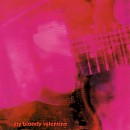
“นี่เป็นอีกอัลบั้มนึงที่เปิดใจผมให้กว้างมากขึ้นในการฟังเพลง จากเดิมทีผมจะชื่นชมแต่กับวงดนตรีที่เป็นประเภทฮีโร่ เล่นกีร์ต้าเต็มไปด้วยเทคนิคแพรวพราว แต่งเพลงซับซ้อน แต่เมื่อฟังเพลงมากขึ้นจึงได้เู้้รียนรู้ว่า ดนตรีที่ดีคืออะไรก็ได้ที่ศิลปินสามารถถ่ายทอดถึงสิ่งที่เขาต้องการสื่อสารให้เราสามารถสัมผัสและกระตุ้นจินตนาการของเราได้ บางครั้งการเล่นโน็ตเพียงตัวเดียวที่ถ่ายทอดผ่านสไตล์ที่ชัดเจนในอารมณ์ที่เหมาะสม มีความหมายมากกว่า ขบวนขันหมากของโน้ตจากากรปั่นของยอดฝีมือเป็นไหนๆ Loveless แท้ที่จริงแล้วก็เป็นเพลงที่เต็มไปด้วยเสียงกีร์ต้าแตกๆที่ควรจะทำให้รู้สึกรำคาญหู แต่ My Bloody Valentine สามารถทำให้มันฟังดูเหงา เศร้า หลอนๆ เป็นดนตรีที่พาล่องลอยไปกับบรรยากาศ ที่เขาเรียกว่าแนว Shoegazer เห็นเขาว่าวงนี้มันเมายา ก็เลยทำให้เพลงออกเบลอๆ ค่าบันทึกเสียงเลยทะลุหลงจ้งไปกว่าห้าแสนเหรียญสหรัฐ บริษัทต้นสังกัดเลยเจ๊ง เพราะอัลบั้มนี้แท้ๆ ”
1. Only Shallow
2. Loomer
3. Touched
4. To Here Knows When
5. When You Sleep
6. I Only Said
7. Come In Alone
8. Sometimes
9. Blown A Wish
10. What You Want
11. Soon
amazon
After My Bloody Valentine had undergone their massive metamorphosis from twee indie-poppers to guitar noiseniks on 1988's Isn't Anything, their eagerly anticipated follow-up was a long time coming. Rumours abounded of massive studio bills, and when the album finally arrived, it listed 18 engineering credits. At times, Loveless is 90 per cent pure studio overmatter--but that doesn't matter. Band leader Kevin Shield's element was the guitar overdub, creating an intoxicating headrush of varispeed, warped, electro-static effects. "To Here Knows When" remains unmatched as an experiment in just how much sonic dissonance a simple pop melody can bear, while Bilinda Butcher sings drowsily as if concussed by the sweet noise. Loveless isn't a case of form over content--the lyrical subject matter of dazed infatuation is perfectly illustrated by the snowblind guitar sound. After this, MBVmoved to Island and remained notoriously unproductive for years, perhaps unsure how to top this.
all music guide
Isn't Anything was good enough to inspire an entire scene of My Bloody Valentine soundalikes, but Loveless' greatness proved that the band was inimitable. After two painstaking years in the studio and nearly bankrupting their label Creation in the process, the group emerged with their masterpiece, which fulfilled all of the promise of their previous albums. If Isn't Anything was the Valentines' sonic blueprint, then Loveless saw those plans fleshed out, in the most literal sense: "Loomer," "What You Want," and "To Here Knows When"'s arrangements are so lush, they're practically tangible. With its voluptuous yet ethereal melodies and arrangements, Loveless intimates sensuality and sexuality instead of stating them explicitly; Kevin Shields and Bilinda Butcher's vocals meld perfectly with the trippy sonics around them, suggesting druggy sex or sexy drugs. From the commanding "Only Shallow" and "Come in Alone" to breathy reflections like "Sometimes" and "Blown a Wish," the album balances complexity and immediately memorable pop melodies with remarkable self-assurance, given its difficult creation. But Loveless doesn't just perfect the group's approach, it also hints at their continuing growth: "Soon" fuses the Valentines' roaring guitars with a dance-inspired beat, while the symphonic interlude "Touched" suggests an updated take on Fripp and Eno's pioneering guitar/electronics experiments. These glimpses into the band's evolution make Shields' difficulty in delivering a follow-up to Loveless even more frustrating, but completely understandable — the album's perfection sounded shoegazing's death-knell and raised expectations for the next My Bloody Valentine album to unreasonably high levels. Though Shields' collaborations with Yo La Tengo, Primal Scream, J Mascis, and others were often rewarding, they were no match for Loveless. However, as My Bloody Valentine fans — and, apparently, Shields himself — will attest, nothing is. — Heather Phares 5/5
CD Times
Despite his name appearing on a clutch of remixes over the years, including Yo La Tengo and Primal Scream, with whom he briefly played live and appeared on remixes as the MBV Arkestra, the rumours that he had recorded two albums and scrapped both, built his own studio and only emerged after sunset gave Kevin Shields an air of cultish mystery. The problem for one who lets such a reputation grow is how ever to return and not reveal oneself to be unclothed of genius, much like the mythical emperor. For Kevin Shields, such was the reputation that surrounded both Loveless and Isn't Anything as well as their formidable live shows in 1991/92, that it would have been perfectly understandable had he never been heard from again.
However, with the recent release of the soundtrack to Sofia Coppola's Lost In Translation, Kevin Shields has recorded and released his first set of original songs since late 1991 when this album first appeared. The songs are still not credited to My Bloody Valentine for, according to those close to him, he believes that little he now records comes close to matching the cracked wonder of Loveless. Time, then, to look back at that album and listen to the swooning melodies, rippling guitars and thrilling arrangements all over again.
The first thing to note about the album is that cover, being a blurry mix of pink printings, photocopies and Fender Jazzmasters, which summarises perfectly the swirling romance and noise of the music within. With much of the text barely readable, not helped by the pink-on-pink colours, all that remains is of that burst of images piled one on top of another. It is only when the album starts that you realise how close that cover was to the opening minutes of Loveless.
Only Shallow, the album's opening track, explains perfectly what course Loveless will take, sweeping a pair of simple chord progressions - verse and chorus - out of the way with a surging, piledriving riff introduced by a martial drumbeat. Buried low in the mix are the vocals, recorded by Shields and his partner, Bilinda Butcher, with words that seldom make it clear of the noise. Never is there the sense, even in this first song, of there being a lack of invention given the remarkable sound of offer. The effect is one of being caught out at sea - the sound is so heavy it threatens, at times, to drag you under, the rhythm ebbs and flows leaving you feeling headspun and, above everything else, sound effects flutter and crash like waves.
Nothing is ever certain on this album and, despite Only Shallow threatening to become lost in the noise, such a thing rarely happens, which is not to say that across the length of album, it never does. Both Loomer and To Here Knows When do give in to the swirl of pretty guitar noise that churns across the album but, even then, the vocals swim through it. At other times, noises that possibly originate on guitar groan and bellow as with what passes for a melody on Touched, the album's only instrumental and on which Shields does not have a songwriting credit. Around the crashing rhythm and synthesiser hums, a guitar cuts through the mix with a sound like whale song.
The variation in songs is what makes Loveless work as well as it does for, despite writing of how Loomer, for example, becomes subsumed by its backing, others, like When You Sleep and What You Want are rich pop songs, both of which are immediately appealing. On When You Sleep, the vocals are almost clear with a line or two being audible over guitars that sweep over the rhythm, tailing each chorus with a synthesiser melody that gives the song a glimmering pop thrill. What You Want, on the other hand, is as straightforward a song as Loveless offers and is the upfront guitar thrash before the complex dance-influenced rock of Soon bursts in.
That last song on the album is likely to be the best recorded by My Bloody Valentine. Following a couple of minutes of keyboards that chime aimlessly, a pair of drum fills introduces the guitars that mark the beginning of Soon, which mixes the roaring guitars from elsewhere on the album with a indie-dance rhythm and a deep, deep bass that's almost funky. With Butcher and Shields pairing on the vocals and harmonising the fills that each close each chorus, Soon mixes a sensual and sexually thrilling whisper with the rush of pleasure-seeking.
Elsewhere on the album, Sometimes beats around the thrum of damped strings on an acoustic guitar and which builds from its simple opening to finish as a glistening and tender love song on which Shields' voice fades as a blissful little keyboard solo builds through the octaves. The only songs yet to be mentioned are I Only Said, which lurches from chorus to verse with a drunken, woozy, lovesick feeling, and Blown A Wish, which is, like Isn't Anything's I Can See It (But I Can't Feel It), gentle to the point of frailty but which also hides its violence behind whispered words.
And yet...and yet there's so much that could be said about this wonderful album but all that matters is that you really just have to hear it to understand how exceptional a record it is. The shame of Loveless is that not only has there never been a follow-up but that so many of those who bought it in late-1991 and early-1992 simply didn't get it. Should you ever require a method of discovering how critical opinion differs from that of the public, then look no further than the racks of second-hand record shops. A week or so after Select, Melody Maker and the NME had declared Loveless to be a five-star, ten-out-of-ten classic, the M-bin in Manchester's second-hand record shops were stuffed full with copies of Loveless. On the odd occasion I was present when a copy was brought in for trade, I so wanted to tell the fool at the desk to get back home, put the disc back on and learn to love the beautifully tender noise at the heart of Loveless. Months later, amid the stories of fans passing out to the jet-engine roar from the Valentines' speakers during their live shows, I attended a number of their concerts and left feeling thrilled at the ear-shredding noise, rhythm and sweet melodies of the music.
Where other bands grunt and sweat, My Bloody Valentine glimmer and have such beautiful songs that one is finally charmed by the churn and hum of guitars and amps that rise and fall throughout Loveless. This is an album of rare power and, like with The Blue Nile's Peace At Last reviewed earlier in the week, it's quite impossible to isolate one moment that could be bettered. With five years spent on creating this album, it's difficult to begrudge Shields a minute of that time when he produces music as wonderful as this. .
Ink Blot Magazine
Guitar-woven tapestries of sound come a dime a dozen and end up, more often than not, hanging lifelessly in the air. My Bloody Valentine's churning guitars emulate the warm fluidity of cellos, creating limpid membranes of sound driven by undulating, visceral rhythms. Since their inception, they've spawned a myriad of languid imitators, none of whom have ever achieved such a lulling din.
This album is the result of nearly three years of meticulous toil, thanks to Kevin Shields' notorious perfectionism,and remains one of the decade's most influential albums. Stereolab has surely benefitted from Butcher's ghostly vocal stylings and "Loomers'" vast swath of tape loops.
The wavy "To Here Knows When" rivals any of Dinosaur Jr.'s hazier concoctions, and though O'Ciosoig's drumming is often relegated to the gullies of Loveless, he emerges adamantly on this track, refusing to be enveloped by the overpowering hum. The band rely heavily on wispy leitmotifs, threading them deftly through seemingly impenatrable layers of guitar, and on "Touched" and "When You Sleep," these sampled themes divulge Shields' familiarity with Fripp and Eno's ambient recordings of the late 70's.
Q
Faced with My Bloody Valentine's formative fumblings, few would have predicted that this garage lurch could metamorphosise into the swooning melody crush that constituted 1988's Isn't Anything. The album came at a time when the post-punk guitar wars had exhausted Jesus And Mary Chain and Sonic Youth's respective feedback and detuning excursions that revitalised things in the mid-'80s. From aping them, the Dublin-born Valentines were the new Mary Chain, indie rock's Great Leap Forwards, and one hell of a stage-diving night out to boot.
Seemingly every other noise-fixated British band have since tried enlisting Isn't Anything's blueprint of dizzy, gliding guitars, blissed-out vocals and cottonwool harmonies - in deference to its sophisticated bridge between pure-pop thrills and the supersonic rush. With such slavish attention, My Bloody Valentine have been pressurised into producing the next innovative dizbuster, especially difficult if you're a perfectionist like principal songwriter Kevin Shields, who needs no reminding that the Valentines have released just two EPs in the last three years. In indie terms, the mounting expectations have reached Guns N'Roses proportions. Indeed, Loveless bears the same relation to its predecessor as Use Your Illusion II does to Appetite For Destruction - a progression more than a revolutionary statement, yet so ahead of the pack that their imitators must be gobsmacked.
When You Sleep and Only Shallow are the last word in noise-pop, where the traditionally cement-mixing wall of sound is sweetened by lush, curvaceous guitar melodies. What gives the band their undeniable edge is their murky, muggy sensuality - imagine that still-dreaming feeling when you first wake up - which seeps through to the vocals. Shields positively sleepwalks through Sometimes, which unfolds over a particularly gorgeous, languid chord pattern, while principal vocalist Belinda Butcher's multi-tracked cooing on Blown A Wish takes them closer to Cocteau Twins' terrain.
The most striking material proves all those studio hours weren't in vain. To Here Knows When, Loomer and Touched are earmarked by some extraordinary touches, as Shields and Butcher concoct ever more giddy guitar whirlpools and ambient effects via an array of tape loops and samples. The results can be disorientating as the guitars sound warped, yet the band somehow make it fit. The instrumental Touched is especially startling, like a drunken fight between a syrupy Disney soundtrack and an Eastern mantra. All in all, Loveless amounts to a virtual reinvention of the guitar.
Conventional rock'n'roll riffs and declamatory vocals are avoided. Sometimes the rhythm section is a mere pulse, buried in the diaphanous haze, only to reappear, providing the insidious house-influenced beats for Soon. Whether such adventurousness will up their commercial worth is uncertain, but it will undoubtedly further their reputation. The rock-is-dead argument could well stop here. 4/5
Rolling Stone
As the world's record-company giants consolidate into the mythical OmniVox Unicorp, pockets of independent-label resistance endure, even thrive, on the strength of artistic vision rather than unlimited capital. Since the mid-Eighties, London's Creation Records has wielded a mighty influence on the trend-mad taste of young Britons, successfully promoting its characteristic breed of noisy pop as the introvert's alternative to gregarious dance music.
Inspired by the Velvet Underground's heroin-cooled din, Creation has become the home of choice for wayward guitar bands addicted to feedback fuzz (Jesus and Mary Chain, the genre's patron saints), charming artlessness (the Times, Felt and Creation chief Alan McGee's own Biff Bang Pow), oddball eclecticism (Jazz Butcher) or, strangely enough, the Rolling Stones (Primal Scream). By now firmly established in its homeland, Creation has expanded its stylistic horizons and begun looking toward America, where its bands have yet to make an above-ground dent.
My Bloody Valentine arrived at Creation in midcareer, but the Anglo-Irish quartet has become its flagship on a roiling sea of melodic dysfunction. A challenging storm of bent pitch, undulating volume and fractured tempos, Loveless has a calm eye at its center, an intimate oasis from which guitarists Bilinda Butcher and Kevin Shields gently breathe pretty tunes into the thick, sweet waves of droning distortion. Despite the record's intense ability to disorient – this is real do-not-adjust-your-set stuff – the effect is strangely uplifting. Loveless oozes a sonic balm that first embraces and then softly pulverizes the frantic stress of life.
Shields's songs are strong and catchy enough to be stripped down without falling apart. Under his production guidance, the group washes them in layers of warped harmonic guitar noise and sampled orchestra, keeping the lush sound moving around an echoey cavern filled with fog. The surges of Loveless – in songs like "Only Shallow," "When You Sleep," "Come in Alone" and "Soon" – send the listener falling weightlessly through space, a fantastic journey of sudden perspective shifts and jagged audio asteroids. In My Bloody Valentine's magical kingdom, cacophony is the mind-altering path to beauty.
While headed in a similar direction, Slowdive hails from a quieter locale – somewhere between the Cocteau Twins' sensuous harmony obsessions and the Moody Blues' classical pretensions. Swathed in reverb and borne along on stately strains of guitar, vocals, piano and strings, Just for a Day floats a baroque folk-rock cloud, then rends the dreamy mood with an infusion of edgy discordance.
When Slowdive is on target – as in "Catch the Breeze," "Waves" and "The Sadman" – the music swells and subsides dramatically around unwaveringly placid vocals, imparting tension to the pastoral songs. Otherwise, the English quintet's music can be more handsome than involving, swaying folds of distressed gauze that conceal nothing but a soft breeze.
If My Bloody Valentine inhabits one end of the psychedelic art-noise pop spectrum, Velvet Crush – Creation's first all-American signing – stands at the other. The Providence, Rhode Island, trio plays and sings out loud and clear, incorporating overload distortion as an ingredient, not a religion. Coproduced to a raw luster by Matthew Sweet, In the Presence of Greatness is an exhilarating rush of brash guitar energy and hook-filled tunes (like "Ash and Earth," "Window to the World" and "White Soul") that slide easily and indelibly into the memory banks.
While the music harks back to the early days of American indie pop, a time when R.E.M. was an underground band, Velvet Crush's teen spirit is wholly current, an informal sense of pop tradition unpolluted by nostalgia. (If the recent crop of young U.K. pop bands addicted to Big Star – like Ride and Teenage Fanclub – could drop their accents and attitudes, they might generate a similar result.) The obvious highlight of an altogether wonderful record, "Drive Me Down" is a blast of robust melodic power that can't miss becoming a college-radio staple.
My Bloody Valentine, Slowdive and Velvet Crush define a wide creative continuum, from ambitiously avant-garde to defiantly unprepossessing, but at heart they all share an abiding respect for the well-formed song. As outwardly modern as their styles might be, their art is built on a venerable foundation. (RS 625) 4/5
nude as the news
It has now been more than 10 years since Kevin Shields and the rest of Dublin's My Bloody Valentine released Loveless, their second full-length album. Loveless made an immediate impact on music at the time, in no small way justifying its outrageous pricetag (reportedly almost half a million U.S. dollars) and the lengths to which the band had taken their sonic pursuits. But its importance has increased dramatically since, as many realize that this singular achievement may never be topped, by Shields or anyone else.
The '90s will be known as the musical decade where bands really fucked around with sound as an entity, where the standard guitar-bass-drums format received stiff challenges from technology (computers, samplers, and so on). Looking forward had never been more exciting, and limits were pushed in all directions. As an artifact of this movement, Loveless has no peer. It's a grand audio statement unlike any that had come before it, forcing listeners to reconfigure their basic ideas about what songs should be, and what music can sound like.
MBV's "sound" is a force of its own. Loveless envelops you like the waves of an alien ocean, working up an almost tangible presence by which to mess around with musical convention. Somehow, Loveless manages to be both fragile and jarring, woozy and emphatic. As one review observed, "you float downstream gritting your teeth." On tracks like "Loomer" and "Sometimes," layers of guitars churn sensually, leaving wisps of sonic haze hanging in the air. On the latter, tingling distortion seeps into acoustic strumming, while Shields' submerged vocals narrate lyrics never meant for outside consumption.
You will throw your hands in the air trying to figure out how any number of passages on Loveless were committed to tape. What in the world is going on during the short instrumental "Touched," which approximates a string section tuning up underwater? One critic posited at the time, "how was it made? You'll still be wondering in the year 2000," and indeed, we are. The melting machine tones and cooing vocals of "Blown A Wish" are probably bubblegum pop in another dimension, but here they have little, if any, precedent. In fact, in the album's liner notes, no less than 18 engineers are given credit for participating in the sessions for Loveless.
Elsewhere, the album is more earth-rooted. The pounding downstrokes of opener "Only Shallow" link MBV to then-peers such as The Jesus And Mary Chain, with only Bilinda Butcher's opaque vocals gradually putting out the fire. The restless "When You Sleep" and the warped, rapture-inducing "I Only Said" paint gorgeous melodies onto the band's wall of sound, splattering them just enough off-center to ensure their carbon-based origin.
Some have argued that while Loveless is an important album, its songs, when analyzed individually, fall short of the album's larger achievements. To be fair, there are instances where the melodies do not vary much from track to track. But in all honesty, melodies aren't really the point -- MBV's "sound" is the point. That this music was actually created at all is the true achievement. If you're having trouble seeing how influential this album is, it might be because attempts to produce sounds like those on Loveless generally fall short.
Still, a few artists have toyed with the balance of electronic/organic elements to great success, including Laika, Olivia Tremor Control, Tortoise, and even The Verve and Swervedriver, whose 1993 albums A Storm In Heaven and Mezcal Head could each be viewed as a poor-man's Loveless.
My Bloody Valentine take the high road to musical bliss on Loveless, and their collective precision resulted in a record that can be imitated, but never duplicated. It's the pinnacle of a decade's worth of sonic adventures.
|