



|
|
Maledpun Music ทางเลือกประสบการณ์ฟังเพลงคุณภาพ | ||||||
|
|
|
|
|||||
CD |
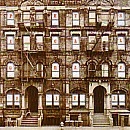
Physical Graffiti Led Zeppelin - 1975
|
||||||||
| อัลบั้มที่ใครฟังก็ต้องชอบ | |||||||||
| อัลบั้มแยกตามแนวดนตรี | |||||||||
| MP3 | |||||||||
| เพื่อนักดนตรี | |||||||||
| DVD & VCD | |||||||||
| คอนเสิร์ตและ MV คุณภาพ | |||||||||
amazon Diversification? To their credit, and the 'Houses Of The Holy' album amply demonstrated this, Led Zeppelin tried, they really did. Hence the magnificence of the funk influenced 'Trampled Underfoot'. These guys were on fire, absolutely. As for Robert Plant, apparently his voice was shot from all those years of touring and he had to learn a different method of projecting his vocals. Judging by the damn sexy performance he gives all through 'Trampled Underfoot', with it's wacky, funky keyboard sounds - he more than succeeded. I'm only upto track five. Track six is only fucking 'Kashmir', for fucks sake!! More 'epic' than 'Stairway To Heaven', more magnificent sounding than anything else they'd done - and the bass drum sound is diamond and gold and heavy as all HEAVY you can imagine. Imagine the heaviest thing? This is heavier, oh yes! Amidst all that, we've got keyboard/string type things, classical stuff going on. Robert Plant moaning all sexually. Not that I actually FIND him sexy - he's utterly hideous to a hot heterosexual stud like me - but you get the idea. Make love to this song! It lasts for eight and a half minutes!! 'Bron Yr Aur' is a nice interlude, pretty folk acoustic stuff from Jimmy. There's more epic stuff with 'In The Light', more RIFFS AND HEAVINESS with 'The Wanton Song'. A couple of bits of near filler, although the likes of 'Down By The Seaside' and 'Ten Years Gone' are both pretty damn fine in my book. They fit, adding to the epic, absolutely everything nature of this 'Physical Graffiti' album. 'Boogie With Stu' sounds just like it's title suggests, it's a plain old rock n roll boogie - but fun. You know, IT IS fun. Robert Plant sounds utterly daft, and that's fun - hugely enjoyable stuff. 'Black Country Woman' is a weird semi-acoustic thing, very eccentric and filler - but for the fact this album REQUIRES such songs. Fifteen songs lasting an hour and a half all EPIC and ALL HEAVY would be silly, wouldn't it? These pieces of 'filler' such as 'Black Country Woman' actually add to the overall whole, even though it's readily apparent such songs ( and, there's not that many of them here ) wouldn't stand well on their own. Still, the closing 'Sick Again' is as heavy and magnificent as anybody could wish it to be. Jimmy Page goes supernova. It's exhausting just listening to this album. Heaven knows where Led Zeppelin even thought they could go next.... 9/10 In a virtual recapitulation of the group's career, Physical Graffiti touches all the bases. There's a blues ("In My Time of Dying") and a cosmic-cum-heavy ballad ("In the Light"); there's an acoustic interlude ("Bron-Y-Aur") and lots of bludgeoning hard rock, still the band's forte ("Houses of the Holy," "The Wanton Song"); there are also hints of Bo Diddley ("Custard Pie"), Burt Bacharach ("Down by the Seaside") and Kool and the Gang ("Trampled under Foot"). If nothing else, Physical Graffiti is a tour de force. The album's -- and the band's -- mainspring in Jimmy Page, guitarist extraordinaire. His primary concern, both as producer and guitarist, is sound. His playing lacks the lyricism of Eric Clapton, the funk of Jimi Hendrix, the rhythmic flair of Peter Townshend; but of all the virtuoso guitarists of the Sixties, Page, along with Hendrix, has most expanded the instrument's sonic vocabulary. He has always exhibited a studio musician's knack for functionalism. Unlike many of his peers, he rarely overplays, especially on record. A facile soloist, Page excels at fills, obbligatos and tags. Playing off stock riffs, he modulates sonorities, developing momentum by modifying instrumental colors. To this end, he uses a wide array of effects, including on Physical Graffiti some echoed slide ("Time of Dying"), a countryish vibrato ("Seaside"), even a swimming, clear tone reminiscent of Lonnie Mack (the solo on "The Rover"). But his signature remains distortion. Avoiding "clean" timbres, Page usually pits fuzzed out overtones against a hugely recorded bottom, weaving his guitar in and out of the total mix, sometimes echoing Robert Plant's contorted screams, sometimes tunneling behind a dryly thudding drum. Physical Graffiti only confirms Led Zeppelin's preeminence among hard rockers. Although it contains no startling breakthroughs, it does affford an impressive overview of the band's skill. On "Houses of the Holy," Robert Plant's lyrics mesh perfectly with Page's stuttering licks. On "Ten Years Gone," a progression recalling the Beatles' "Dear Prudence" resolves in a beautifully waddling refrain, Page scooping broad and fuzzy chords behind Plant, who sounds a lot like Rod Stewart. Elsewhere, the band trundles out the Marrakech Symphony Orchestra (for "Kashmir"), Ian Stewart's piano and even a mandolin (both for "Boogie with Stu"). Despite some lapses into monotony along the way ("In My Time of Dying," "Kashmir") Physical Graffiti testifies to Page's taste and Led Zeppelin's versatility. Taken as a whole, it offers an astonishing variety of music, produced impeccably by Page. On Physical Graffiti, Led Zeppelin performs rock with creativity, wit and undeniable impact. They have forged an original style, and they have grown within it; they have rooted their music in hard-core rock & roll, and yet have gone beyond it. They may not be the greatest rock band of the Seventies. But after seven years, five platinum albums and now Physical Graffiti, the world's most popular rock band must be counted among them. The dynamic range and channel separation are outstanding throughout both albums. You'll notice it as soon as the needle settles into the groove for "Custard Pie." Bonzo's drumming propels the music along with more force and impact than ever before, especially on "In My Time of Dying." If you're going to crank this one up, make sure you remove any valuable and/or breakable items from the tops of your speakers first. Going from one extreme to the other, Page's solo acoustic number, "Bron-Y-Aur" has never sounded sweeter. Classic Records has been slowly reissuing the band's catalog on vinyl, and the results have been stunning. The improvement in sound quality here isn't as dramatic as on Led Zeppelin IV, but it's considerably better than the recently remastered CD. The CDs don't sound bad, but they lack the low end heard on the original vinyl. That is no longer a problem. The lows are back with all the depth and clarity of the original release, and then some. Physical Graffiti remains an essential part of any collection, and Classic did their usual excellent job on this landmark album. It looks and feels great (vinyl lovers will understand what I'm talking about here), and sounds even better. Trying not to get swept up in what is currently dominating the CD changer, or popular consensus that certain records are great because the critics have said so in the past; for instance, does anyone really listen to Born to Run anymore save for the stalwarts at classic rock stations? Going by sales is no good either, as certainly no one would own up to actively being in possession of the Eagles Greatest Hits, the current number one seller of all time (according to the Recording Industry Association of America (RIAA). Ignoring the fact that to choose one Beatles record would require excluding all of their other masterpieces, resting easy that they remain the greatest group ever and that anyone who says different is either lying or just being difficult. Realizing that the Stones never really put out a perfect record from top to bottom, there is only one choice from one band: Led Zeppelin, Physical Graffiti. Released smack in the middle of their career, on the surface, the double record set appears to be simply another example of the '70s rock behemoths wielding more power than necessary. The expansive album packaging depicts a four story brown building, which, when opened, reveals pictures of Marlene Dietrich, the Queen of England, Charles Atlas, Lee Harvey Oswald, and the band themselves in drag along with dozens more offbeat images within it's die cut windows. Three songs are listed at being over eight and a half minutes long with the rest hovering near and beyond the five-minute mark. Simply put, it reeks of excess. Get past the scent of something overdone though, and what's deeper in the packaging is indispensable. Taken from a dwelling located on St. Mark's Place in New York City, the cover is metaphorical for the music. Guitarist Jimmy Page stated on numerous occasions that Zeppelin was constantly striving to find the perfect balance between light and shade. Physical Graffiti accomplishes the feat like no other. Phasing in and out of radically different styles, much like the "something different behind every door" way of thinking. Initially, the band went through a deep heavy blues phase, demonstrated on their first two recordings released in 1969. This was followed by a complete 180 on the third record, which, while still pushing up the volume knob at times, delved mainly into an acoustic side that showed Zeppelin was more than simply cock rock held over from the Yardbirds' era of guitar heroes. The next two records cemented the legacy of the band, who, while routinely written off and chastised by the music press at large, continued to outsell every seventies act in both album and ticket sales -- including the Rolling Stones. Physical Graffiti, encompassing the best pieces of the first releases, shows why. From the opening lick of "Custard Pie", with its multi-layered guitar and Robert Plant's lyrical lifts paying homage to both Bukka White's "Shake 'Em on Down" and "Drop Down Daddy" by Sleepy John Estes, the Mighty Zep show that they haven't forgotten about the strength of the Delta Blues. "The Rover" plays on a menacing riff by Page and an unbelievable bottom end held together expertly by John Paul Jones where the bassist comes dangerously close to overshadowing his guitarist with funked out, lazy but quick fills. While drummer John Bonham easily holds his own on the first two tracks, it's during the epic slide guitar led blues of "In My Time of Dying" where he thunders through his strongest drumming ever on a Zeppelin record (a title taken away one album later on the song "Achilles Last Stand"). Going clear past any other drummer in history in terms of power and intensity, Bonzo matches Page note for note when not bashing away rolls left and right, only to lead the stop and start at the three-forths mark of the song. Plant's pleas for Jesus to "Make up his dying bed" would later cast a pall over the band, imaginary or not, but surely some price had to be paid for the unbridled power and magnitude of the piece. "Houses of the Holy", held over from the sessions that produced the album of the same name is one of the more pop based songs that Zeppelin has recorded, while "Trampled Underfoot" became a showcase for John Paul Jones and his use of keyboards; unlike Deep Purple, but breaching into what later became known as heavy metal all the same. "Kashmir", and its lofty orchestral arrangement rising and falling throughout, provides a vehicle for Plant and Page to wax on their Middle Eastern fascination. No one in the mid-seventies driving around in tricked out Mustangs and small block Camaros had clue about what all this talk of "all I see turns to brown" was, but it sounded bad ass nonetheless. Diluted somewhat by incessant radio play over the years, in the context of the rest of Physical Graffiti, it loses none of the original muscle. By the time the second disc, or third side rolls around, a respite is given from the weight of the first six songs. "In the Light" is the true centerpiece of the record, and is quite possibly the best example of the light and shade Page was chasing. More than just a ballad, it builds and builds until falling away in a crescendo of wailing guitar flurries. The gentle and intense acoustic piece "Bron-Yr-Aur" is the perfect segue into "Down By the Seaside", which shifts from many soft "ooohs" and "aaaahs" in the chorus into a dark beat indicative of the upcoming foray back into an edgier tilt. "Ten Years Gone" is the blueprint (though "Stairway to Heaven" is to blame) for most of the ballads that came to fruition in the '80s. Plant becomes wistful and regretful while Page lays down a passionate solo culminating in Plant begging for someone to identify with his longing "Did you ever really need somebody -- and really need them bad?" "Night Flight" has Bonham showing his Buddy Rich style of drumming while "Boogie With Stu" gives the rest of the band a shot at honky tonk courtesy of sometime Rolling Stone pianist Ian Stewart. "Black Country Woman", from the infamous Stargroves sessions, begins with engineer Eddie Kramer attempting to remove the sound of an airplane flying over the outdoor recording session. Plant tells him to "leave it in" while the band gets caught up in a moment of an acoustic "Hey, hey mama . . . why you treat me mean? That's all right, I know your sisters too". It's subject matter of pining for girl who's broken him down, and realizing that a good blues piece is coming from it, makes it all the easier to dismiss the woman with a "Whas' a matter wit you mama?" "The Wanton Song" and album closer "Sick Again" are the stereotypical all out assault that Zeppelin is often categorized as. On the latter, Bonham pounds away at the high hats before pulling back to let Page rip into a fiery solo, setting Plant up for some golden god sexual innuendoes that he laid into with the utmost in ego -- all of which, like the rest of the record, is appropriate and well-deserved. At over 15 times platinum according to the RIAA, Led Zeppelin obviously did something right. The double record wasn't a case of '70s gluttony, but rather an encapsulation of a band in their prime who were just dead on top of their game. This was when their craft was honed and Zeppelin was a well-oiled machine. The riffs were coming from left and right, and there was no reason to hold them over until a later release. It was just before tragedy and drug addiction began to eat away at the core of the band, leaving only the angry and defiant Presence and the John Paul Jones attempt at salvation, In Through the Out Door. Then Bonham died, Plant renounced the group, Jones disappeared, and Page got lost in the mire of the '80s. With that, Physical Graffiti is the true testament to the greatest rock group that there ever was. Unfortunate for the musicians they influenced who don't get it, Led Zeppelin was more than just the aggressive salvos of guitar, bass, drum and caterwauls of a singer with a blonde mane in tight jeans. Physical Graffiti shows that like no other, light and shade can be accomplished -- deftly. However, it's not until disc two that the band truly reaches the creative heights. Here, they offer a diverse mix of influences and elements to present some of their greatest compositions. "In the Light" begins with psychedelic keyboard and an eerie and echoey Robert Plant vocal introduction, only to give way to the plodding, Goliathlike churn of the classic Zeppelin machine, anchored by John Bonham's heavy hitting. "Bron-Yr-Aur" is a pretty showcase for Page's acoustic work, accented nicely by Bonham's cymbals. The wonderfully happy and soothing ballad "Down By the Seaside" offers Plant's childlike lyrics while the tense bridge provides the ideal contrast to the rest of the song. Layers and layers of Page's guitars form the foundation of "Ten Years Gone." Plant writes sensitively about the inevitable passing of time and lost love, delivering his lyrics with great depth of emotion. On this cut, the quiet verses create the tension and the instrumental break provides the release. "Night Flight," a buoyant hit-the-road tune, leaves the typical grandeur behind for a simple and direct blues shuffle. "Boogie with Stu" includes Ian "Stu" Stewart's rollicking ragtime piano and a boogie-woogie beat while "Black Country Woman," a humorous and lilting acoustic blues, nods in the direction of the Delta. The classic rock pounding of the first disc is certainly formidable, but disc two steals the show. In fact, disc two alone would probably be Zeppelin's greatest single album. However, it's not until disc two that the band truly reaches the creative heights. Here, they offer a diverse mix of influences and elements to present some of their greatest compositions. "In the Light" begins with psychedelic keyboard and an eerie and echoey Robert Plant vocal introduction, only to give way to the plodding, Goliathlike churn of the classic Zeppelin machine, anchored by John Bonham's heavy hitting. "Bron-Yr-Aur" is a pretty showcase for Page's acoustic work, accented nicely by Bonham's cymbals. The wonderfully happy and soothing ballad "Down By the Seaside" offers Plant's childlike lyrics while the tense bridge provides the ideal contrast to the rest of the song. Layers and layers of Page's guitars form the foundation of "Ten Years Gone." Plant writes sensitively about the inevitable passing of time and lost love, delivering his lyrics with great depth of emotion. On this cut, the quiet verses create the tension and the instrumental break provides the release. "Night Flight," a buoyant hit-the-road tune, leaves the typical grandeur behind for a simple and direct blues shuffle. "Boogie with Stu" includes Ian "Stu" Stewart's rollicking ragtime piano and a boogie-woogie beat while "Black Country Woman," a humorous and lilting acoustic blues, nods in the direction of the Delta. The classic rock pounding of the first disc is certainly formidable, but disc two steals the show. In fact, disc two alone would probably be Zeppelin's greatest single album. However, it's not until disc two that the band truly reaches the creative heights. Here, they offer a diverse mix of influences and elements to present some of their greatest compositions. "In the Light" begins with psychedelic keyboard and an eerie and echoey Robert Plant vocal introduction, only to give way to the plodding, Goliathlike churn of the classic Zeppelin machine, anchored by John Bonham's heavy hitting. "Bron-Yr-Aur" is a pretty showcase for Page's acoustic work, accented nicely by Bonham's cymbals. The wonderfully happy and soothing ballad "Down By the Seaside" offers Plant's childlike lyrics while the tense bridge provides the ideal contrast to the rest of the song. Layers and layers of Page's guitars form the foundation of "Ten Years Gone." Plant writes sensitively about the inevitable passing of time and lost love, delivering his lyrics with great depth of emotion. On this cut, the quiet verses create the tension and the instrumental break provides the release. "Night Flight," a buoyant hit-the-road tune, leaves the typical grandeur behind for a simple and direct blues shuffle. "Boogie with Stu" includes Ian "Stu" Stewart's rollicking ragtime piano and a boogie-woogie beat while "Black Country Woman," a humorous and lilting acoustic blues, nods in the direction of the Delta. The classic rock pounding of the first disc is certainly formidable, but disc two steals the show. In fact, disc two alone would probably be Zeppelin's greatest single album. |
http://www.geocities.com/maledpunmusic/
Updated October 2004