|
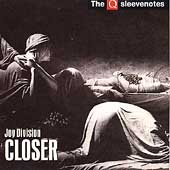
” ถ้าอยากรู้ว่าเพลงที่แต่งจากความรู้สึกกดดันทางจิตใจเป็นอย่างไร ต้องลอง Closer นี่คืออัลบั้มหนึ่งที่ถ่ายทอดความรู้สึกออกมาในรูปแบบทางดนตรีและเนื้อร้องได้ดีมาก ไม่ต้องแปลกใจว่าเพลงจะทำให้คุณรู้สึกหนักหัว ทั้งที่เพลงไม่ได้เร็วและแรงแต่อย่างใด เบื้องหลังเนื้อหาที่เครียดและหนักมาจากนักร้องนำ Ian Curtis ที่มีไม่ประสบความสำเร็จกับชีวิตคู่ และปัญหาทางจิต Ian Curtis แขวนคอตายด้วยวัยเพียง 23 ทำให้สมาชิกที่เหลือตั้งวงใหม่เป็น New Order ลองฟังเพลงเปรียบเทียบ Joy Division กับ New Order จะรู้ได้ว่าคนเพียงคนเดียวมีอิทธิพลต่อซาวนด์และเนื้อหาของเพลงได้อย่างไม่น่าเชื่อ ”
1. Atrocity Exhibition
2. Isolation
3. Passover
4. Colony
5. A Means to an End
6. Heart and Soul
7. Twenty Four Hours
8. The Eternal
9. Decades
all music
If Unknown Pleasures was Joy Division at their most obsessively, carefully focused, ten songs yet of a piece, Closer was the sprawl, the chaotic explosion that went every direction at once. Who knows what the next path would have been had Curtis not chosen his end? But steer away from the rereading of his every lyric after that date, treat Closer as what everyone else thought it was at first - simply the next album - and Joy Division's power just seems to have grown. Hannett was still producing, but seems to have taken as many chances as the band itself throughout - differing mixes, differing atmospheres, new twists and turns define the entirety of Closer, songs suddenly returned in chopped-up, crumpled form, ending on hiss and random notes. Opener "Atrocity Exhibition" was arguably the most fractured thing the band had yet recorded, Sumner's teethgrinding guitar and Morris' Can-on-speed drumming making for one heck of a strange start. Keyboards also took the fore more so than ever - the drowned pianos underpinning Curtis' shadowy moan on "The Eternal," the squirrelly lead synth on the energetic but scared-out-of-its-wits "Isolation," and above all else "Decades," the album ender of album enders. A long, slow crawl down and out, Curtis' portrait of lost youth inevitably applied to himself soon after, its sepulchral string-synths are practically a requiem. Songs like "Heart and Soul" and especially the jaw-dropping, wrenching "Twenty Four Hours," as perfect a demonstration of the tension/release or soft/loud approach as will ever be heard, simply intensify the experience. Joy Division was at the height of their powers on Closer, equaling and arguably bettering the astonishing Unknown Pleasures, that's how accomplished the four members were. Rock, however defined, rarely seems and sounds so important, so vital, and so impossible to resist or ignore as here. 5/5
Q
Maybe his widow's book will give an approximation to what went on in Ian Curtis's sadly uneven mind. Maybe it'll help define just what it was that made Joy Division so special, so far ahead of more plodding imitators, like Echo & The Bunnymen, The Cure and the rest of the long mac brigade. But it probably won't and 13 years after his death, all that remains of Curtis are some desperately lonely lyrics, a deep, frightened voice and the lingering - though far from proven theory - that his suicide showed that he actually meant it. Unknown Pleasures (1979) was so fully realised, it didn't sound like the debut from four Manchester oiks with only a couple of EPs to their name. It began brilliantly: Disorder's thundering minute-long introduction and "I've been waiting for a guide to come and take me by the hand/Show me sensations, make me feel the pleasures of a normal man". It got better until I Remember Nothing's glass-smashed-against-a-wall closed things. Exhausting listening, but never inaccessible, Unknown Pleasures was, purely and simply, a work of genius. No wonder Grace Jones was covering She's Lost Control by 1980.
Finished before and released after Curtis's death, Closer was less clattering and disturbingly more haunted. The songs weren't quite up to Unknown Pleasures' standard but Martin Hannett's delicate production prised every last shivering nuance. On one level it's a truly terrifying last testament. On another, Peter Hook was becoming a great bassist. Joy Division were sensitively milked after they dissolved. Still was their last concert and is poorly recorded (no crime, Curtis was hardly going to let on his suicide was imminent), save for an awesome Isolation. There are some outtakes and rarities. It lacks the flow of the proper albums but there is plenty for fans to savour. Substance is a compilation of non-album tracks. Again there's no flow and Curtis's voice is unmasked as weedy before Hannett took it over. It does include Novelty, the great lost Joy Division song, with lyrics of stunning viciousness.
Joy Division spawned countless ghastly imitators and narrow-minded fans who cried "foul" when Paul Young dared to cover Love Will Tear Us Apart. Curtis died, New Order were speedily born. Too speedily in fact, for their debut, Movement (1980), was a mess. Produced by Hannett, its attempt to turn Bernard Sumner into Curtis resulted in parody. The songs, too, were profoundly average. Power, Corruption & Lies was better. Joy Division were finally buried, it contained a few jokes and the newly-confident foursome were beginning to embrace dance. Solid, if not spectacular. 1985's Low-Life was a stunner. New Order emerged as a fully fledged dance act with marvellous songs covered by a metallic sheen. They'd re-invented themselves as the blueprint for the rave generation. How they must have laughed. A year later, Brotherhood would wipe some of the smiles off those four faces. Too similar to Low-Life, it suffered from an absence of truly great songs, Bizarre Love Triangle excepted. Substance coralled the singles, including Blue Monday, which changed everything for New Order, transforming them into major league players. Alas, more is less, for Substance is bogged down by the B-sides and New Order B-sides, like everyone else's are there because they're not good enough to make proper albums or A-sides. Last of this bunch - re-released at a cheapish price to celebrate the back catalogue switch to London - is 1989's Technique. Starting where Low-Life left off, recorded in Ecstasy-saturated Ibiza, it was the soundtrack for the cynical summer of love and, as Neil Diamond so accurately said, good times never felt so good 4/5
adrian denning
With the later arrival of New Order, people sometimes forget that Joy Division were already using keyboard textures as early as this. With the sad, tragic demise of the groups frontman Ian Curtis, we'll never now know if Joy Division would have gone on to make a 'blue monday' rock / dance crossover type of breakthrough or whether they'd merely have continued refining their existing sound. Ian was actually the member of the group that brought Kraftwerk to the attention of the others. Bernard in particular saw the possibilites very early on. Given that 'Closer' is a move away from the guitar based 'Unknown Pleasures' to a sound sometimes ignoring guitars completely ( eg, 'isolation' ), chances are Joy Division themselves would indeed have done something 'different' through subsequent releases had they only all stayed alive in order to record and write subsequent releases. 'Atrocity Exhibition' is lyrically dense and intriguing, offers up various treated guitar sounds and for six minutes relies almost entirely on a stop, start 'awkward' drum pattern, bass, and the sound of Ian Curtis vocally. Sure, there is guitar here, but the guitar isn't exactly playing flowing lines of melody and tunefullness. The guitar sounds alien, mixed into the background, sometimes moving closer to the foreground in the purely instrumental passages. It creates an extraordinary sound, actually. 'Atrocity Exhibition' isn't as in your face an album opener as the clattering, startling 'Disorder', but it's a perfect introduction to 'Closer'. A different sound, a different album, a step away, a step forwards - whichever way you want to look at things. 'Isolation' features keyboard lines and bass lines, drums that sound like machines but are actually drums as far as I can tell. No guitar here whatsoever - "i'm ashamed of the person I am" sings Ian, and indeed he was going through a difficult time in his personal life, had become estranged from his wife, become increasingly 'ill'. It never seemed to affect the group as far as studio activities were concerned however. Just gave Ian an extra something to write about. 'Passover' is a piece of brilliance. The opening two songs are both good, decent songs, but not obviously stand-out Joy Division songs. 'Passover' is eerie, scary, very atmospheric. The drum pattern is again a key to the musical build-up of the song, the bass rumbles deeply around the drums, the guitar slashes and is allowed the freedom to do so. The rhythm section has already created such a strong melody and groove, the guitar doesn't have to provide 'the tune', so to speak. The lyrical content is dark and poetic, Ian sings almost matter of factly and the overall effect is quite something.
'Colony' further winds the album up a notch, and offers the first real guitar oriented song on the record. The rhythm section do 'the usual' Joy Division mix of jerky alien rhythms and the guitar blasts and soars, Ian spits out the words, shouts out the lyrics in other places through the song, a song with power. 'A Means To An End' has an almost 'bouncy' sounding bass line, Ian sounds far off, yet still powerfully strong. Credit is again due to producer Martin Hannett, 'Closer' is beautifully recorded and mixed. When Ian raises his voice to sing "I put my trust in you" - and then the guitars joyfully ( yes, joyfully! ) come in, it's really a wonderful thing. The keyboards return for 'Heart And Soul' and 'Closer' continues to offer variety whilst still retaining a fully cohesive mood. The vocals sound different here, the words are almost whispered, but the voice still dominates the song. It's a funny thing, the sheer sound of Ian Curtis, the lyrical presence and vocal presence even with strong melody and striking keyboard lines remains the one element of the song that really reaches you above all else. And he's singing softly. I don't 'understand' what goes on in 'Heart And Soul' or how the song was written or created. It seems almost super-human, this unfathomable thing. It sounds like a great piece of art, let's just say that. '24 Hours' when it rises from quiet to impossibly dense and loud sections is a thrillingly dark blast, falling again to gentle softer sections throughout. The final two songs here deserve an extra special mention. They single-handedly raise a good album and a strong follow-up album into an all-time classic work. "procession moves on, the shouting is over" sings Ian, and 'The Eternal', so aptly named because it perfectly evokes the feeling of both utter dejection and death. Death is eternal. But, there is beauty here. The piano lines add a touch of beauty, a last gasp of life, or alternately, a ray of hope in admist all the gloom. Much gloom, and also one of the most beautiful sad songs i've ever heard. 'Decades' follows 'The Eternal', another piece that progresses at a funeral's pace, but remains utterly captivating. The keyboard lines, the slow gentle bass lines. Ian Curtis "here are the young men, weight on their shoulders", a series of great lines come at you all through 'Decades'. And those keyboard lines, primitive and yet wonderfully beautiful, and desolately sad. "where have they been" sings Ian, the keyboard continues and suddenly you're likely to burst into tears. This is powerful, emotional music, some of the most emotional music you'll ever hear. 'Closer' isn't an expression of joy and happiness, obviously, but these other emotions have rarely, if ever, been captured better.
10/10
Jack Feeney
I've just been flicking through the nine songs on here trying to decide which to list as best tracks and, apart from the unsurpassable trio of "Isolation", "Decades" and the jaw-dropping "Twenty Four Hours", I could quite easily list every single track. Thus, although I've plumped for the opener "Atrocity Exhibition" ANY of the other tracks would have been no worse choices. This album is, quite simply, faultless. Just to recap, though, Unknown Pleasures didn't meet with great (although not insignificant) success and by May, the following year the band had ready a single release ("Love Will Tear Us Apart") and an accompanying album, Closer. Curtis, though, hung himself the week "Love Will Tear Us Apart" was released and thus never lived to see it break the top ten. People are split as to the real reason for his suicide, some citing a love triangle, presumably involving his wife Debra, whilst others think he felt too strongly a sense of rejection following from Unknown Pleasures' relative failure. If the latter is true the irony of "Love Will Tear Us Apart"'s success is truly tragic. My guess, as with most suicides, is that Curtis simply couldn't go on living anymore. His choice, I guess. Thankfully this album was completely finished unlike with some other posthumous albums and thus is a truly genuine masterpiece. The band have well and truly found their sound and thus every song is perfect. Some are slow and hard-going but they are still masterpieces unlike a couple of tracks from Unknown Pleasures. The synthesiser also features more prominently (only really being obvious on "Insight" from the previous album) and to absolutely no greater effect than on "Isolation". The brilliant irony of an almost cheesy synth-pop song supporting some of the most desperate lyrics Curtis ever penned heightens the song even further. On the other hand keyboards are used more traditionally on the final duo of "The Eternal" and "Decades". "The Eternal" utilises a very sparse descending keyboard line (only one note at a time). More Sabbath influence, specifically the crap piano line from "Changes". Again Curtis' lyrics fail to match the beautiful maturity of Ozzy Osbourne's. Does sarcasm work that well in written form? Actually you must have known I was joking as soon as you saw the words "beautiful maturity" and "Ozzy Osbourne" together. Obviously "The Eternal" is a far better piece than "Changes". Actually a sentence like that is too kind on "Changes". The two songs just should not be compared. "The Eternal" is a little slow although the haunting piano line prevents only the most hardened cynic from calling it turgid. "Decades" is even better with, in contrast to "The Eternal"'s sparse arrangement, a repetitive, claustrophobic chord progression. It sounds a little like a harpsichord although I've no doubt it was recorded on a keyboard. An assumption only backed up by the same synthesiser being used to play both "Isolation" and "Decades" for the live set on Still. Curtis sounds so old and world-weary that it simply seems inconceivable that the man intoning "here are the young men, the weight on their shoulders" is but a young man himself. That song is simply wonderful, there is no two ways about it. The best possible conclusion to the album. "Heart and Soul" uses a synth-line as well for its similarly haunting progress. Curtis' vocals are completely unique from the rest of the album giving the song a very, very eerie aura. The best song on the album, though, is my favourite Joy Division song of all-time (and maybe their best) "Twenty Four Hours". Like I mentioned in the previous review it is quite similar to "Shadow Play" in that it is propelled along by an aggressive guitar line. It is certainly better than "Shadow Play", and that, in itself, is no mean feat. Lyrically not a word is wasted and the part where the song breaks down for a few lines before Curtis tells us "destiny unfolded...I watched it slip away" and it speeds up again is brilliant. An unrelentless onslaught of despair. "Colony" is also a bit more up-tempo (although not in a jolly way) with a sort of heavy metal gothic guitar line. It's hard to describe, maybe "scary" is a good word. You're really entering a world of pain with this album. "Passover" utilises a similar guitar line to "Day of the Lords" and, if I'm honest, isn't as good but is still as consistently great as most of the rest of the material on here. Let's see, the final track I've yet to describe is the album opener which I, perhaps wrongly, listed as a best track. It begins with a sort of rolling drum beat (almost like congas although played on a standard drum kit) and the guitar line for the verses consists of only pick-scraping meaning the bass-line is where the melody (if there really is one) lies. The chorus revolves around the macabre plea that "this is the way - step inside". A real Dostoevsky style look at the dark side of the human character, obsessed with pain and suffering. One of Dostoevsky's greatest quotes, from The Karamazov Brothers, is "if the devil doesn't exist, but man has created him, he has created him in his own image and likeness" which I'm sure expresses sentiments Curtis wholeheartedly agreed with. And I agree with the critics when I say that this is one of the greatest albums of all-time. And you agree with me when I say that. If not, please let me know and you shall soon see your name in lights beneath this review. 10/10
amazon
In retrospect, the second and final album by this Manchester postpunk band seems to point straight at singer Ian Curtis's suicide, which happened a few months before it was released. The band's reverberating mesh of minor-key lines and Curtis's tremorous bass voice are doomy enough on their own, and attention to the words reveals references to blacker-than-black stories by J.G. Ballard and Joseph Conrad; the void and its terrors were splitting Curtis apart from the inside. "I put my trust in you," he sings, and his voice leaves no doubt that that trust has been betrayed. But the music, grim and powerful as it is, points to the direction the surviving members took as New Order, incorporating the mechanical gravity of club rhythms.
80's Exchange
For what I have heard of 80s music, this album has to be the most darkest, full of melancholy and sadness ever recorded in that period. Ian Curtis wrote some songs that are so beautiful and strange that listening to them was like looking into a mirror deep in human's soul itself. Truly captivating, Closer is a masterpiece, a timeless album to treasure. Perhaps, one of the top 5 albums of the 80s.
|