



|
|
Maledpun Music ทางเลือกประสบการณ์ฟังเพลงคุณภาพ | ||||||
|
|
|
|
|||||
CD |
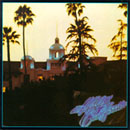
Hotel California The Eagles - 1976
|
||||||||
| อัลบั้มที่ใครฟังก็ต้องชอบ | |||||||||
| อัลบั้มแยกตามแนวดนตรี | |||||||||
| MP3 | |||||||||
| เพื่อนักดนตรี | |||||||||
| DVD & VCD | |||||||||
| คอนเสิร์ตและ MV คุณภาพ | |||||||||
Rolling Stone Hotel California showcases both the best and worst tendencies of Los Angeles-situated rock, but more strikingly its lyrics present a convincing and unflattering portrait of the milieu itself. Don Henley, handling five of the eight vocal tracks, expresses well the weary disgust of a victim (or observer) of the region's luxurious excess. Yet the record's firm musical bases cannot be overlooked. Bernie Leadon departed and Joe Walsh arrived; the Eagles have abandoned most of their bluegrass and country & western claims in favor of a more overt rock stance. Walsh's exact effect isn't always obvious, but this record does have subtleties and edges that have sometimes eluded the group. The title cut, for example, incorporates a pinch of reggae so smoothly that it's more felt than heard. "Life in the Fast Lane," propelled by Walsh's guitar and Glenn Frey's clavinet, rocks like it really means it; "Victim of Love" works similarly, though at a slower tempo. Henley is superb on all three. The frequent orchestration, however, doesn't always fit. "Pretty Maids All in a Row" employs glistening, high-pitched string synthesizer to good effect, adding a reserved tension to the slowly paced arrangement; but the approach fails on "Wasted Time," an over arranged wash embodying the worst of rock-cum-Hollywood sensibilities. What does work is the elegant fullness of "The Last Resort," whose concluding words best sum up Hotel California: "You call some place Paradise ... kiss it goodbye."
All Music The Eagles took 18 months between their fourth and fifth albums, reportedly spending eight months in the studio recording Hotel California. The album was also their first to be made without Bernie Leadon, who had given the band much of its country flavor, and with rock guitarist Joe Walsh. As a result, the album marks a major leap for the Eagles from their earlier work, as well as a stylistic shift toward mainstream rock. An even more important aspect, however, is the emergence of Don Henley as the band's dominant voice, both as a singer and a lyricist. On the six songs to which he contributes, Henley sketches a thematic statement that begins by using California as a metaphor for a dark, surreal world of dissipation; comments on the ephemeral nature of success and the attraction of excess; branches out into romantic disappointment; and finally sketches a broad, pessimistic history of America that borders on nihilism. Of course, the lyrics kick in some time after one has appreciated the album's music, which marks a peak in the Eagles' playing. Early on, the group couldn't rock convincingly, but the rhythm section of Henley and Meisner has finally solidified, and the electric guitar work of Don Felder and Joe Walsh has arena-rock heft. In the early part of their career, the Eagles never seemed to get a sound big enough for their ambitions; after changes in producer and personnel, as well as a noticeable growth in creativity, Hotel California unveiled what seemed almost like a whole new band. It was a band that could be bombastic, but also one that made music worthy of the later tag of "classic rock," music appropriate for the arenas and stadiums the band was playing. The result was the Eagles' biggest-selling regular album release, and one of the most successful rock albums ever. |
http://www.geocities.com/maledpunmusic/
Updated October 2004