



|
|
Maledpun Music ทางเลือกประสบการณ์ฟังเพลงคุณภาพ | ||||||
|
|
|
|
|||||
CD |
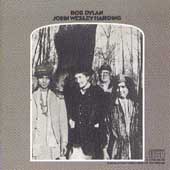
John Wesley Harding Bob Dylan - 1967
|
||||||||
| อัลบั้มที่ใครฟังก็ต้องชอบ | |||||||||
| อัลบั้มแยกตามแนวดนตรี | |||||||||
| MP3 | |||||||||
| เพื่อนักดนตรี | |||||||||
| DVD & VCD | |||||||||
| คอนเสิร์ตและ MV คุณภาพ | |||||||||
Rolling Stone So, there is this semi-recognizable cat on the front of the album out there in the woods, looking like some friend of Baudelaire, way back in 1844 in "Le Vieux Quartier" of Paris with a few friends from inside the walls. You might well ask, "What's it all about?" The music is again a brilliant electronic adaptation of rural blues and country and western sounds. A swaying harp picks out the title track, "John Wesley Harding." A statement is made about the concept of everyday Good and Evil. Harding is Johnny Cash's outlaw figure, "he was never known to hurt an honest man" folk-hero of a different kind, John Wesley Harding"a friend to the poor." Call him Robin Hood if it means more to you. He was offering you "a helping" hand, and was this a man really to be hunted and punished? With all the spiced crispness of the Elizabethan verse of some Samuel Daniel, Dylan expresses in this early morning incidente, "As I Went Out One Morning," all the beauty of a different concept of Love: in his knowing, he can only refuse the hand of this "fairest damsel," as he must. This Sad-eyed Lady, reaching out for another answer, finds only a rejection. In her asking she condemns herself: "I will secretly accept you, and together we'll fly South." Dylan lets he go her own way, also so "sorry for what she's done." In "Dreaming of St. Augustine," some parallels are found with the bent track of all our lives. St. Augustine , who also sought an answer in a life of deprivation, of spiritual and physical agony, ("with a blanket, underneath his arm" as he went "searching for the very souls that already have been sold,") found in the end a similar humility to that expressed by Dylan here. The two concepts of Saint and Devil blended here. "There is no martyr amongst you now"; compared to Mozart, so "Come out you gifted Kings and Queens " and do your thing. And "know you're not alone." The immense compassion Dylan feels is shown only too clearly: he tells us that "He put his finger to the glass and bowed his head and cried." There is hope for those still on the other side. With a delicate rippling harp-ending, Dylan tells us with all his gentleness how easy it is to break once and for all the clouded glass. The opening lines of "All Along the Watchtower" resemble a wandering entrance through Dark Portals ("There must be someway out of here."). Dylan speaks in an almost apocalyptic vein of the Fall to come. He has told us frequently in his poetry of his acceptance of Chaos: "businessmen may drink my wine, ploughmen dig my earth; none of them along the line know what any of it is worth." Yet there is some hope in the minds of those who watch eagerly from the turrets: "There are many here amongst us who feel life is just a joke." There could be a New Day for the Princes and their Ladies of realized, once thought impossible, differences, and a dancing tapestry of endless sounds and colors. For those who wait, "the hour is getting late." Perhaps the most important track on the album is "Frankie Lee and Judas Priest." This too real, even surrealistic, dialogue between two opposed parties attains a steam-hammer urgency. (It recalls the "Lonesome Death of Hattie Carroll" in its intensity.) The enormous gulf between the turned-on honesty of Judas Priest and his charity ("My loss will be your gain,) as he pulled out a roll of tens, and the baffled, suspicious questioning of Frankie Lee is a stage-piece. Judas, the knowing, says the money will all disappear and "Pointed down the road and said 'Eternity'." This vision of a Golden Age though "you might call it Paradise " is not so far off. Judas the Priest, the one who has really seen, does not put Frankie down, but rather as a friend is just willing to wait until he can also find the laughing way out of it all. The limits of conventional Paradise are well known to the young, as they are to the "neighborhood child who walked along with his guilt so well concealed." And as Dylan whoops his way through a jubilant exit, one cannot help thinking of what might be changed soon, if one does "not go mistaking Paradise for that home across the road." "Drifter's Escape" is a weird Kafkaesque judgment. Dylan, as ever, catches the exact pulse of these days just as with "The Times They Are A' Changing" and Highway 61. Here is the nation, as its own jury and judge, and the Trial has commenced. The Vietnam war, symbolized in the court and its process, has a personal and national level: "help me in my weakness" for "my time it isn't long." The choice is there. The consequences of no rational answer to the whole problem were made only too clear in Peter Watkins' The War Game. The choice is Black and White "you fail to understand why must you even try"). Good and Evil exist only on Man's terms. The tapping chords of a bass guitar ("outside the crowd was stirring") as an asking minstrel voice tells us of the lightning that could strike and who will be the victor then the Drifter? Side Two begins in the simple terms typical of the whole album. The elegant restraint of his plea for sanity ("my burden is heavy, my dreams are beyond control") amid the grasping hand of capitalistic machinery is overawing. Gone is the harsh attack of Dylan's previous compositions; "Dear Landlord" is a statement of what goes on around here sometimes. Dylan knows that they too "have suffered much although in that you are not unique" and questions the emptiness, bitterness and unhappiness of the supposedly rich and the vacuous non-reality of "things that you can feel, but just cannot touch." The song is a plea to those out there. Dylan "is not about to argue or move to some other place." With final resignation he says "If you don't underestimate me, I won't underestimate you." "I Am A Lonesome Hobo" recalls (as does the picture of Bob, on the sleeve), a 15-year-old Arthur Rimbaud on the cobbled streets of Belgium , and his miniature masterpiece My Bohemian Existence. The serving of "time" that first questioning of established values of many career and personal desires, that unique nature of personal choice, brought us all down here with Dylan. Brilliantly Dylan reverses the role of the Hobo and tells us what road one may end up on if one does not "stay free from petty jealousies, live by no man's code," hold your judgment for yourself and keep cool. In "I Pity the Poor Immigrant," almost to the tune of "Irene Good-night," Dylan suggests the immense sympathy he has for those who have dared to cut the rope and be free from the life of being one, "who lies with every breath, who passionately hates himself, and likewise fears his death." He realizes the trials of anybody who pushes through to the side of the Looking Glass. The immigrant, having seen through the enormous paradox of wealth and poverty on this earth, seeks another way The song ends with open tenderness for those who have made the journey. Just who the "Wicked Messenger" is, is unimportant, except to say that one knows his faces only too well. With "his mind that multiplied the smallest matter," and all the old hang-ups of flattery and dealing, Messenger is but total Self-deception. With epic descending interludes Dylan tells us to reject it all: the bid was made behind the Assembly Hall and it did not come to pass. Seek the truth as it is, not as it is laid upon you. Many now seek a way, but, "if you cannot bring good luck, then don't bring any." "I'll Be Your Baby Tonight" is such a simple answer. The minor chords jangle the shattered staircases of all our fears: "You don't have to worry anymore," "You don't have to be afraid." Woman's age-old fear of unwanted and unloved children has no more relevance. The song ranks alongside "Ramona" and "It Takes a Lot to Laugh, It Takes a Train to Cry," as an epic, lyrical love song. So tonight "kick your shoes off do not fear." As the hang-ups recede you will forget the moon when somebody lies in your arms tonight. Love really isn't anything to regret on equal terms. Without a doubt this is another major musical step for Bob Dylan. The predominance of country blues, white and black, from Hank Williams to Leadbelly is unprecedented in the new electric music. The steel guitar conjures shades of the Black Ace on many a front porch down South. As to the usual message and meaning, anybody can feel the return to a cooler, more hip, almost shrugged-shoulder awareness of the whole scene revolving around here. The commitment is, as always, frighteningly sincere. And Bob would no doubt agree that J. S. Bach did try also, so really hard, to tell us that the seagulls had wings to fly.
All Music Bob Dylan returned from exile with John Wesley Harding, a quiet, country-tinged album that split dramatically from his previous three. A calm, reflective album, John Wesley Harding strips away all of the wilder tendencies of Dylan's rock albums — even the then-unreleased Basement Tapes he made the previous year — but it isn't a return to his folk roots. If anything, the album is his first serious foray into country, but only a handful of songs, such as "I'll Be Your Baby Tonight," are straight country songs. Instead, John Wesley Harding is informed by the rustic sound of country, as well as many rural myths, with seemingly simple songs like "All Along the Watchtower," "I Dreamed I Saw St. Augustine," and "The Wicked Messenger" revealing several layers of meaning with repeated plays. Although the lyrics are somewhat enigmatic, the music is simple, direct, and melodic, providing a touchstone for the country-rock revolution that swept through rock in the late '60s.
Adrian’s Album Reviews A lot happened to Dylan during the Blonde On Blonde era and its immediate aftermath. He toured with 'The Band' and attracted controversy at virtually every single concert they played. This has been captured well in the recently released Royal Albert Hall live album. The story has been told many times elsewhere of course, so I won't repeat it here. The way Bob was living his life was reaching breaking point. That 'breaking' point came with a motorcycle accident and Bob withdrawing from public gaze for quite some time before officially emerging with this set of recordings. He recorded a bunch of classic songs after his motorcycle accident that were compiled by The Band's Robbie Robertson for release in 1975 and turned into hit singles by a whole number of acts prior to that release. With this release Bob presented the public with a very different sounding record than the albums preceeding it. Gone was the torrent of words replaced by lyrics rich in story-telling and biblical imagery. An album of stories this. The music is very stripped back, Bob handles all the guitar duties himself bar two songs featuring Pedal Steel. The rhythm section is understated if perfectly suiting the material. The bass guitar in particular holds this album together, musically. The opening title song is a case in point. Little shuffling drums, Bob on acoustic guitar and harmonica. The bass provides the melody and very fluent and fluid the playing is too. The words are story-telling, simplistic at first glance but like many other songs here, presenting hidden depths of meaning after repeated listening. 'As I Went Out One Morning' again seems a simple sort of song, but the lyrics are strangely captivating. A whole industry has sprung up just to detail the true meaning behind these lyrics. There are supposedly something like 61 or so Biblical references sprinkled across these twelve tracks. Knowing what they are isn't important in terms of enjoying the record however! The 'stories' can make sense in any case, they can present themselves to your mind in a number of different ways. You don't need to know who 'Tom Paine' actually is! |
http://www.geocities.com/maledpunmusic/
Updated October 2004