



|
|
Maledpun Music ทางเลือกประสบการณ์ฟังเพลงคุณภาพ | ||||||
|
|
|
|
|||||
CD |
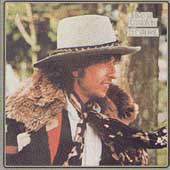
Desire Bob Dylan - 1976
|
||||||||
| อัลบั้มที่ใครฟังก็ต้องชอบ | |||||||||
| อัลบั้มแยกตามแนวดนตรี | |||||||||
| MP3 | |||||||||
| เพื่อนักดนตรี | |||||||||
| DVD & VCD | |||||||||
| คอนเสิร์ตและ MV คุณภาพ | |||||||||
Rolling Stone Desire is a very special album, although Bob Dylan's adamantly antimusical approach keeps it from greatness. Somehow, though, Dylan's antimusic winds up being very seductive. The real problems with this record lie in other areas. What's most striking about the record is that it is such a collaborative effort. Dylan works as closely with these musicians and singers -- among them, violinist Scarlet Rivera, bassist Rob Stoner and drummer Howard Wyeth of the Rolling Thunder crew, and vocalists Emmylou Harris and Ronee Blakley -- as he has with anyone since the Band. But it's still Dylan's album. Had the group been given a chance to record with more care, the record could have been the blockbuster the songs deserve. In addition to working with a band again, Dylan is collaborating on lyrics with Jacques Levy (who cowrote "Chestnut Mare," among others, with Roger McGuinn), and Dylan's longtime Columbia Records associate, Don DeVito, has stepped into a full-fledged production role (although he is given only a halfhearted credit). DeVito's role is crucial. Although he wasn't able to get Dylan to work with the musical discipline that's been missing from all of his records since he left the Nashville studio pros, DeVito did get a sound that's a considerable improvement on the fuzzy Blood on the Tracks or the seemingly unmixed Planet Waves. Fuller instrumentation might even have overwhelmed the technical flaws. As it is, the drum sound adds a power akin to rock & roll on almost every song, and the droning effect of the voices set against Rivera's violin is so seductive that it can make you forget that what's being played is often fairly boring. It's not altogether clear just what Jacques Levy contributed to the songs. In many ways, they are of a piece with Dylan's other work. But the humor that has been missing since John Wesley Harding is in great abundance here (" Isis " might be an outtake from JWH) and the imagery is the most strikingly well-developed since New Morning. On the other hand, the rhyme schemes are just as tortured as ever: Mozambique may very well rhyme with cheek-to-cheek, speak and peek, but then there's "put his ass in stir" and "triple murder" in "Hurricane." But it's hardest to determine who is responsible for the most meaningful change in Dylan's writing, which is expressed in the songs concerning women. Previously, Dylan has recognized only two kinds of women: "angels," whose function was to save man (from the women themselves as often as not), and "bitches," whose function was to let him down, if not by overt attempts to ruin and confuse, at least by their failure to save. The bitches enjoyed their heyday during the "Just like a Woman" period, of course, and their prominent return on Blood on the Tracks was one of the principle reasons why that album was believed to be a return to the golden age. The angels dominated from Nashville Skyline to Planet Waves, and there is reason to believe that Dylan still holds onto something of that vision: "Sara," one of two songs on Desire which he wrote alone, again speaks of his wife as a "sweet virgin angel." Part of this lyrical attitude may simply be the altogether healthy influence of Levy, but some of it must have had to do with the presence of women while the record was being made. It is a little difficult to imagine Dylan coming in with one of his "Just like a Woman" poses while women looked on. Scarlet Rivera, in particular, asserts her identity strongly on this album -- she sometimes seems to be forcing her way in but she's never far from the heart of the matter. Emmylou Harris is equally ubiquitous but her presence is less strongly felt, partly, I guess, because backup singing is a well-defined woman's role. The change, however, really stands out in the lyrics -- " Isis " is on one of its several levels a sendup of the whole bitch/angel routine, and "Oh, Sister" might be a sort of apology, again among other things. If "Sara" tells us that Dylan is in some sense unregenerate in his attitudes, its most telling lines concern the couple's children, who are collaborations of quite another sort. But love songs aren't the focus of Desire, which is one of the things that differentiates it from Dylan's other post-rock work. On the best songs, Dylan returns to the fantastic images, weird characters and absurdist landscapes of the Sixties. The metaphors work on so many levels they're impossible to sift, and just when you think you have one firmly defined, it slips off into something else again. The crucial ideas are cinematic; in fact, one song, "Romance in Durango ," seems to be an explicit parable about making Pat Garrett and Billy the Kid in 1973. There are the usual romances, the stories of hard-luck kids from rough slums, a couple of other westerns, even a bit of travelogue (" Mozambique "). Some of the songs, like "One More Cup of Coffee" (which is apparently based on a story Ramblin' Jack Elliott used to tell), seem ancient, as though Dylan were once more using the resources of traditional folk music for his melodies and themes. But the bulk of the songs are nightmares, visions of a man on the run from something he can't define, or else stories about the fear of having nowhere to turn (as in "Oh, Sister" and "One More Cup of Coffee"). As Dylan races past the tomb of the Pharaoh in "Isis," hunting the world's biggest necklace and singing so deadpan it's hard to believe it, or through the "Aztec ruins" and ancestral towns of central Mexico in "Romance in Durango," history and time collide, shift, interweave. In "Black Diamond Bay" this is carried to its extreme. In a madhouse hotel where suicidal Greeks are mistaken for Soviet diplomats, the terrified protagonist, running again from something unnamed, loses her identity -- she can't even remember the face on her passport. Open a door, and like a Rube Goldberg contraption, the Greek is hung, a volcano explodes, the island falls into the sea. And the desk clerk, meanwhile, simply sits and smiles: he's seen it all before. It's hardly even surprising that we wind up with Dylan sitting in front of his TV set, sipping a beer while the whole wild story repeats itself on the CBS Evening News with Walter Cronkite. The record only falters, in fact, when it attempts to write or rewrite real history. I believe Dylan's confession about "Sad-Eyed Lady of the Lowlands " in "Sara" but I don't trust it. "Hurricane" is a setup. The whole thing is too improbable for real life, though (like the Hearst kidnapping) it did happen. Dylan even sings with a measure of disbelief and, in the end, his rage is rather impotent. Is the point really that: Now all the criminals in their coats and their ties This is hardly a radical idea of what it means for an outspoken black boxer to be jailed by devious means. It is, in fact, a little sophomoric to consider coats, ties and martinis the real enemy of a man like Hurricane Carter. This problem presents itself most explicitly and awkwardly in "Joey," a hymn to Joey Gallo, the self-educated Mafioso who quelled an Attica riot and then, upon his release, precipitated, with his brothers, the most vicious modern mob war. Dylan would obviously like to write an outlaw ballad, making a sort of Billy the Kid or Pretty Boy Floyd from a modern-day thug. But there are outlaws who have been branded as criminals and then there are thugs who share jail cells and not much else. Pretty Boy Floyd, Bonnie & Clyde and Billy the Kid were supposed to be outlaws, robbing from the rich to give to the poor. If history denies this -- we are now told that Billy was a vicious psychopath and Pretty Boy not much better -- the impulse for their canonization at least makes a kind of sense. But Dylan's rationale for lionizing Joey Gallo is different. Joey was heroic because he spent his time in prison "readin' Nietzsche and Wilhelm Reich," because he came out of prison dressed like Jimmy Cagney. For this sense of style, Dylan is willing to forgive him his numbers and gambling rackets -- even slyly attempting to deny that he ever was involved with such things. But his neatest ellipsis is to avoid all mention of the public execution of Joseph Colombo, which the evidence suggests the Gallo mob ordered. In which case it is hardly relevant that Joey Gallo did not carry a personal weapon and much more understandable that he himself was gunned down in front of his family. Gallo was an outlaw, in fact, only in the sense that he refused to live by the rules of the mob --it's as hard to be sympathetic to him as it is to be comfortable with Robert De Niro's crazy Johnny in Mean Streets. Is an intellectual Mafioso really that much more heroic than an unlettered hood? This is elitist sophistry of the worst sort, contemptible even when it comes from an outlaw radlib like Bob Dylan. Specious as it is, "Joey" is musically seductive. Its chorus is perhaps the most memorable on the album, and there's a passion in the singing and playing that is uplifting. This doesn't excuse the sophomoric idea that animates that passion but it does provide some kind of measure of Dylan's continued power as a songwriter and mythmonger. Liking Desire is hardly the point --there are those of us who will always believe that Dylan is copping out until he returns to the fiery rock & roll that drove his middle Sixties work, just as there are those who will never truly love his music again until he writes an album full of "Hurricanes." The test of Bob Dylan's talent is really that all of us continue to listen and hope.
All Music If Blood on the Tracks was an unapologetically intimate affair, Desire is unwieldy and messy, the deliberate work of a collective. And while Bob Dylan directly addresses his crumbling relationship with his wife, Sara, on the final track, Desire is hardly as personal as its predecessor, finding Dylan returning to topical songwriting and folk tales for the core of the record. It's all over the map, as far as songwriting goes, and so is it musically, capturing Dylan at the beginning of the Rolling Thunder Revue era, which was more notable for its chaos than its music. And, so it's only fitting that Desire fits that description as well, as it careens between surging folk-rock, Mideastern dirges, skipping pop, and epic narratives. It's little surprise that Desire doesn't quite gel, yet it retains its own character — really, there's no other place where Dylan tried as many different styles, as many weird detours, as he does here. And, there's something to be said for its rambling, sprawling character, which has a charm of its own. Even so, the record would have been assisted by a more consistent set of songs; there are some masterpieces here, though: "Hurricane" is the best-known, but the effervescent " Mozambique" is Dylan at his breeziest, "Sara" at his most nakedly emotional, and " Isis" is one of his very best songs of the '70s, a hypnotic, contemporized spin on a classic fable. This may not add up to a masterpiece, but it does result in one of his most fascinating records of the '70s and '80s — more intriguing, lyrically and musically, than most of his latter-day affairs.
Adrian’s Album Reviews Only months after releasing 'Blood On The Tracks' Bob was already looking forwards. He went searching for a new sound. He could have made 'Blood On The Tracks' part two, instead he found an exotic violin player by the name of Scarlet Riveria and effectively, she became the 'lead guitar' player for this set of recordings. Bob played acoustic and sang of course - and talented musicians Rob Stoner and Howard Wyeth made up the rhythm section. EmmyLou Harris sings backing vocals. Add of all this together and you get? A damn fine sounding record, that's what! I so love the sound this group of musicians create. Especially the violin, it's an unsual but very effective touch. And besides, this album would almost be guarranteed a place in the history books just for the stupendously exciting 'Hurricane'. It screams out 'classic' as soon as the opening bars kick in. ' Isis ' makes it two classics running. This clearly follows on from the writing techniques used on 'Blood On The Tracks'. It's difficult to keep a track of or make sense of what's going on lyrically. Musically, the band hit a groove, the violin provides the added exotica! All is well. |
http://www.geocities.com/maledpunmusic/
Updated October 2004