



|
|
Maledpun Music ทางเลือกประสบการณ์ฟังเพลงคุณภาพ | ||||||
|
|
|
|
|||||
CD |
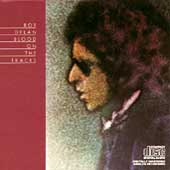
Blood on the Tracks Bob Dylan - 1975
|
||||||||
| อัลบั้มที่ใครฟังก็ต้องชอบ | |||||||||
| อัลบั้มแยกตามแนวดนตรี | |||||||||
| MP3 | |||||||||
| เพื่อนักดนตรี | |||||||||
| DVD & VCD | |||||||||
| คอนเสิร์ตและ MV คุณภาพ | |||||||||
Rolling Stone Chaplin transcended his lack of interest in the function of directing through his physical presence. Almost everyone recognizes that his face was the equal of other directors' cameras, that his acting became his direction. But Dylan has no one trait -- not even his lyrics -- that is the equal of Chaplin's acting. In this respect, Elvis Presley may be more representative of a rock artist whose raw talent has overcome a lack of interest and control in the process of making records. Presley is the only rock artist whose records have consistently failed to list a producer. When they are great, they represent the triumph of his natural ability over everything that surrounds him -- songs, musicians, recording equipment. We remember him, not the record. He creates the illusion that he can do anything he wants to, but never has to be more than he is. It is enough that he sounds like Elvis Presley. Even at his worst, his records sound complete. He defines himself. For many years I believed that Dylan could do that too. But for many more I doubted it. Through Blonde on Blonde, Dylan's originality as a performer, singer, songwriter and presence haunted a generation -- and had an incalculable effect on my own life. But while Elvis Presley never had to rely on anything but himself to see himself through, Dylan needs his specific talents to make himself felt. Since Blonde on Blonde they haven't served him well enough to compensate for his indifference to the process of making records. And in retrospect, it now seems clear that indifference has marred much of his work. Dylan has often said that his goal in the studio is to catch the feeling and the way he does that best is by keeping things simple: light rehearsal, a few takes and on to the next song. The artist knows how he works best, so there may be no alternative. But the shortcomings of the approach must be noted. Dylan's electric albums have often been pointlessly sloppy, sometimes badly recorded and not nearly as good as some of the material warranted. To me, Planet Waves sounds like nothing so much as a rough draft of an unfinished work, a sketch of planned painting, something to be worked on, not released. When Dylan recorded by himself, there was something primitively satisfying about his voice-guitar-harmonica performances that made even the weakest cuts on the four purely acoustic albums sound finished. But he produced his craziest and greatest work with rock bands and I think his reputation will finally stand or fall on the basis of what he has done with them. As a rock artist there were times when he so charged a recording session with the power of his words and voice that nothing else mattered. Coincidentally (perhaps not) these usually took place when the accompaniment was at least adequate and sometimes brilliant. I'm thinking of such personal favorites as "She Belongs to Me," "Like a Rolling Stone," "It Takes a Lot to Laugh, It Takes a Train to Cry," "Highway 61 Revisited," "Just like Tom Thumb's Blues," a good half of Blonde on Blonde, the singles "Positively 4th Street" and "Can You Please Crawl out Your Window?," the "Basement Tapes" and Albert Hall bootlegs, "All along the Watchtower" "Down along the Cove" and "I'll Be Your Baby Tonight," on John Wesley Harding, "Sign on the Window" and "Went to See the Gypsy" (and maybe another two from New Morning) and a matter of taste -- but the Band itself has never sounded more lifeless and colorless. The best music on that album doesn't hold a candle to the worst music on The Band, let alone anything so majestic as "The Weight," "King Harvest" or "Stage Fright." To bring it all back home: The paradox of Bob Dylan's reputation is that he is regarded as our greatest rock artist without having made the records -- the completed works -- that should support that reputation. When compared to people who are thought (usually mistakenly so, in my view) to have made their records in the same natural, unproduced style in which he has made his, I find him wanting: He has made no single cut to equal Elvis Presley's "Mystery Train," Chuck Berry's "Johnny B. Goode," Jerry Lee Lewis's "Breathless," Little Richard's "Long Tall Sally." If compared to the records of musicians whose work is thought to owe its quality to production, I find him wanting: He's made no single record to equal the Ronettes' "Be My Baby" or Martha and the Vandellas' "Heat Wave." If compared to contemporary rock & roll bands, I find him wanting: He's made nothing to equal the Beach Boys' "Don't Worry Baby," the Who's "My Generation" or the Rolling Stones' "Satisfaction" (or "Get Off My Cloud" or "Tumbling Dice"). If compared to the trash-rock of the bar lounges, I find him wanting: He's made no records to equal Gary (U.S.) Bonds's "Quarter to Three" or Joey Dee and the Starliters' "Peppermint Twist." Dylan invented the modern singer/songwriter form and there's no question that he remains the best of the lot, but how any of them will finally stand as recording artists no one can yet say. Most of them display some of his flaws in record making, while others use production to hide a lack of substance --something no one will ever accuse Dylan of. (Only one, Joni Mitchell, seems to have solved the problem by inventing a form of production on Blue that doesn't sound like production at all.) Consider this: Dylan is supposed to be the standard against which so many have measured rock for the past ten years. But if the reader can allow that any record by performers obviously lacking Dylan's broader artistic credentials equals or surpasses his, then his position as a premier recording artist is called into question. It didn't matter that Charlie Chaplin may not have been a great director or a great anything else. He made great movies. But it does matter whether or not the sum total of Dylan's talents has added up to the making of great records. By and large I don't believe that they have and, if the unit of rock & roll art were only what survives on vinyl, exclusive of anything else and undivided into its component parts, then I don't believe that Bob Dylan would qualify as a great rock artist. If Dylan isn't a great rock artist per se, he is a great artist, period. He has transcended his limitations more successfully than anyone else in rock. He succeeded in making himself indispensable. The records may be indispensable in only the first moments in which they are perceived, but they can transmit as much force in those moments as others do in hours, days and years. Dylan considered in total -- as a man, myth, singer, writer and, yes, maker of records -- hasn't been merely immediate and urgent: He's given rock its drama. He creates tensions within his audience beyond anyone else's reach. If he isn't as good a record maker as Chuck Berry, he's a much better actor. As an actor and as a personality, Dylan hasn't handled every role with equal skill. He was unconvincing as the happy homeowner. People who criticize that phase of his work never intended to deny him the right to be exactly what he wanted to be. But they reacted to the fact that he couldn't make that experience as real as he could the emotions of anger, pain, hurt, fear, loneliness, aloneness and strength. Like James Dean and Marlon Brando, he was better at playing the rebel than the citizen, the outsider than the insider and the outlaw than the sheriff. Much of the critical enthusiasm for Blood on the Tracks is really a sigh of relief that he's shaken off the role of contentment that Jonathan Cott also has found never rang true. But in returning to his role as disturber of the peace, Dylan hasn't revived any specific phase from the past, only a style that lets his emotions speak more freely and the state of mind in which he no longer denies the fires that are still raging within him and us. He is using elements of his past to make an album about his past. The record itself has been made with typical shoddiness. The accompanying musicians have never sounded more indifferent. The sound is generally no more than what Greil Marcus calls "functional," a neutral environment from which Dylan emerges. But the singing is much better than on any recent album. He turns up with beautiful lines and phrasing on "Tangled Up in Blue," "You're a Big Girl Now," "Shelter from the Storm" and "Buckets of Rain" (but the snarl that he resurrects from "Like a Rolling Stone" in order to sing "Idiot Wind" sounds like a shadow of his former self). The writing is the source of the record's power. It's been a long time since Dylan has composed a melody line as perfectly suited to his voice as "Tangled Up in Blue," and though the lyrics are both confessional and narrative, Dylan makes it all sound like direct address. There are times when he sounds closer, more intimate and more real than anyone else. If in Dylan's world of extremes there's room for a middle ground, that's where I place Blood on the Tracks. It's his best album since Blonde on Blonde, but not nearly as good. If it contains nothing so bad as the second version of "Forever Young," only "Tangled Up in Blue" comes even close to "One of Us Must Know (Sooner or Later)." To compare the new album to Blonde on Blonde at all is to imply that people will treasure it as deeply and for as long. They won't. But, for the moment, which is when this record was made for, I like everything about it; the good, the bad and the ugly. It all matters: the title "Tangled Up in Blue"; and the way that song propels itself relentlessly forward (even though it is about the past) and always winds up leaving Dylan and us standing in the same place; the lines, "I helped her out of a jam, I guess/But I used a little too much force"; the way that the song sounds so right for the Byrds of 1965; the compassion, not rage, of "You're a Big Girl Now"; the lines "I can make it through/You can make it too"; the innocence and unqualified beauty of Dylan's reprise of his folk music roots on "Buckets of Rain"; the awkwardness of the music for "If You See Her, Say Hello"; the childishness (without any redeeming childlike wonder) of so much of "Idiot Wind"; the holiness of the last verse of "Shelter from the Storm"; the extension of the apocalyptic mood of his earlier work into something still forceful, but mellower, more understanding, more tolerant and more self-critical; the indifference to the subject of women as a generality and his involvement with women and love as something specific, and above all, the arrogance -- that defiant indifference to whatever it is others think he ought to be doing. He still stands alone. Blood on the Tracks will only sound like a great album for a while. Like most of Dylan, it is impermanent. But like the man who made it, the album answers to no one and was made for everyone. It is the work of someone who is not just seeing through himself, but looking through us -- and still making us see things that we haven't seen before. (RS 182 - March 13, 1975) Indeed, one needs only to hear the primal scream of 'Idiot Wind' to understand the enormity of Dylan's sense of loss and betrayal. Some may consider that track to be a catharsis, while others may wonder whether or not such a naked and raw performance needed to be released at all. Blood on the Tracks is first and foremost a brilliant commercial album, which has received its fair share of critical acclaim and rightfully so. Butthe success of the album commercially brings up another issue that should be explored. Is it proper for any artist, let alone someone at the level of a Bob Dylan, to use personal tragedy as a selling point for their commercial art? For Bob Dylan, the tragic events that would ultimately inspire Blood on the Tracks began in the late 1960s, when he had semi-retired to his Woodstock home to spend more time with his wife Sara and their children. His recording label feared losing one of their best-selling artists, but negotiations between Dylan's representatives and the label had broken down completely by the early 70s. In retaliation, Columbia executives released an album consisting of substandard originals and poorly received covers that were collecting dust in the label's vaults. That album, simply entitled Dylan, was a commercial and artistic failure. Determined not to allow this album to be his swan song, Dylan threw himself back into his work full-time. Such a move may have saved his commercial career, but created a palpable tension between he and Sara. Extended road tours and countless hours in the studio compounded the mounting strain between them. When accusations of infidelity surfaced, as they often do in such circles, Sara reached her breaking point and began divorce proceedings against Dylan.As with any such desperate measures, emotions ran painfully high on both sides, but a settlement was eventually reached. What emotional impact this truly had on Bob Dylan may never be fully understood by his fans, but the immediate fallout of this tragedy was the first tentative tracks of a yet unnamed album laid down in a New York studio. Dylan himself has expressed his own concern about the intensity and subject matter of 'Tracks' on many occasions. He has been quoted as saying that the blisteringly honest 'Idiot Wind' should never had been included, since it obviously was too close to his own feelings. But the decision to leave it on the album was partially Dylan's, so one must wonder what convinced him to leave the confessional track on the album. Without songs like 'Idiot Wind' or 'If you see her, say hello', the album would still succeed as a collection of well-crafted love songs, but would not have had the immediacy of the 'divorce' references. By including songs that pointedly referred to his private life, he may have inadvertently promoted sales of the album at the cost of some personal healing. By creating such a passionate and intimate album, Dylan may have ushered in an era where recording artists' personal lives may be as much ofan interest to their fans as their professional offerings, but this may not have been such a good thing in retrospect. One may take a second look at the tragically short career of Kurt Cobain to understand that some lines must still be drawn between the private lives of musicians and their public images. An artist with the emotional strength of a Bob Dylan may be able to put themselves through a 'Blood on the Tracks' experience, but care should be taken to insure that the audience can still separate the 'pain' expressed in the music from the real pain endured by the artist himself. Blood on the Tracks is a brilliant album, and Dylan should be quite proud of his artistic triumph. But future generations who hear this album for the first time should understand that this brilliance came at a tremendous personal cost to the artist. Dylan chose to share that pain with his audience, so we must accept the bitter with the sweet when we listen to this powerful and honest album again. |
http://www.geocities.com/maledpunmusic/
Updated October 2004