|
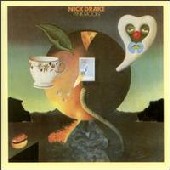
อัลบั้มสุดท้ายที่ใช้เวลาบันทึกเสียงทั้งอัลบั้มเพียงสองคืน ก่อนที่เขาจะเสียชีวิตภายหลังจากการเสพยาเกินขนาด ด้วยวัยเพียงยี่สิบหกปี น่าเสียดายนักดนตรีฝีมือดีที่ทุ่มเทแต่งเพลงด้วยใจจริงๆ แต่ผลงานไม่ประสบความสำเร็จด้านยอดขายเท่าที่ควร ทำให้ต้นสังกัดไม่ให้ความสนใจเขาเท่าที่ควร เขาเองจึงรู้สึกน้อยเนื้อต่ำใจจนมีผลต่อสุขภาพจิตอย่างแรง ก็น่าอยู่ล่ะนะสำหรับศิลปินที่มีอารมณ์อ่อนไหวเช่นนี้ ซึ่งการตายของเขาก็ยังเป็นปริศนาว่าการเสพยาเกินขนาดอาจเป็นการตั้งใจฆ่าตัวตายก็ได้ ฟังเพลงและได้รู้เรื่องของเขามากขึ้นยิ่งทำให้ Pink Moon มีคุณค่าทางด้านดนตรีมากขึ้นมากมายนัก อีกทั้งเกิดความรู้สึกผูกพันกับเขาอย่างบอกไม่ถูก เหมือนกับเพื่อนสนิทร้องเพลงให้ฟังก่อนตาย ทั้งอัลบั้มนี้มีเพียงเขาคนเดียวนั่งหันหน้าเข้ากำแพงดีดกีร์ต้าโปร่งอยู่ในห้องอัด มีเพียงเพลงที่มีชื่อเดียวกับอัลบั้มเท่านั้นที่มีการบันทึกเสียงเปียโนทับ นอกนั้นอัดสดรอบเดียวผ่าน เป็นอัลบั้มที่สะเทือนอารมณ์มากถึงแม้ไม่รู้ว่าเนื้อเพลงที่เขาแต่งพยายามจะสื่ออะไรก็ตาม ”
1. Pink Moon
2. Place To Be
3. Road
4. Which Will
5. Horn
6. Things Behind The Sun
7. Know
8. Parasite
9. Ride
10. Harvest Breed
11. From The Morning
Rolling Stone
Pink Moon is folk icon Nick Drake's third and last full album - and at less than thirty minutes, it can seem as starkly foreshortened as the singer's life, which ended in 1974 when he was twenty-six. But as one of Drake's friends put it, "If something's that intense, it can't be measured in minutes." Rousing himself out of one of the paralyzing depressions that plagued him in his last years, Drake recorded these eleven tracks in two nights, often in just one take. He accompanies himself only on acoustic guitar, except for the title track, on which he overdubs a brief, lovely piano part.
By the time of these sessions, Drake had retreated so deeply into his own internal world that it is difficult to say what the songs are "about." His lyrics are so compressed as to be kind of folkloric haikus, almost childishly simple in their structure ("Which will you go for/Which will you love") and elemental in their imagery ("And I was green, greener than the hill/ Where flowers grow and the sun shone still"). His voice conveys, in its moans and breathy whispers, an alluring sensuality, but he sings as if he were viewing his life from a great, unbridgeable distance. That element of detachment is chilling. To reinforce it, messages of isolation gradually float to the surface of the songs' spare, eloquent melodies. "You can say the sun is shining if you really want to," he sings on "Road," as if daylight were merely a subjective perception that he could not summon the will to sustain. "I can see the moon and it seems so clear." "I'm darker than the deepest sea," he observes in "Place to Be."
It makes unfortunate sense in this age of marketing that what has partially rescued Drake from a quarter-century of obscurity is neither the admiration of artists ranging from R.E.M. to Elton John nor the generations of critics who have sung his praises, but a Volkswagen ad. Lack of recognition in his lifetime deepened Drake's constitutional despair and may well have contributed to his death from a (possibly intentional) drug overdose. He despised commercialism, of course, but let's hope that wherever he is, he can at least enjoy the irony.
All Music
After two albums of tastefully orchestrated folk-pop, albeit some of the least demonstrative and most affecting around, Drake chose a radical change for what turned out to be his final album. Not even half-an-hour long, with 11 short songs and no more — he famously remarked at the time that he simply had no more to record — Pink Moon more than anything else is the record that made Drake the cult figure he remains. Specifically, Pink Moon is the bleakest of them all; that the likes of Belle and Sebastian are fans of Drake may be clear enough, but it's doubtful they could ever achieve the calm, focused anguish of this album, as harrowing as it is attractive. No side musicians or outside performers help this time around — it's simply Drake and Drake alone on vocals, acoustic guitar, and a bit of piano, recorded by regular producer Joe Boyd but otherwise untouched by anyone else. The lead-off title track was eventually used in a Volkswagen commercial nearly 30 years later, giving him another renewed burst of appreciation — one of life's many ironies, in that such an affecting song, Drake's softly keened singing and gentle strumming, could turn up in such a strange context. The remainder of the album follows the same general path, with Drake's elegant melancholia avoiding sounding pretentious in the least thanks to his continued embrace of simple, tender vocalizing. Meanwhile, the sheer majesty of his guitar playing — consider the opening notes of "Radio" or "Parasite" — makes for a breathless wonder to behold. If anyone needs confirmation as to why artists like Mark Eitzel, Elliot Smith, Lou Barlow, or Robert Smith hold Drake close to their hearts, it's all here, still as beautiful as the day it was released.
Adrian’s Album Reviews
Nick was crushed by the commercial failure of 'Bryter Layter' and a complete lack of recognition from the general public. Look in any of the music papers from the early seventies and the name Nick Drake is conspicuous only by its absence. Nobody was really even expecting a third Nick Drake album, at Island Records. Nick was experiencing deepening depression at this stage, a depression that would ultimately, directly or in-directly cost him his life. Depression is mis-understood even to this day. Nick had his family around him, Folk singer John Martyn was close to Nick. He wasn't alone, but he felt terribly alone and under-appreciated. He apparently told his mother he'd thought he'd failed in everything he'd tried to do in life. If 'Five Leaves Left', 'Bryter Layter' and 'Pink Moon' are failures, then well..... I mean, it takes time to build a career. Through touring ( something Nick was petrified of ), releasing records frequently, talking to the press. Richard Thompson for example, who had worked with Nick and by 1972 was in a state of limbo didn't having a solo charting album until 1988 or something! So, maybe Nick had un-realistic expectations of the amount of attention his records were going to receive. Then again, making music this beautiful, pouring your heart and soul into it - to see it largely ignored? It must have been truly soul-destroying.
Nick was a fan of blues music, and rather taken by Robert Johnson amongst others. 'Pink Moon' has drawn frequent comparisons to the music of blues legend Robert Johnson. Partly this is due to the fact Nick entered the studios with engineer John Wood with nobody else present and recorded the entire album facing the wall - just Nick and his guitar. The record itself is stark in nature, only the title song features any overdubs, with tasteful Piano enhancing the track. The skill of John Wood captures Nicks voice well, even though it appears he wasn't singing with any great self-confidence. He's almost mumbling in places. The funny thing is though, thanks to John Wood, thanks to the sheer beauty of the songs themselves, it doesn't become a problem. It becomes part of the overall mystique and appeal of 'Pink Moon' the album. The song 'Know' displays this the most effectively. A bare, repeating guitar figure. Nick starts humming the melody of the lyric. It's a two and a half minute song. He doesn't start singing until it's half-way over. When he does though, 'I know that I love you, I know that I don't care....' it's effective, to say the least. 'Know' is typical of the stark pure beauty of 'Pink Moon'. The guitar towards the end of the song sounds really strange, as if he's tuned it to death. I'm not a guitar player, but it sounds as if the strings are really 'tight' and not tuned in a normal fashion.
'Place To Be' follows 'Pink Moon' on the album, a beautiful vocal, reaching deep. The lyrics contain less of the imagery present on 'Five Leaves Left' for example but still are rooted in nature and emotion. It's a lovely song. 'Road' has some of the most enjoyable guitar playing on the album, hypnotic and beautiful. Nicks voice comes in, quiet and deep, lost in a world of its own. The guitar is crystal clear and the contrast between the guitar playing and the vocals is striking and very effective. 'Which Will' contains one of albums happiest guitar melodies, almost back to the kind of sound heard on 'Five Leaves Left' only without all the overdubs and orchestra parts. If 'Bryter Layter' for some was over-orchestrated, 'Pink Moon' is too unadorned. But these songs are the pure essence of Nick Drake. There is nothing else, after all. No other musicians, nothing. 'Horn' is sometimes described as filler. It's an instrumental, just over a minute long. It's very hard to explain or write about the sound of someone's inner turmoil, however brilliantly and effectively it's being expressed. A simple guitar figure, long sustained notes going off into the ground, before a new section comes in - a repetition re-iterating the message of the song. It's a plea for help without any words, appropriate really given Nicks state of mind. Can you call a song such as this 'enjoyable'. Well, perhaps not enjoyable, but it is utterly haunting and possessing a strange kind of beauty. 'Things Behind The Sun' following this becomes even more striking. It sounds full thanks to Nicks guitar playing. The lyrics are back to the symbolic, poetic nature of 'Five Leaves Left' and indeed, this song dates from that era, it's a song Nick had been working on for a while, playing the guitar pattern to himself over and over. It's a brilliant song. Following 'Know' comes 'Parasite', more beautiful guitar playing, more quietly deep affecting vocals. The lyrical matter here comes across as bitter - reflects Nicks state of mind at this time. That it's still utterly beautiful, through the poetic nature of the lyrics and vocal work, says something to me about how developed Nicks talent was.
The entire album is under thirty minutes long. Nick was asked if he wanted to add anything else, but no. And, you know? It would have spoilt it. In it's own way, this 'Pink Moon' record is perfect, just as it is. What would you have added anyway? Each of the songs here plays a part. 'Ride' is completely impossible to describe. I don't know what's going on in the song, guitar wise, lyrically..... how do you translate such material as this? If 'Pink Moon' has been compared to Syd Barretts 'Madcap Laughs' in terms of it representing the sound of someone falling apart mentally, it's just plain wrong. Nick was still fully in command of his writing and playing. His playing here is as good as any of his playing. We do get 'Horn' and 'Know' sometimes too heavy insights into his psyche, but we also get plenty of others songs of sheer beauty. The title song is one, 'Things Behind The Sun' another. The closing joy of 'From The Morning' yet another. 'From The Morning' was a favourite of Nicks parents and ends the album on an optimistic note. It's a song full of spring-time and beautiful air. Wonderful lyrics, vocals and playing - and it does sound happy. Given the length of the album as a whole, you may be inclined after 'From The Morning' to listen all over again. It's a short enough album to do that. It's not an entirely comfortable record, this isn't at all an easy record. What it loses though it more than gains through a sustained, captivating atmosphere. This is a unique record, a work of beauty and another fine testament to the talents of Nick Drake.
|